
What is Wire Gauge?
Wire Gauge is a numerical system that describes the diameter of electrical wire conductors. In the American Wire Gauge system, smaller numbers mean larger conductors, while larger numbers mean smaller conductors. Gauge affects a wire’s current capacity, resistance, flexibility, and voltage drop, so the correct size must match the circuit load and installation conditions.
Quick Facts About Wire Gauge
Category
Electrical measurement system
Measured by
Conductor diameter and cross-sectional area
Used for
Selecting conductors for current, distance, and voltage needs
Common confusion
A smaller gauge number means a thicker wire
Also called
American Wire Gauge, AWG
Often discussed with
Electrical Wiring Repair, Electrical Code Corrections
Key Takeaways About Wire Gauge
- American Wire Gauge numbers decrease as conductor diameter increases.
- Larger conductors usually carry more current with less resistance and voltage drop.
- Circuit load, wire length, insulation rating, and installation conditions affect wire selection.
- A breaker must protect the wire, not simply match the appliance rating.
- Copper and aluminum conductors with the same gauge can have different performance limits.
Understanding Wire Gauge
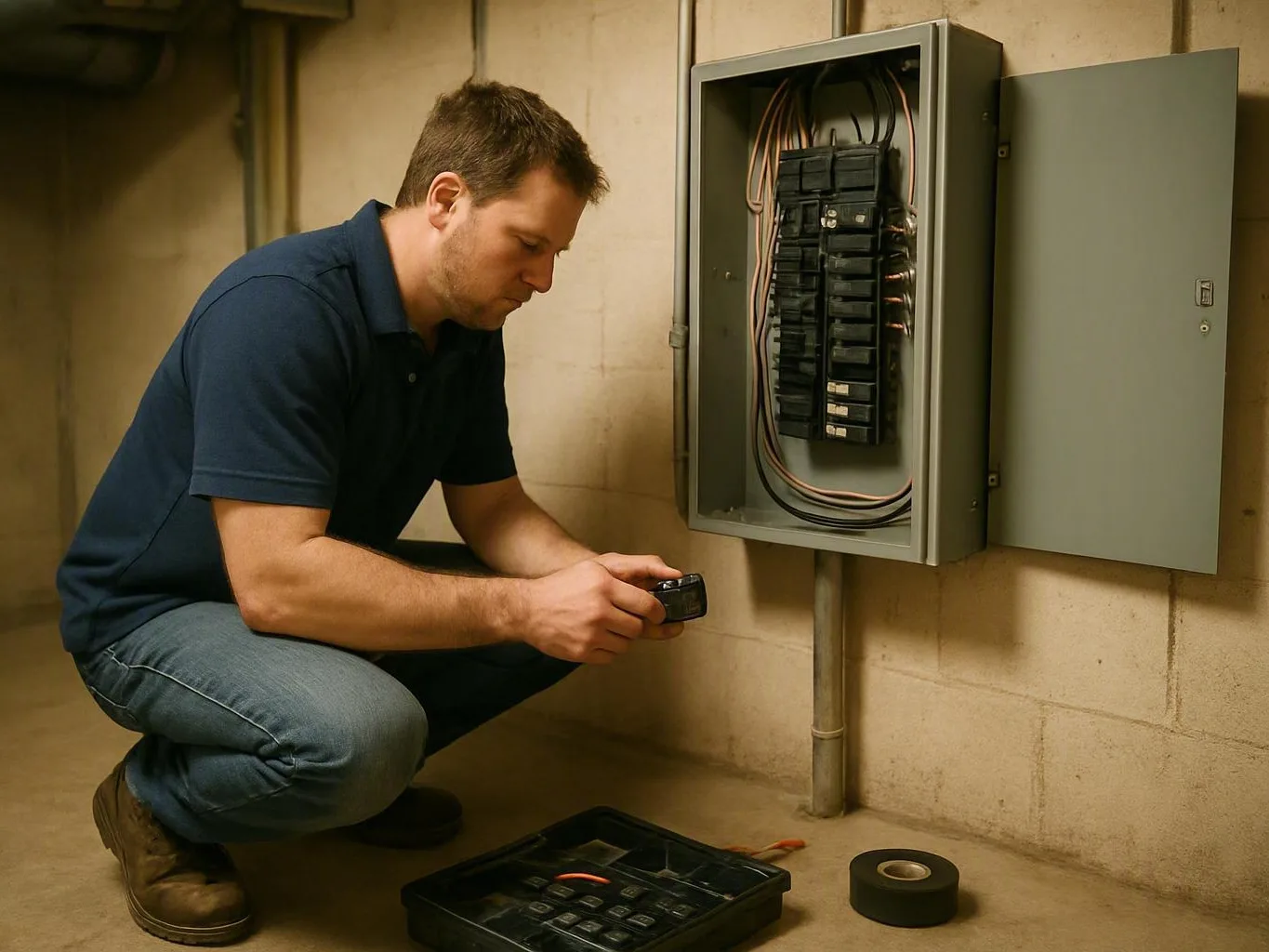
Wire Gauge is a sizing system for the metal conductor inside an electrical cable. In North America, electricians commonly use American Wire Gauge, or AWG. The system assigns a number to each standard conductor size. A 12 AWG conductor is larger than a 14 AWG conductor. The 14 AWG conductor has the higher number.
Related glossary terms: Voltage Drop, Overcurrent, Electrical Load Calculation.
Gauge describes conductor size, not the complete cable. A cable may also have insulation, a ground wire, a jacket, and markings for temperature or wet locations. The conductor material matters as well. Copper and aluminum wires with the same AWG number can have different resistance and ampacity characteristics. You must identify the material before selecting a replacement.
How Wire Gauge Works, Is Measured, or Is Used?
AWG is based on a fixed relationship between conductor diameter and gauge number. Each change of three gauge sizes represents about a two-times change in cross-sectional area. For example, 12 AWG has a larger conductor area than 14 AWG. This allows lower resistance under the same conditions. The sizing process starts with the circuit load. It then accounts for conductor material, insulation, ambient temperature, grouping, and installation method.
Electricians also check ampacitywhich is the current a conductor can carry under stated conditions. A circuit with a 20-ampere breaker commonly requires a permitted conductor size. The final choice depends on the applicable code tables and installation details. Long runs may need a larger conductor to control.voltage drop. A typical workflow includes these steps.
- Identify the expected load and system voltage.
- Check the conductor material, insulation rating, and terminal ratings.
- Review the required ampacity and voltage-drop conditions.
- Select a breaker and conductor combination that protects the wiring.
- Confirm the cable marking and installation method before work begins.
Why Wire Gauge Matters?

Correct gauge controls heat, energy loss, and equipment performance. A conductor that's too small for its load has higher resistance. It can produce excess heat at terminals or along the cable. That condition can damage insulation and raise fire risk. A conductor larger than required is usually safe when its terminals accept it. The installation method must accept it as well. However, it may add cost and make connections harder.
Gauge also affects how equipment operates. Excessive voltage drop can cause lights to dim. It can cause motors to start poorly. It can cause heaters to run below their intended output. It can also cause electronic equipment to shut down. Breaker size doesn't make an undersized wire safe. The overcurrent device must limit current to a safe level. The conductor and connected equipment must handle that level.
When Wire Gauge Matters Most?
Wire gauge becomes especially important during new circuits and panel changes. It also matters during appliance installations, rewiring, and repairs after overheating. High-load equipment often requires careful sizing. Its current demand may continue for long periods. Long cable runs, crowded raceways, hot spaces, and bundled conductors can also change the allowable ampacity.
Inspection and troubleshooting provide another reason to verify gauge. Discolored insulation, melted wire ends, warm receptacles, repeated breaker trips, flickering lights, and unexplained voltage loss can signal an overloaded circuit or a poor connection. In Fort Wayne homes and commercial buildings, an emergency repair may require identifying the existing conductor. This must happen before replacing a device or restoring power. The replacement must match the circuit design, the equipment, and the requirements of the National Electrical Code.
How to Evaluate Wire Gauge?
- Read the cable marking and confirm the AWG size, conductor material, insulation type, and temperature rating.
- Compare the wire’s permitted ampacity with the circuit breaker rating and expected continuous load.
- Measure the circuit length and check for voltage drop on long runs.
- Look for heat damage, loose terminals, discoloration, brittle insulation, or repeated breaker trips.
- Confirm that terminals, lugs, connectors, and raceways accept the selected conductor size.
Related Concepts Compared
Wire Gauge vs. Ampacity
Ampacity is the maximum permitted current for a conductor under stated conditions. Wire gauge describes physical conductor size, while ampacity also depends on material, insulation, temperature, and installation.
Wire Gauge vs. Cable Size
Cable size may describe the conductors inside a cable or the complete cable assembly. Wire gauge normally identifies an individual conductor size.
Wire Gauge vs. Voltage Drop
Voltage drop is the reduction in voltage caused by resistance along a circuit. A larger wire gauge, meaning a thicker conductor, can reduce voltage drop on a long run.
Expert Note
Do not choose wire from gauge alone. A professional also checks conductor metal, insulation temperature, terminal limits, circuit length, ambient heat, bundled conductors, and the breaker protecting the circuit.
Common Mistakes or Myths About Wire Gauge
- Assuming a higher AWG number means a thicker wire.
- Matching wire size to an appliance label without checking breaker protection and circuit length.
- Ignoring the difference between copper and aluminum conductors.
- Replacing a damaged wire with a smaller conductor because it fits the existing connector.
- Treating a larger wire as automatically acceptable when terminals or equipment are not rated for it.
Wire Gauge in Practice: A Real-World Example
A 20-ampere branch circuit has a long run to a detached workshop. The electrician checks the expected load and voltage drop before selecting the conductor. A larger conductor may be needed so the workshop equipment receives usable voltage without overheating the circuit wiring.
Sources & Further Reading on Wire Gauge
Related Terms
Voltage Drop
Voltage Drop is the reduction in electrical pressure that occurs as current travels through a conductor…
Overcurrent
Overcurrent is an electrical condition in which current exceeds the safe rating of a conductor, circuit…
Electrical Load Calculation
Electrical Load Calculation is a method for estimating the electrical demand of a building, dwelling, or…
National Electrical Code
National Electrical Code is a widely adopted set of safety rules for electrical design, installation, inspection…
Chris Miller Electric
Have Questions About Wire Gauge?
Contact Chris Miller Electric for practical guidance on Wire Gauge and related 24/7 emergency electricians work in Fort Wayne.