
What is Voltage Drop?
Voltage Drop is the reduction in electrical pressure that occurs as current travels through a conductor, connection, or device. Resistance, wire length, current demand, and wire size affect the amount. Excessive voltage drop can cause dim lights, weak motor performance, overheating, nuisance tripping, or equipment failure.
Quick Facts About Voltage Drop
Category
Electrical measurement and circuit condition
Formula
Voltage drop equals current multiplied by resistance
Measured by
A digital multimeter under operating load
Common confusion
Voltage drop is not the same as a power outage
Also called
Voltage loss, Circuit voltage drop
Often discussed with
Electrical Wiring Repair, Commercial Electrical Repairs
Key Takeaways About Voltage Drop
- Longer wires and higher current usually produce more voltage drop.
- Small wire, loose connections, and corroded terminals can increase voltage drop.
- Motors, heaters, and sensitive electronics may perform poorly with excessive voltage drop.
- Electricians compare source voltage with load voltage while the circuit operates.
- Correct wire sizing and sound connections help control voltage drop.
Understanding Voltage Drop
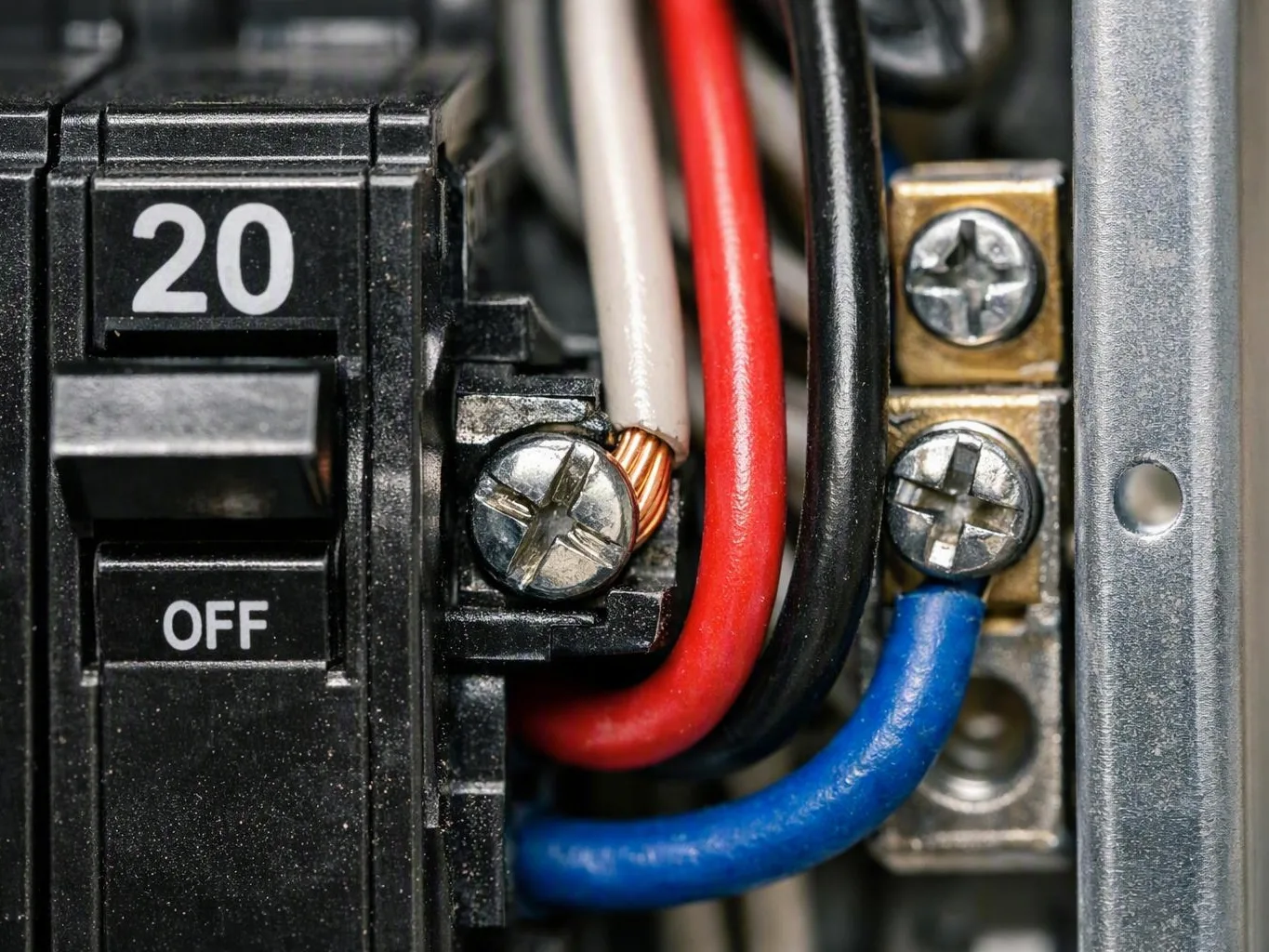
Voltage Drop describes lost voltage. Electricity loses voltage through wire resistance, terminals, switches, and other circuit parts. A power source may provide 120 volts. Yet, a load at the far end may receive less voltage while operating. Every conductor has resistance, so some drop occurs in every energized circuit.
Related glossary terms: Branch Circuit, Electrical Load Calculation, Ohm's Law.
The amount depends on wire length, conductor size, material, and current. A longer path has more resistance. A smaller conductor has less metal available to carry current. Loose terminals, damaged conductors, and corroded connections can add resistance at one point. They can also create heat.
How Voltage Drop Works, Is Measured, or Is Used?
Ohm's Law describes the basic relationship with the formula V = I × R. In this formula, V represents voltage drop. I represents current in amperes. R represents resistance in ohms. For example, a circuit carrying 10 amperes through 0.2 ohms of resistance has a 2-volt drop.
An electrician measures voltage at the source. The electrician then measures voltage at the load while equipment runs. The difference between those readings is the circuit's voltage drop. A no-load reading can miss a problem. A weak connection may show normal voltage until current flows through it.
Evaluation also considers the circuit's purpose and design. Wire gauge, circuit length, conductor material, and equipment starting current affect the result. A motor can draw much more current during startup. Its temporary voltage drop may exceed its running value.
Why Voltage Drop Matters?
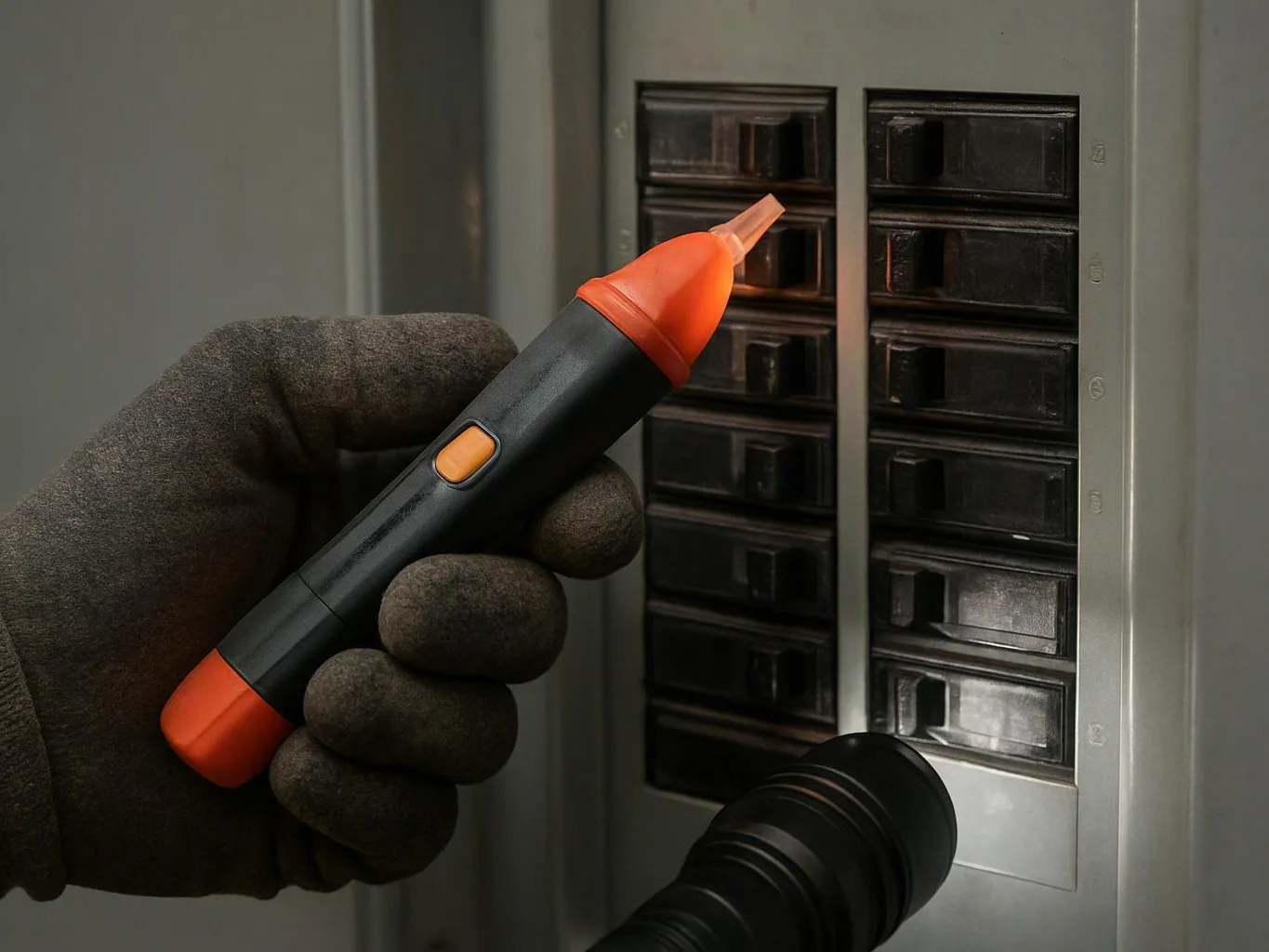
Excessive voltage drop can make lights dim and motors run hot. It can also make heating equipment operate below its rated output. Electronics may reset or shut down when their supply falls outside the expected range. Repeated heating at a high-resistance connection can damage insulation and increase fire risk.
The measurement helps distinguish a circuit design problem from a failing component. A drop across a long wire run may point to conductor sizing. A sharp drop across one terminal may indicate a loose or damaged connection. That difference guides repair decisions. It also avoids replacing equipment that's not the root cause.
When Voltage Drop Matters Most?
Voltage drop deserves close attention on long branch circuits, detached-building feeders, and circuits powering motors or compressors. Well pumps, air conditioners, refrigerators, and electric vehicle chargers can draw substantial current. This happens especially during startup or charging. Flickering lights or a motor that struggles to start can provide an early warning.
Testing becomes more useful when symptoms appear only under load. Compare readings at the panel and at the equipment. Then inspect connections, conductor size, and the circuit's rated load. Don't increase a breaker size to hide low voltage. Overcurrent protection must match the conductors and equipment.
How to Evaluate Voltage Drop?
- Measure voltage at the source and load while the equipment operates, then compare the two readings.
- Inspect long runs, small conductors, loose terminals, corrosion, and damaged insulation.
- Check whether motors, compressors, or chargers have high startup or operating current.
- Confirm wire gauge, breaker rating, circuit length, and equipment requirements match the installation.
- Treat unusual heat, burning odor, buzzing, or repeated breaker trips as warning signs.
Related Concepts Compared
Voltage Drop vs. Line Voltage
Line voltage is the voltage supplied between circuit conductors or between a conductor and ground. Voltage drop is the reduction that occurs between the source and the load.
Voltage Drop vs. Resistance
Resistance is the opposition to current flow within a material or connection. Voltage drop is the voltage effect created when current passes through that resistance.
Voltage Drop vs. Power Factor
Power factor describes how effectively alternating-current equipment converts supplied power into useful work. It can affect current and voltage drop, but it is not another name for voltage drop.
Voltage Drop vs. Brownout
A brownout is a broader condition involving reduced utility or building voltage. Voltage drop usually refers to a reduction within a particular circuit or wiring path.
Expert Note
A voltage reading taken with the equipment switched off may look normal even when a connection fails under load. Measure both ends of the circuit during operation, then test across individual connections if the total drop is excessive.
Common Mistakes or Myths About Voltage Drop
- Checking voltage only with the equipment turned off.
- Increasing the breaker size instead of correcting undersized wiring.
- Assuming flickering lights always mean a utility problem.
- Ignoring a loose neutral or overheated terminal.
- Replacing equipment before testing the circuit under load.
Voltage Drop in Practice: A Real-World Example
A 120-volt pump receives 111 volts while running from a distant panel. The nine-volt difference may result from a long run, undersized wire, or a loose connection. Measuring each connection and conductor section helps locate the source.
Sources & Further Reading on Voltage Drop
- NFPA 70, National Electrical Code
- Fluke, Understanding Voltage Drop
Related Terms
Branch Circuit
Branch Circuit is the wiring path that carries electricity from a service panel or distribution panel…
Electrical Load Calculation
Electrical Load Calculation is a method for estimating the electrical demand of a building, dwelling, or…
Ohm's Law
Ohm's Law is the relationship between voltage, current, and resistance in an electrical circuit. The law…
Resistance
Resistance is the opposition that an electrical material presents to current flow. Measured in ohms, resistance…
Chris Miller Electric
Have Questions About Voltage Drop?
Contact Chris Miller Electric for practical guidance on Voltage Drop and related 24/7 emergency electricians work in Fort Wayne.