
What is an Overcurrent?
Overcurrent is an electrical condition in which current exceeds the safe rating of a conductor, circuit, device, or power source. It can result from an overload, short circuit, or ground fault. Circuit breakers and fuses detect excessive current and open the circuit to limit heat, equipment damage, and fire risk.
Quick Facts About Overcurrent
Category
Electrical safety condition
Measured by
Amperes, or amps
Used for
Circuit protection and fault diagnosis
Common confusion
Overcurrent is not the same as overvoltage
Also called
Excess current, Excessive current
Often discussed with
Circuit Breaker Repair, Electrical Panel Repair
Key Takeaways About Overcurrent
- Overcurrent occurs when current exceeds the safe capacity of a circuit or electrical device.
- Overloads, short circuits, and ground faults are common causes of excessive current.
- Fuses and circuit breakers interrupt current to reduce heat, damage, and fire risk.
- A repeatedly tripping breaker signals a fault, overload, or equipment problem that needs diagnosis.
- Replacing a breaker with a larger one can create a serious wiring hazard.
Understanding Overcurrent
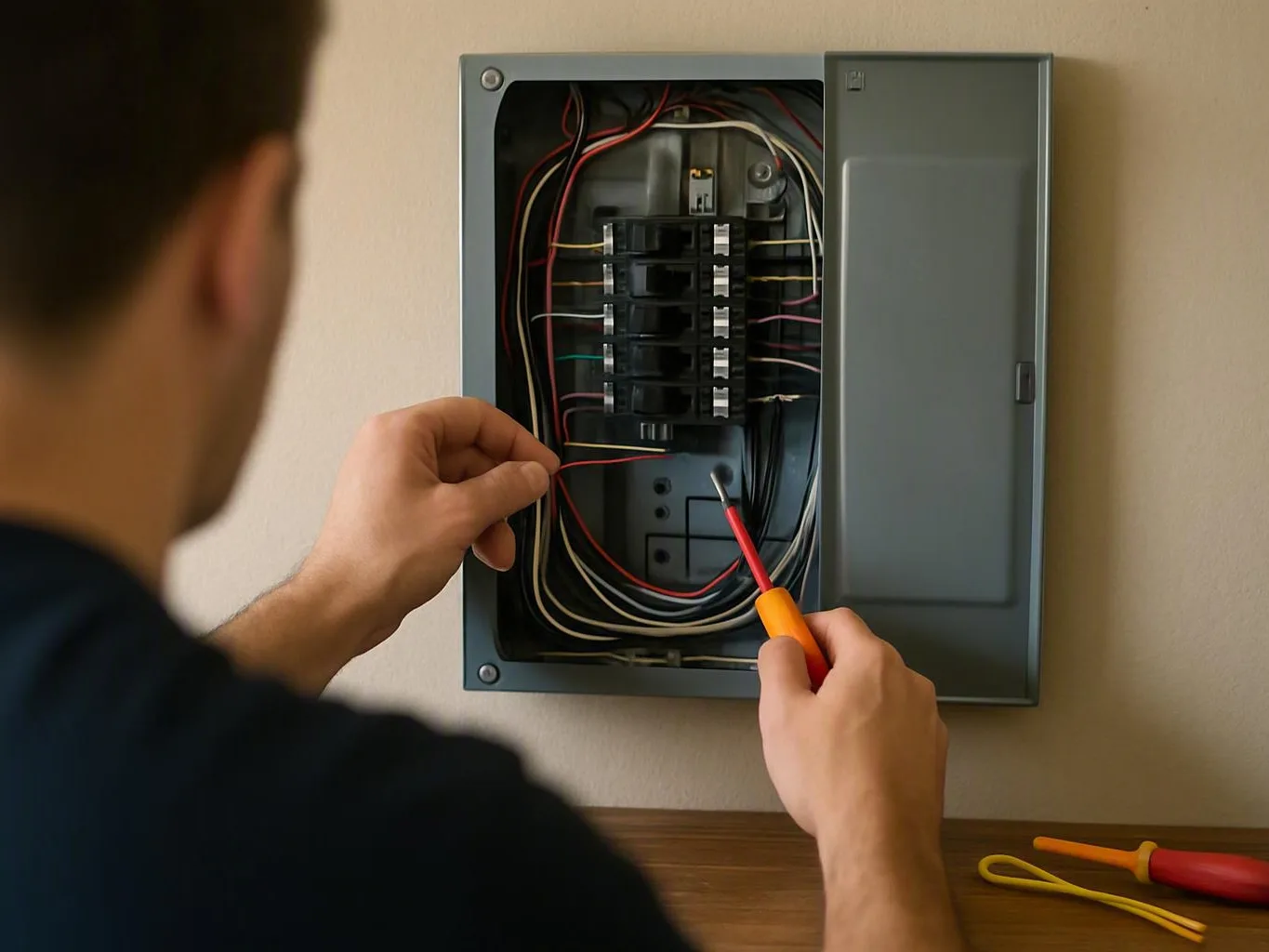
Overcurrent describes current above the safe limit for a wire or circuit. This limit also applies to an electrical device or source. Electric current is measured in amperes, often called amps. Every conductor and protective device has a current rating. Exceeding that rating can produce excess heat.
Related glossary terms: Fuse, Branch Circuit, Electrical Load Calculation.
An overloadhappens when connected equipment draws more current than a circuit should carry during normal operation.short circuitcreates an unintended low-resistance path. This path can cause a rapid current surge.ground fault sends current along an unintended path to ground. These conditions differ in cause, but each can create an overcurrent hazard.
How Overcurrent Works, Is Measured, or Is Used?
Currentflows through a circuit when voltage pushes electrons through electrical resistance. A simple relationship.Ohm's Law is I = V ÷ R. I represents current in amps. V represents voltage. R represents resistance in ohms. If resistance falls sharply, current can rise sharply when voltage remains present.
Fuses contain a link that melts when current stays above its rating long enough. Circuit breakers open their contacts when a thermal or magnetic mechanism detects excessive current. The response time depends on the amount of current and the protective device design. A small overload may take longer to interrupt than a severe fault.
Electricians evaluate overcurrent by checking the circuit rating, conductor size, measured load, and protective device. A clamp meter can measure current without disconnecting a conductor. A multimeter can help verify voltage and continuity when used correctly. A load calculation also shows whether equipment exceeds the circuit's intended capacity. This equipment may include a heater, motor, or electric vehicle charger.
Why Overcurrent Matters?
Excess heat is the main physical danger from sustained overcurrent. Heat can damage insulation, loosen terminations, weaken equipment, and ignite nearby materials. A protective device that opens the circuit reduces the duration of the fault. However, it doesn't repair the condition that caused the device to trip.
Frequent trips can reveal a worn breaker, a failing appliance, a damaged cable, or too much connected load. The decision should focus on finding the cause. It shouldn't focus on restoring power repeatedly. A breaker that trips immediately after reset may indicate a short circuit or ground fault. This condition requires a cautious response.
When Overcurrent Matters Most?
Older wiring and altered circuits deserve careful review. Their conductor sizes, connections, and protection may no longer match present loads. Problems also become more likely after adding high-demand equipment, remodeling a room, or using several heat-producing appliances on one branch circuit. Burning odors, warm outlets, discoloration, buzzing, and repeated trips are warning signs.
Overcurrent protection must match the circuit conductors and equipment ratings. A larger breaker is not a safe fix for nuisance tripping. The entire circuit must support and receive approval for that rating. During an emergency, turn off affected equipment if it's safe to do so. Avoid damaged electrical parts. Keep people away from visible arcing or smoke.
How to Evaluate Overcurrent?
- Compare the circuit breaker or fuse rating with the conductor rating and connected equipment requirements.
- Measure operating current under normal conditions and compare it with the circuit and device nameplate ratings.
- Record whether the protective device trips during startup, steady operation, or only when several loads run together.
- Look for warm or discolored outlets, damaged insulation, buzzing, burning odors, or loose connections.
- Confirm that replacement fuses or breakers have the correct type, voltage rating, and ampere rating.
Related Concepts Compared
Overcurrent vs. Overload
An overload is one cause of overcurrent. It occurs when normal equipment loads draw more current than a circuit can safely carry.
Overcurrent vs. Short Circuit
A short circuit is an unintended low-resistance connection between conductors. It can create a sudden, high overcurrent that protective devices must interrupt.
Overcurrent vs. Overvoltage
Overvoltage means voltage is higher than a device or circuit should receive. Overcurrent concerns the amount of current flowing, although the two conditions can occur together.
Overcurrent vs. Ground Fault
A ground fault occurs when current reaches an unintended grounded surface or conductor. Ground faults are a specific type of fault that can produce overcurrent and shock hazards.
Expert Note
A tripping breaker does not prove that the breaker is defective. The fault may be downstream in an appliance, receptacle, junction, or cable. The timing of the trip, the connected load, and signs of heat often provide better diagnostic clues than the breaker handle alone.
Common Mistakes or Myths About Overcurrent
- Resetting a tripped breaker repeatedly without finding the cause.
- Installing a higher-ampere breaker on existing wiring to stop nuisance trips.
- Assuming a short circuit and an overload are the same condition.
- Ignoring heat, discoloration, buzzing, or a burning smell near electrical equipment.
Overcurrent in Practice: A Real-World Example
A 15-amp branch circuit supplies a portable heater and several other loads. The combined demand raises current above the circuit's safe operating range, so the breaker trips after several minutes. Removing the extra load may stop the trips, but an electrician should still verify the circuit and connections if the problem returns.
Related Services
Related Terms
Fuse
Fuse is an overcurrent protection device that contains a metal element designed to melt when electrical…
Branch Circuit
Branch Circuit is the wiring path that carries electricity from a service panel or distribution panel…
Electrical Load Calculation
Electrical Load Calculation is a method for estimating the electrical demand of a building, dwelling, or…
Wire Gauge
Wire Gauge is a numerical system that describes the diameter of electrical wire conductors. In the…
Chris Miller Electric
Have Questions About Overcurrent?
Contact Chris Miller Electric for practical guidance on Overcurrent and related 24/7 emergency electricians work in Fort Wayne.