
What is Arc-Fault Circuit Interrupter?
Arc-Fault Circuit Interrupter is a protective device that detects dangerous electrical arcing and disconnects power before an arc can start a fire. An AFCI monitors the electrical waveform on a circuit, identifies patterns linked to loose connections or damaged wiring, and trips the circuit. AFCIs protect people and property from fire hazards.
Quick Facts About Arc-Fault Circuit Interrupter
Category
Electrical fire protection
Used for
Detecting hazardous electrical arcs
Common confusion
AFCI is not the same as GFCI
Relevant standard
National Electrical Code requirements
Also called
AFCI, Arc-Fault Breaker
Often discussed with
Electrical Panel Repair, Electrical Code Corrections
Key Takeaways About Arc-Fault Circuit Interrupter
- AFCIs detect hazardous arcing that may occur inside walls, cords, outlets, or electrical equipment.
- The device trips power quickly when its electronics identify an arc pattern.
- An AFCI does not replace a ground-fault circuit interrupter or proper wiring repairs.
- Repeated trips can indicate damaged wiring, loose connections, overloaded equipment, or a defective device.
Understanding Arc-Fault Circuit Interrupter

Arc-Fault Circuit Interrupter, often called an AFCI, protects circuits. It helps reduce fires caused by unwanted electrical arcing. An arc forms when electricity jumps across a gap, not through a solid conductor. Damaged insulation, loose terminals, pinched wires, and worn cords can create gaps. Arcs can produce intense heat without tripping standard circuit breakers.
Related glossary terms: Ground-Fault Circuit Interrupter, Branch Circuit, National Electrical Code.
An AFCI checks current moving through a branch circuit. It looks for patterns linked to electrical arcing. If it finds a dangerous pattern, it opens the circuit and stops power flow. AFCIs can be circuit breakers in panels or receptacles in approved locations. Required types and locations depend on the building, circuit, equipment, and local code.
How Arc-Fault Circuit Interrupter Works, Is Measured, or Is Used?
Inside an AFCI, electronic sensors check changes in the current waveform. A normal load, such as a lamp or motor, makes expected changes. These changes happen when the load starts or stops. An arc makes a different pattern with fast, uneven changes. The device checks the signal and trips when it meets its set limits.
An AFCI doesn't have one simple field test that proves full operation. Electricians inspect.circuit breaker, wiring, neutral conductors, and connected loads. They also use the built-in test button. The test should trip the device and require a reset. A breaker that won't reset or trips repeatedly needs diagnosis. Don't keep resetting it. Testing doesn't replace checks of hidden wiring or damaged equipment.
Why Arc-Fault Circuit Interrupter Matters?
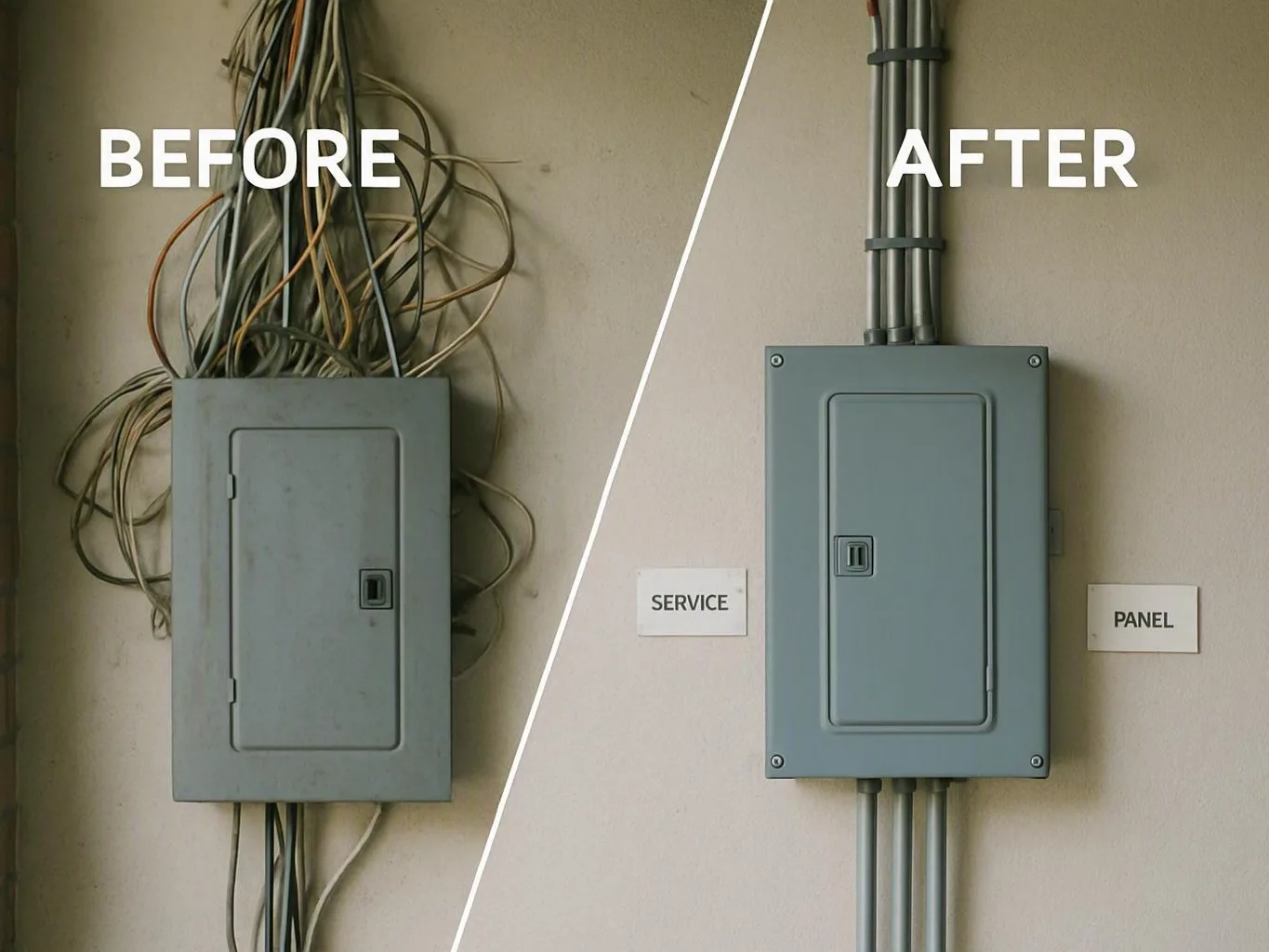
Electrical arcing can start in hard-to-see places. These places include wall spaces, junction boxes, appliance cords, and outlet terminals. Arc heat can damage insulation and nearby materials before a standard breaker responds. An AFCI adds protection against this fire risk. It works best with proper wiring, devices, and connections.
AFCI protection helps separate two electrical hazards. A standard breaker mainly responds to too much current. An AFCI responds to patterns linked to arcing. A Ground-Fault Circuit Interrupter responds to current leaving its intended path. It helps protect against shock in bathrooms and outdoor areas. Some devices combine AFCI and GFCI functions. The functions remain separate.
When Arc-Fault Circuit Interrupter Matters Most?
AFCI protection matters during remodeling, panel replacement, circuit changes, and trip checks. Circuit changes can trigger current code requirements. The exact rule depends on the adopted National Electrical Code edition and local amendments. Older homes may have old insulation, loose connections, or mixed wiring methods. These conditions deserve careful review.
Pay attention when an AFCI trips after plugging in an appliance. Also watch it after turning on a light or running a motor. Unplug the suspected equipment. Avoid repeated resets until you know the cause. An electrical check should include the device test, neutral-to-ground connections, and tight terminals. It should also check conductor condition and signs of heat or odor. Don't bypass an AFCI. Nuisance trips may signal a wiring or equipment problem.
How to Evaluate Arc-Fault Circuit Interrupter?
- Press the built-in test button and confirm that the AFCI trips and resets correctly.
- Check whether trips occur with one appliance, one outlet, or the entire circuit.
- Inspect for loose terminals, damaged insulation, heat marks, buzzing, or burning odors.
- Verify the AFCI type and circuit placement against the locally adopted National Electrical Code.
- Confirm that neutral conductors are connected correctly and are not shared improperly.
Related Concepts Compared
Arc-Fault Circuit Interrupter vs. Ground-Fault Circuit Interrupter
A GFCI detects current leaking away from its intended path and helps reduce shock risk. An AFCI detects electrical patterns linked to hazardous arcing and helps reduce fire risk.
Arc-Fault Circuit Interrupter vs. Circuit Breaker
A conventional circuit breaker mainly protects conductors from overcurrent and short circuits. An AFCI adds electronic arc detection that a standard breaker may not provide.
Arc-Fault Circuit Interrupter vs. Surge Protector
A surge protector limits short voltage spikes from events such as switching or lightning. It does not detect or interrupt hazardous electrical arcing.
Expert Note
A nuisance trip should be treated as a diagnostic clue, not an inconvenience. The cause may be a failing appliance, shared neutral, loose connection, damaged cable, or incompatible device. Replacing the AFCI without finding the cause can leave the original hazard in place.
Common Mistakes or Myths About Arc-Fault Circuit Interrupter
- Assuming an AFCI replaces a GFCI in a wet or outdoor location.
- Resetting a repeatedly tripping AFCI without finding the cause.
- Replacing an AFCI with a standard breaker to stop nuisance trips.
- Ignoring burning smells, buzzing, heat marks, or damaged insulation.
- Connecting neutral conductors incorrectly during circuit repairs.
Arc-Fault Circuit Interrupter in Practice: A Real-World Example
A bedroom AFCI trips whenever a vacuum runs from one receptacle. An electrician finds a loose terminal behind it and heat damage on the wire insulation. This repair fixes the cause instead of repeated breaker resets.
Sources & Further Reading on Arc-Fault Circuit Interrupter
Related Terms
Ground-Fault Circuit Interrupter
Ground-Fault Circuit Interrupter is a protective device that monitors current flowing through an electrical circuit. The…
Branch Circuit
Branch Circuit is the wiring path that carries electricity from a service panel or distribution panel…
National Electrical Code
National Electrical Code is a widely adopted set of safety rules for electrical design, installation, inspection…
Overcurrent
Overcurrent is an electrical condition in which current exceeds the safe rating of a conductor, circuit…
Chris Miller Electric
Have Questions About Arc-Fault Circuit Interrupter?
Contact Chris Miller Electric for practical guidance on Arc-Fault Circuit Interrupter and related 24/7 emergency electricians work in Fort Wayne.