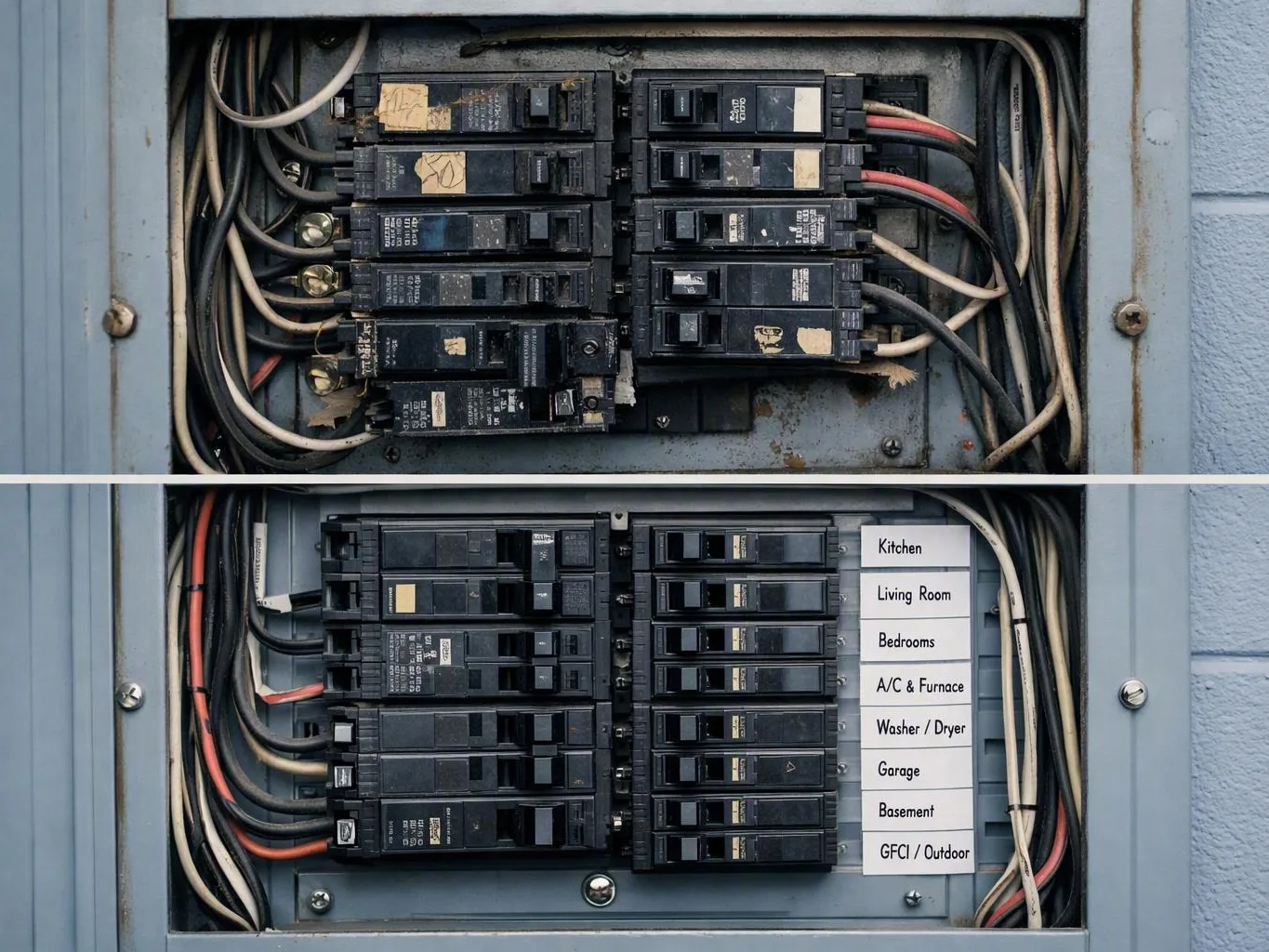
Warning Signs Your Electrical Panel Needs Immediate Attention
Electrical panel failure can cause buzzing, burning smells, hot surfaces, flickering lights, tripped breakers, visible damage, and partial power loss. These signs may point to loose connections, overloaded circuits, bad breakers, arcing, or worn panel parts. Turn off power only when it's safe. Stay away from damaged equipment. Then contact a qualified electrician for help. A professional can decide if Electrical Panel Repair, circuit breaker replacement, or a full Electrical Panel Replacement is safest.
Get a Free Estimate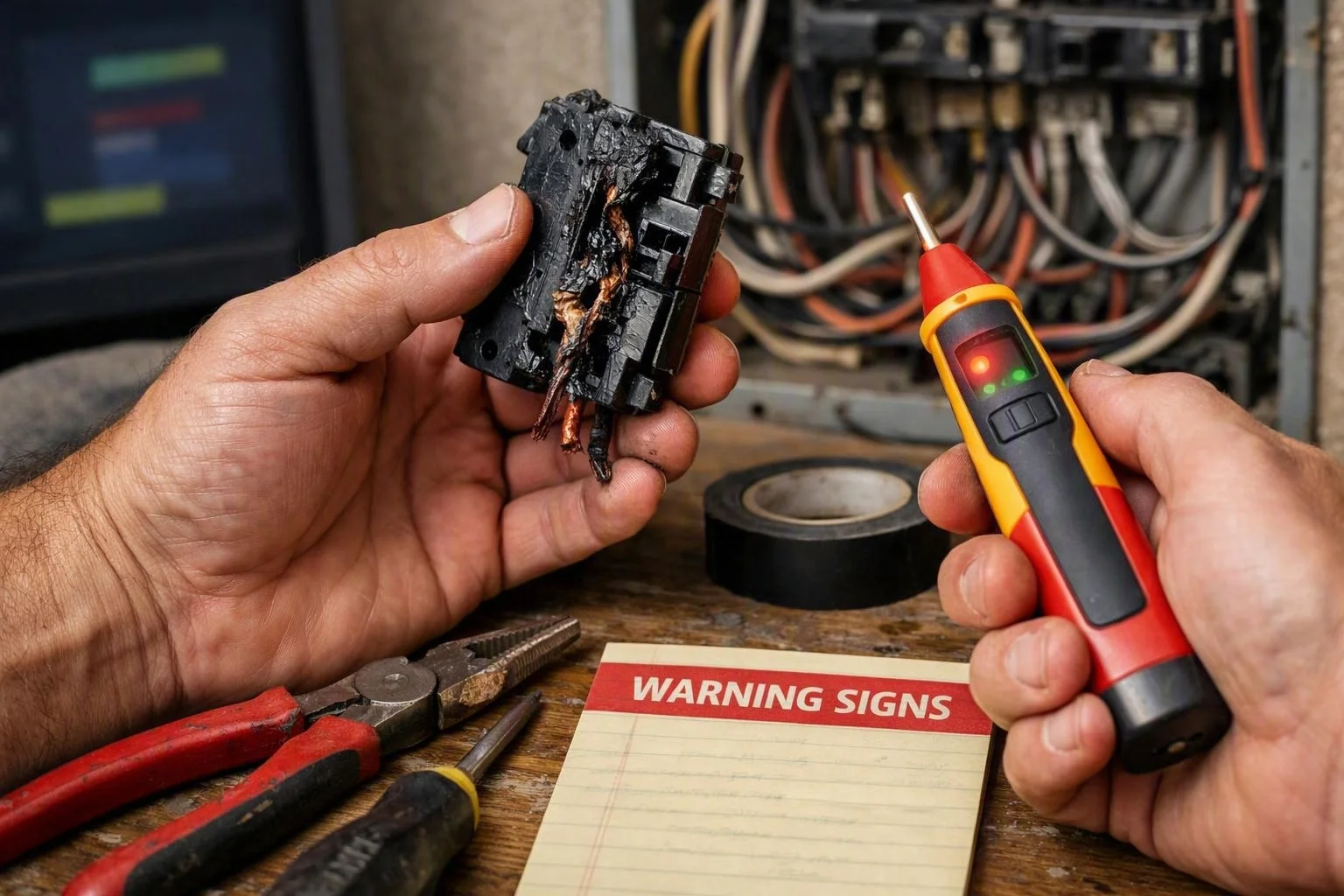
What Are the Warning Signs of a Bad Electrical Panel?
A bad electrical panel may show heat, burning smells, buzzing, rust, scorch marks, repeated breaker trips, flickering lights, or partial power loss. These signs may point to loose wires, overloaded circuits, bad breakers, or arcing. Stop using affected circuits. Arrange a professional electrical inspection before the problem grows.
The residential electrical panel sends power to each circuit in the home. Safety devices respond when current becomes unsafe. Problems can hide behind the cover. A small sign may point to a larger fault.
Children, pets, older adults, and people who use medical equipment need extra care during power problems. Keep everyone away from the panel. Move items that can burn. Make a safe plan for needed power while help is on the way. Chris Miller Electric can provide Electrical Panel Repair in Fort Wayne after a proper inspection.
Why Is My Electrical Panel Buzzing or Humming?
Electrical buzzing from a panel usually means a breaker, connection, or live part needs inspection. A soft transformer hum may be normal. A new, loud, or changing sound isn't normal. A qualified electrician should find the source before it causes more damage.
Some transformers make a steady, low hum during normal use. A residential panel shouldn't make a loud buzz, crackle, or sizzle. The sound may come from a loose connection, worn breaker, or loose wire terminal.
Electrical arcing can sound like buzzing or frying. It happens when current jumps across a damaged path. This heat can damage insulation, a breaker, or the bus bar. Don't put your ear near the panel. Never remove the cover to check it.
Turn off affected appliances if it's safe. Keep the panel area clear. Then call for service. If you see smoke, sparks, or smell burning, leave the area and call emergency services when needed.
What Does a Hot Electrical Panel Mean?
A hot electrical panel may have dangerous heat inside the enclosure. Common causes include an overloaded circuit, loose terminal, bad breaker, or poor connection. A panel shouldn't feel hot during normal use. Don't touch or open it. Keep items that can burn away. Contact an electrician soon.
A small temperature change may be normal. A hot panel, cover, breaker, or nearby wall is a warning. Heat can weaken insulation, bend plastic, damage terminals, and spread over time.
Common causes include too many high-use devices on one circuit. Loose terminals, worn breakers, and damaged bus bars can also create heat. Moisture, rust, or poor work may add risk. These problems can cause a fire even when lights still work.
Don't open the panel or press hot breakers. Keep paper, cleaners, boxes, and clothing away. Move children and pets to another area. Make a safe plan for people who need steady power. If smoke or flames appear, leave at once and call emergency services.
An electrician can check heat, loads, and connections safely. The fix may involve a circuit change, circuit breaker replacement or repair. A full replacement may be needed when the panel can't safely serve the home.
Can a Failing Panel Cause Flickering Lights and Partial Power Loss?
A failing electrical panel can cause flickering lights and partial power loss. A bad breaker, bus bar, feeder, or neutral connection may cause these signs. The fault may also be elsewhere. A qualified electrician should test the panel and circuits instead of resetting breakers again and again.
Lights may flicker when a large device starts. Repeated or widespread flickering needs attention. A loose neutral connection can create uneven voltage. It may damage sensitive electronics. A bad main breaker or feeder can limit power to part of the home.
Partial power loss doesn't always mean the panel failed. The issue may involve a branch circuit, outlet, service connection, or hidden wire. Testing helps find the true source.
Write down when the lights flicker. Note which rooms are affected. Also note if appliances start or stop then. Unplug sensitive electronics if safe. Don't reset breakers again and again. Don't bypass safety devices. Don't use extension cords as a lasting fix. Reliable power matters for people who use medical devices, heaters, refrigerators, or mobility equipment.
Most visits start with a quick visual check and electrical tests. The first inspection often takes 30 to 90 minutes. Access and the number of symptoms can change that time. Hidden wire faults may need more testing.
When Does an Electrical Panel Need Replacement Instead of Repair?
Electrical panel replacement is often safer than repair when the enclosure or bus bar is damaged. Replacement may also be needed with heavy rust, unavailable breakers, known safety issues, or low capacity. Repair may work for one bad breaker, loose connection, or usable part.
Repair fits a small problem with a clear cause. A qualified electrician may replace one breaker or fix a loose connection. The panel must still be sound. The right parts must also be available.
Replacement becomes more likely when damage affects the enclosure, bus bar, breaker spaces, or main disconnect. An old panel may lack safe replacement breakers. Heavy rust may hide damage. It may also stop parts from making safe contact.
Capacity is another key concern. An electric vehicle charger, heat pump, workshop, home addition, or electric stove may raise demand. A larger panel alone won't fix a small service. The electrician must check service wires, the meter, grounding, and total load.
An emergency electrical panel upgrade may help control an urgent risk. A full project may follow later. The choice depends on damage, load, parts, hidden faults, and future needs. Panel age alone doesn't decide it.
| Condition | Likely service | Why it matters |
|---|---|---|
| One failed, compatible breaker | Circuit breaker replacement | A focused fix may restore protection when the panel is otherwise sound. |
| Loose connection with no major damage | Electrical panel repair | Correcting the connection can stop heat and instability. |
| Corrosion or damaged enclosure | Electrical panel replacement | Structural damage can make internal parts unreliable or unsafe. |
| Damaged bus bar or repeated heat damage | Replacement or urgent upgrade | Heat and poor contact may continue even after a single part is changed. |
| Obsolete equipment with unavailable breakers | Panel replacement | Improvised parts can create compatibility and protection problems. |
| Insufficient capacity for current or planned loads | Service evaluation and possible upgrade | The system must safely support present and future electrical demand. |
Replacement should support future needs, not only today's circuits. Our team can explain if you need a repair, breaker change, urgent upgrade, or full replacement.
What Should You Do During an Electrical Panel Emergency?
Move people away from smoke, sparks, flames, exposed wires, or a very hot panel. Call emergency services if there's a fire. Don't open the panel or remove its cover. If there's no danger and the disconnect is easy to reach, a qualified electrician can guide you.
Safety comes before finding the cause. An electrical emergency can worsen fast. Don't pour water on an electrical fire. Don't touch the panel. Don't try to pull out a breaker.
After the danger ends, an electrician may suggest temporary stabilization, Electrical Panel Repair, or an emergency electrical panel upgrade. Full replacement may follow if the panel is damaged, old, or too small.
Can I Inspect or Repair an Electrical Panel Myself?
Homeowners can watch for warning signs and clear space around a panel. Internal checks and repairs need a qualified electrician. A panel may stay live even when its breakers are off. Professional tests can separate a bad breaker from a wiring, service, or panel problem.
DIY work inside the panel is risky. Main service wires may stay live. A shock can happen without a spark. An arc flash can cause intense heat, pressure, eye damage, hearing damage, and fire.
| Factor | DIY | Professional |
|---|---|---|
| Visual observations | Look for odors, heat, noise, corrosion, or marks without opening the panel. | Inspects the enclosure, labels, breakers, and accessible connections safely. |
| Internal access | Not safe for an untrained homeowner. | Uses qualified procedures and protective equipment around energized parts. |
| Diagnostic testing | Cannot reliably identify voltage or load faults with casual observation. | Performs voltage testing, breaker testing, and load assessment. |
| Code and compatibility | Risk of using the wrong part or creating an electrical code problem. | Matches components and work to applicable requirements and equipment design. |
| Final decision | Should not be based on a breaker reset or visual guess. | Determines whether repair, replacement, or an upgrade is appropriate. |
You can keep storage away from the panel and note its symptoms. Give the electrician clear access. Don't remove the cover, tighten terminals, install a breaker, or test live parts without proper training and tools.
How an Electrician Diagnoses Panel Failure?
An electrician finds panel failure by reviewing symptoms, checking the enclosure, testing voltage and breakers, looking for heat or arcing, and checking circuit loads. These results show if you need circuit breaker replacement, Electrical Panel Repair, an emergency upgrade, or full replacement.
The process starts with questions about flickering lights, burning smells, buzzing, tripped breakers, and partial power loss. The electrician also asks about recent remodeling and new high-use appliances. Next, they check labels, safety devices, grounding, moisture, rust, and the panel's condition.
Voltage tests can find unstable power, a bad main breaker, a neutral wire problem, or an issue outside the panel. Breaker tests show if a safety device works correctly. A load check compares home demand with service capacity.
A heat check may find hot terminals, bad breakers, or uneven heating. The electrician also checks wires for loose connections, damage, wrong placement, or signs of arcing. Hidden wire faults may need more tests.
The final advice should explain the risk, cause, and service choices. Our team can tell a bad breaker from a wider panel problem. We can also explain how future home loads may affect the choice.
Questions About 24/7 Emergency Electricians
What Are the Warning Signs of a Bad Electrical Panel?
Warning signs include a burning smell, scorch marks, buzzing, heat, rust, flickering lights, repeated breaker trips, electrical arcing, and partial power loss. Stop using affected circuits. Keep people away from the panel. Arrange an electrical inspection. Don't remove the cover or reset a breaker again and again.
Why Is My Electrical Panel Buzzing or Humming?
A steady transformer hum may be normal. A loud, new, or changing sound may show a loose connection, breaker trouble, or electrical arcing. Turn off affected devices if safe. Don't open the panel. Have a qualified electrician find the source.
What Does a Hot Electrical Panel Mean?
A hot panel may have an overloaded circuit, loose terminal, bad breaker, or damaged connection. The panel shouldn't feel hot during normal use. Keep items that can burn away. Don't touch or open it. Call an electrician soon. Smoke or flames require evacuation and emergency help.
When Does an Electrical Panel Need Replacement Instead of Repair?
Replacement is often safer when the enclosure or bus bar is damaged, rust is heavy, breakers aren't available, safety concerns exist, or capacity is too low. Repair may work for one bad breaker or loose connection when the rest of the panel is safe.
Can a Failing Panel Cause Flickering Lights and Partial Power Loss?
Yes. A bad breaker, feeder, bus bar, main disconnect, or neutral connection can cause flickering lights and partial power loss. The fault may also be elsewhere in the residential electrical system. An electrician should test the panel and circuits instead of resetting breakers repeatedly.
Don't ignore heat, smells, noise, visible damage, or unstable power. We can help decide if you need a safe repair, breaker change, emergency electrical panel upgrade, or full replacement. For urgent problems, contact 24/7 Emergency Electricians. Keep your household away from the panel until it's checked.
For a planned inspection or service discussion, contact our team.
Related Resources
Circuit Breaker and Fuse Replacement: What It Costs and How It Works
circuit breaker replacement cost emergency electrician
What It CostsCommercial Emergency Electrical Repairs: Cost, Response, and Process
commercial emergency electrical repair cost Fort Wayne
Compared ToElectrical Panel Repair vs. Replacement: Cost, Options, and Timing
electrical panel repair vs replacement cost
Compared ToWhole-House Surge Protection: Installation Cost and Options
whole house surge protector installation cost