
What is a Resistance?
Resistance is the opposition that an electrical material presents to current flow. Measured in ohms, resistance limits current and converts some electrical energy into heat. Wire length, conductor size, material, and temperature affect resistance. Electricians test resistance to find open circuits, damaged conductors, poor connections, and faulty components.
Quick Facts About Resistance
Category
Electrical property
Formula
R = V ÷ I
Measured by
Ohmmeter or multimeter
Used for
Limiting current and testing circuits
Common confusion
Resistance is not the same as impedance
Also called
Electrical resistance, Ohmic resistance
Key Takeaways About Resistance
- Resistance limits current and is measured in ohms.
- Longer, thinner wires usually have greater resistance than shorter, thicker wires.
- High resistance at a loose connection can create heat and damage.
- A multimeter measures resistance only on a de-energized circuit.
- Ohm’s Law connects resistance, voltage, and current.
Understanding Resistance
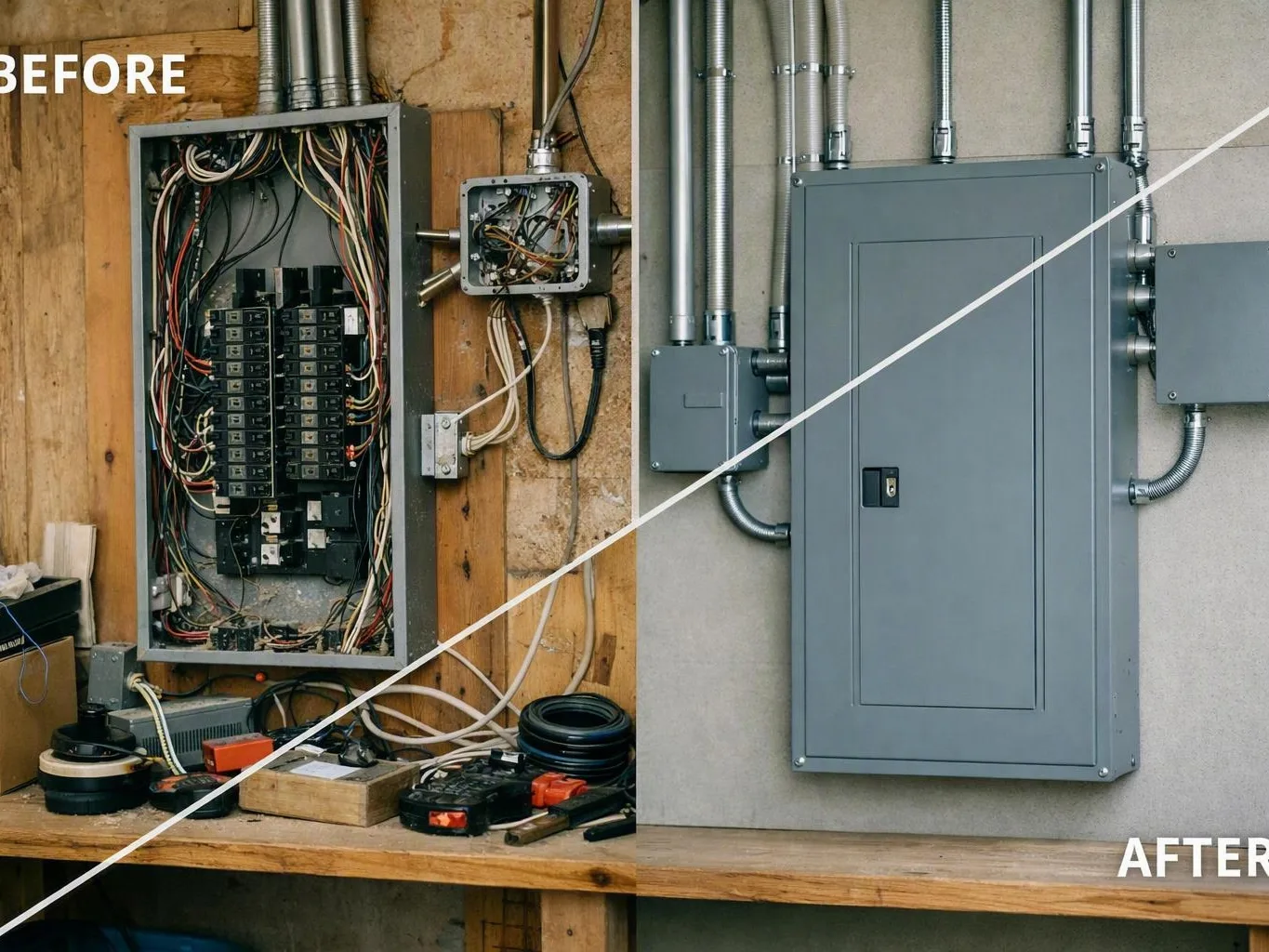
Resistancedescribes how strongly a material opposes the movement of electric charge. A conductor with low resistance allows current to move easily. A material with high resistance restricts current. The unit of measurement.ohm, represented by the Greek letter omega, Ω.
Related glossary terms: Ohm's Law, Voltage Drop, Wire Gauge.
Every wire and electrical device has some resistance. The amount depends on the conductor’s material, length, cross-sectional area, and temperature. Copper wire usually has low resistance. Heating elements use materials with higher resistance so they can produce heat. Resistance also appears at terminals, switches, plugs, and splices. These surfaces may be dirty, loose, corroded, or damaged.
How Resistance Works, Is Measured, or Is Used?
Ohm’s Law expresses the relationship between voltage, current, and resistance with the formula R = V ÷ I. If voltage stays the same, higher resistance allows less current to flow. For example, a 120-volt load with 24 ohms of resistance draws 5 amperes. This relationship helps electricians check whether a measured value matches the expected design.
A digital multimeter measures resistance by sending a small test current. It sends this current through a circuit. Then, it reads the resulting voltage. The circuit must be de-energized before this test. Capacitors may need time to discharge. A reading near zero may indicate a short or a normal low-resistance path. An OL or very high reading may indicate an open circuit. The correct interpretation depends on the component and test points.
Resistance also affects voltage drop and heat. As current passes through resistance, electrical energy changes into heat according to the relationship P = I²R. A small amount of resistance in a properly sized wire is expected. The same resistance at a loose terminal can become dangerous. A high-current load may produce excessive heat at one small connection.
Why Resistance Matters?
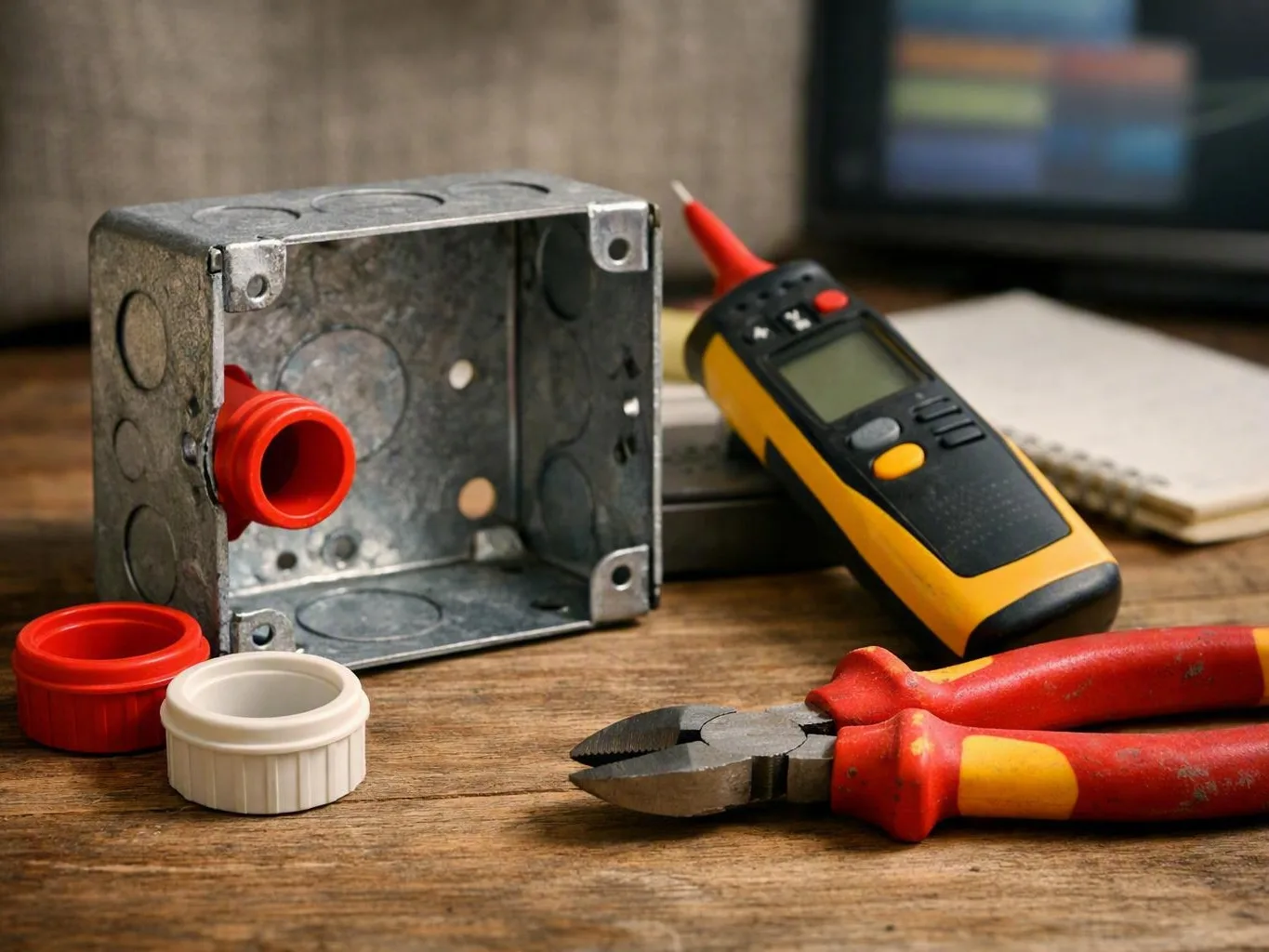
Resistance helps explain why a circuit may trip a circuit breaker, run a motor poorly, dim lights, or show signs of overheating. A short circuit has an unusually low-resistance path. This path can draw a large current. An open circuit has a broken path and prevents normal current flow. A loose connection can create a high-resistance point. It may not open the circuit completely.
Testing resistance supports fault finding. But one reading doesn't prove that wiring is safe. A conductor may pass a basic continuity test. It can still have damaged insulation, a weak connection, or a fault under load. Electricians may combine resistance tests with voltage, current, insulation, and visual checks. These tests help identify the actual condition.
When Resistance Matters Most?
Resistance becomes especially important during electrical wiring repair, equipment troubleshooting, and inspections after overheating or water exposure. It matters when a breaker trips repeatedly, an outlet feels warm, lights flicker, or a motor struggles to start. These symptoms can come from several causes. Testing must follow a safe sequence.
Resistance is also central to selecting wire gauge and estimating voltage drop on long runs. A conductor that's too small for the circuit length and load can waste energy. It can also develop unwanted heat. Before testing, turn off the supply, verify the absence of voltage, isolate the component when needed, and follow the meter manufacturer’s instructions.
How to Evaluate Resistance?
- Confirm that the resistance value is measured in ohms and matches the component manufacturer’s specification.
- Check for loose, corroded, discolored, or heat-damaged terminals near any high-resistance reading.
- Compare voltage drop under load with the expected circuit performance.
- Verify that the circuit is de-energized before connecting an ohmmeter.
- Ask whether insulation testing is needed when ordinary resistance testing shows no clear fault.
Related Concepts Compared
Resistance vs. Impedance
Impedance is the total opposition to alternating current. It includes resistance plus reactance from inductors and capacitors.
Resistance vs. Continuity
Continuity means a complete conductive path exists. A continuity beep does not show whether the path has an acceptable resistance under load.
Resistance vs. Voltage Drop
Voltage drop is the reduction in voltage along a conductor or connection. Resistance is one cause of that reduction.
Resistance vs. Electrical Grounding
Grounding connects electrical systems or equipment to earth or a grounding path. Grounding does not remove resistance from every circuit.
Expert Note
A resistance reading is meaningful only when the test points, circuit state, and expected component value are known. Parallel paths can produce a lower reading than the individual part, so isolate the component before making a final judgment.
Common Mistakes or Myths About Resistance
- Measuring resistance on an energized circuit.
- Treating a continuity beep as proof that wiring is safe.
- Ignoring heat or discoloration at a connection with increased resistance.
- Testing a component in circuit without accounting for parallel paths.
- Assuming every low-resistance reading indicates a short circuit.
Resistance in Practice: A Real-World Example
A 120-volt receptacle circuit has a loose terminal that adds resistance at the connection. A space heater may still operate, but the terminal can become hot under load. Inspection, de-energized resistance testing, and voltage-drop testing can help locate the problem.
Sources & Further Reading on Resistance
- OpenStax, College Physics, Resistance and Resistivity
- Occupational Safety and Health Administration, Electrical
Related Terms
Ohm's Law
Ohm's Law is the relationship between voltage, current, and resistance in an electrical circuit. The law…
Voltage Drop
Voltage Drop is the reduction in electrical pressure that occurs as current travels through a conductor…
Wire Gauge
Wire Gauge is a numerical system that describes the diameter of electrical wire conductors. In the…
Electrical Grounding
Electrical Grounding is a safety system that connects electrical equipment and circuits to the earth or…
Chris Miller Electric
Have Questions About Resistance?
Contact Chris Miller Electric for practical guidance on Resistance and related 24/7 emergency electricians work in Fort Wayne.