
What is a Lockout/Tagout?
Lockout/Tagout is a safety process that prevents machines, equipment, and electrical systems from releasing hazardous energy during service or maintenance. Authorized workers isolate energy sources, apply physical locks and warning tags, release stored energy, and verify zero energy before work begins. The process protects workers from shock, burns, crushing, movement, and unexpected startup.
Quick Facts About Lockout/Tagout
Category
Electrical and equipment safety procedure
Used for
Maintenance, repair, installation, and testing
Relevant standard
OSHA 29 CFR 1910.147
Common confusion
A warning tag alone is not a physical lock
Also called
LOTO, Energy control procedure
Often discussed with
Commercial Electrical Repairs, Electrical Code Corrections
Key Takeaways About Lockout/Tagout
- The process controls electrical, mechanical, hydraulic, pneumatic, thermal, and other hazard sources.
- A lock stops an isolation device from returning to service.
- A tag warns others but does not give the same physical restraint as a lock.
- Workers must release stored energy and check isolation before touching equipment.
- Each authorized worker usually applies and removes a personal lock.
Understanding Lockout/Tagout
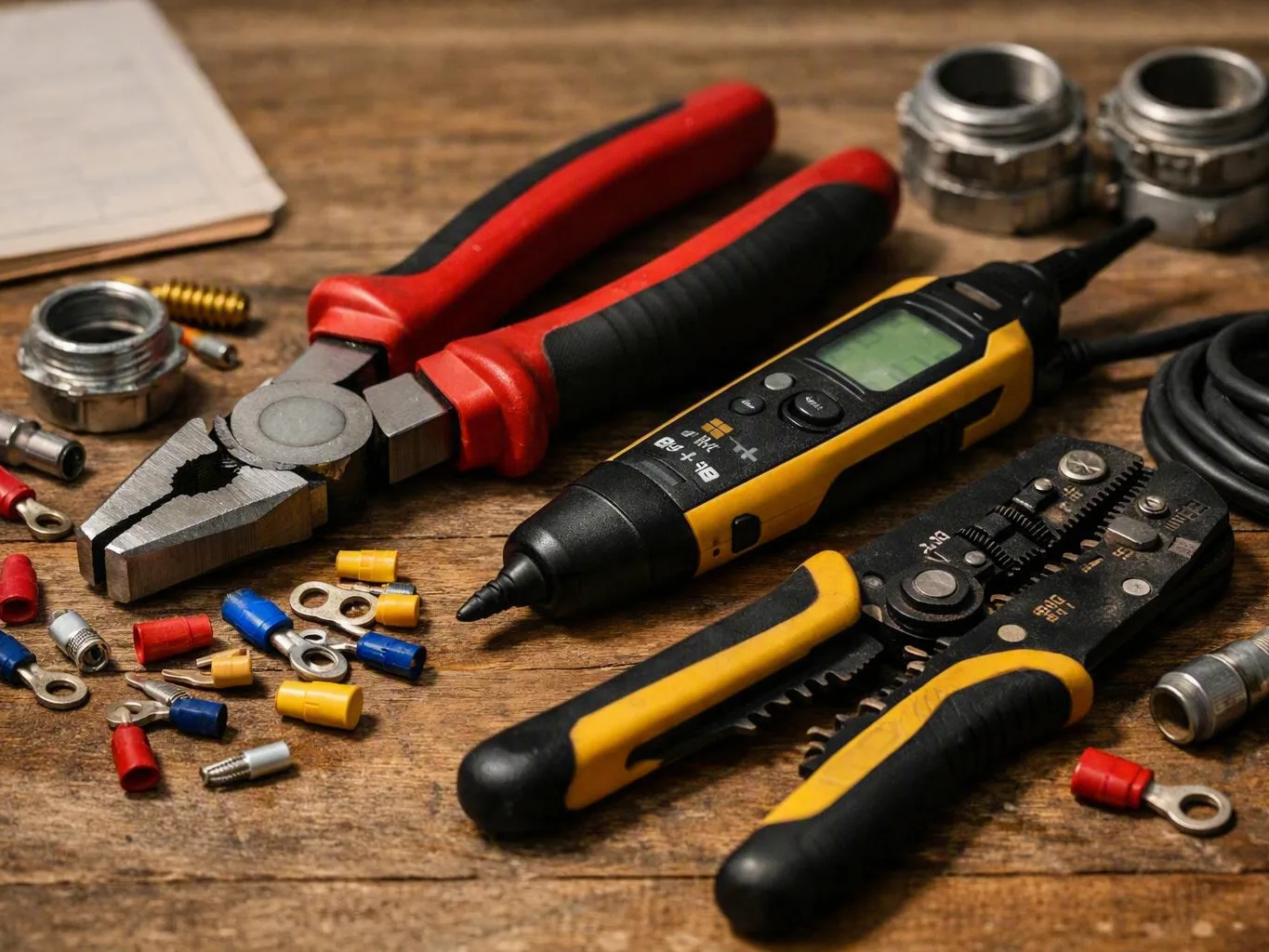
Lockout/Tagout is a controlled method for stopping hazardous energy during service work. Hazardous energy includes electricity, compressed air, hydraulic pressure, steam, gravity, heat, and stored mechanical force. A shutdown switch may stop normal operation. It may not remove every energy source that can injure a worker.
Related glossary terms: Electrical Grounding, Line Voltage, Overcurrent.
The process uses an energy isolation device, a personal lock, and an identification tag. The lock keeps a disconnect, valve, breaker, or similar device safe. The tag identifies the worker. It warns others not to operate the equipment. A tag without a physical lock offers limited protection. This applies unless a specific procedure and authorized exception apply.
How Lockout/Tagout Works, Is Measured, or Is Used?
A typical procedure begins with an energy review and a shutdown notice. An authorized worker turns off the equipment. The worker disconnects every known energy source. The worker applies a lock and tag. The worker releases or blocks stored energy. Stored energy may remain in capacitors, elevated parts, rotating assemblies, pressurized lines, or heated components.
Verification is the critical final check before work starts. The worker attempts a normal start from the controls. The worker tests electrical circuits with properly rated test equipment. The worker confirms that movement, pressure, voltage, and other hazards are absent. The worker then returns controls to the off position. After service ends, each worker removes their own lock. They check that tools are clear and guards are restored. They also check that people are outside the danger area.
Complex work may require a lock box, group locks, or a written energy control procedure. A qualified person should identify every isolation point. They should use drawings, labels, field inspection, and equipment instructions. The procedure is measured by its accuracy and verification. It isn't measured by the number of locks used. A missing energy source can leave a system dangerous. This can happen when the main disconnect appears open.
Why Lockout/Tagout Matters?

Unexpected energization can cause electric shock, arc flash burns, amputation, crushing injuries, or fatal contact with moving equipment. Normal controls don't always stop automatic cycles, remote commands, backfeed, or stored system energy. Lockout/Tagout creates a physical barrier between the worker and the energy source.
Effective procedures also improve maintenance decisions. They show which disconnects, breakers, valves, and blocking points control the equipment. Records, training, and periodic inspections help an employer find weak steps. They can find these steps before an incident occurs. OSHA requires covered employers to establish energy control procedures. Employers must train affected workers. They must inspect procedures at least annually.
When Lockout/Tagout Matters Most?
Lockout/Tagout matters whenever a worker must remove a guard or enter a danger zone. It also matters when workers reach into equipment or replace wiring. It applies when workers open an electrical enclosure or service a circuit. The circuit could start unexpectedly. It applies to planned maintenance and many urgent repairs. Time pressure doesn't remove the need to identify and isolate energy.
Extra care is needed during troubleshooting, generator work, transfer switch service, industrial panel repairs, and repairs involving multiple crews. Testing may require temporary energization under a controlled procedure. Workers must de-energize equipment before physical work resumes. For electrical tasks, the worker must also account for backfeed, alternate supplies, batteries, capacitors, and live circuits. These circuits may stay live after one disconnect opens.
How to Evaluate Lockout/Tagout?
- Does the written procedure identify every electrical and non-electrical energy source?
- Can each authorized worker apply a personal lock that remains under personal control?
- Does the verification step test for zero voltage, pressure, movement, and other stored energy?
- Are workers trained for their roles, and are procedures inspected at least annually where OSHA rules apply?
- Are group lockout, shift changes, and emergency removal of a personal lock clearly documented?
Related Concepts Compared
Lockout/Tagout vs. De-energization
De-energization turns equipment or a circuit off, but it does not by itself prove that the energy is isolated. Lockout/Tagout adds locks, tags, stored-energy control, and verification.
Lockout/Tagout vs. Electrical Safe Work Condition
An electrical safe work condition describes an electrically de-energized state that has been verified. Lockout/Tagout is the control process used to establish and maintain isolation during service.
Lockout/Tagout vs. Arc Flash Boundary
An arc flash boundary defines an approach limit around a possible arc flash hazard. Lockout/Tagout prevents energization, while the boundary manages exposure when energized work remains.
Lockout/Tagout vs. Tagout
Tagout places a warning label on an energy isolation device. Lockout uses a physical restraint, so Lockout/Tagout provides stronger protection when the device can accept a lock.
Expert Note
A voltage reading alone may not prove complete isolation. Electricians must consider backfeed, control circuits, stored charge, alternate supplies, and equipment movement. Test instruments must be checked before and after the test so a failed meter does not create false confidence.
Common Mistakes or Myths About Lockout/Tagout
- Treating a turned-off control switch as full energy isolation.
- Using a tag without a lock when the isolation device can accept a lock.
- Skipping the test step because the breaker or disconnect appears open.
- Overlooking stored energy, control voltage, capacitors, batteries, or generator backfeed.
- Removing another worker's personal lock without following a documented emergency procedure.
Lockout/Tagout in Practice: A Real-World Example
An electrician must replace a motor starter in a commercial mechanical room. They lock feeder, isolate control, check backfeed, release energy, verify zero voltage, then open enclosure. Each worker applies a personal lock and removes it after leaving the hazard area.
Sources & Further Reading on Lockout/Tagout
Related Terms
Electrical Grounding
Electrical Grounding is a safety system that connects electrical equipment and circuits to the earth or…
Line Voltage
Line Voltage is the electrical potential supplied by a power source to a circuit, equipment, or…
Overcurrent
Overcurrent is an electrical condition in which current exceeds the safe rating of a conductor, circuit…
Transfer Switch
Transfer Switch is an electrical device that moves selected circuits between a normal utility supply and…
Chris Miller Electric
Have Questions About Lockout/Tagout?
Contact Chris Miller Electric for practical guidance on Lockout/Tagout and related 24/7 emergency electricians work in Fort Wayne.