
What is a Busbar?
Busbar is a rigid metal conductor that distributes electrical power within switchboards, panelboards, switchgear, and other equipment. Copper or aluminum busbars carry high current through a compact path, often replacing several individual wires. Insulation, spacing, supports, and overcurrent protection help control heat, faults, and accidental contact.
Quick Facts About Busbar
Category
Electrical power distribution component
Used for
Distributing current inside panels and switchgear
Common confusion
A busbar is not simply a bare wire
Main risk
Overheating, arcing, or fault current damage
Also called
Bus bar, Electrical bus
Often discussed with
Electrical Panel Repair, Emergency Electrical Panel Upgrade
Key Takeaways About Busbar
- Busbars send current between incoming supplies, breakers, switches, and outgoing circuits.
- Copper and aluminum are the most common busbar materials.
- The busbar rating must match current, voltage, temperature, and fault conditions.
- Loose connections or damaged insulation can cause heat, arcing, and fire hazards.
- Busbars are not the same as neutral or grounding conductors in every installation.
Understanding Busbar
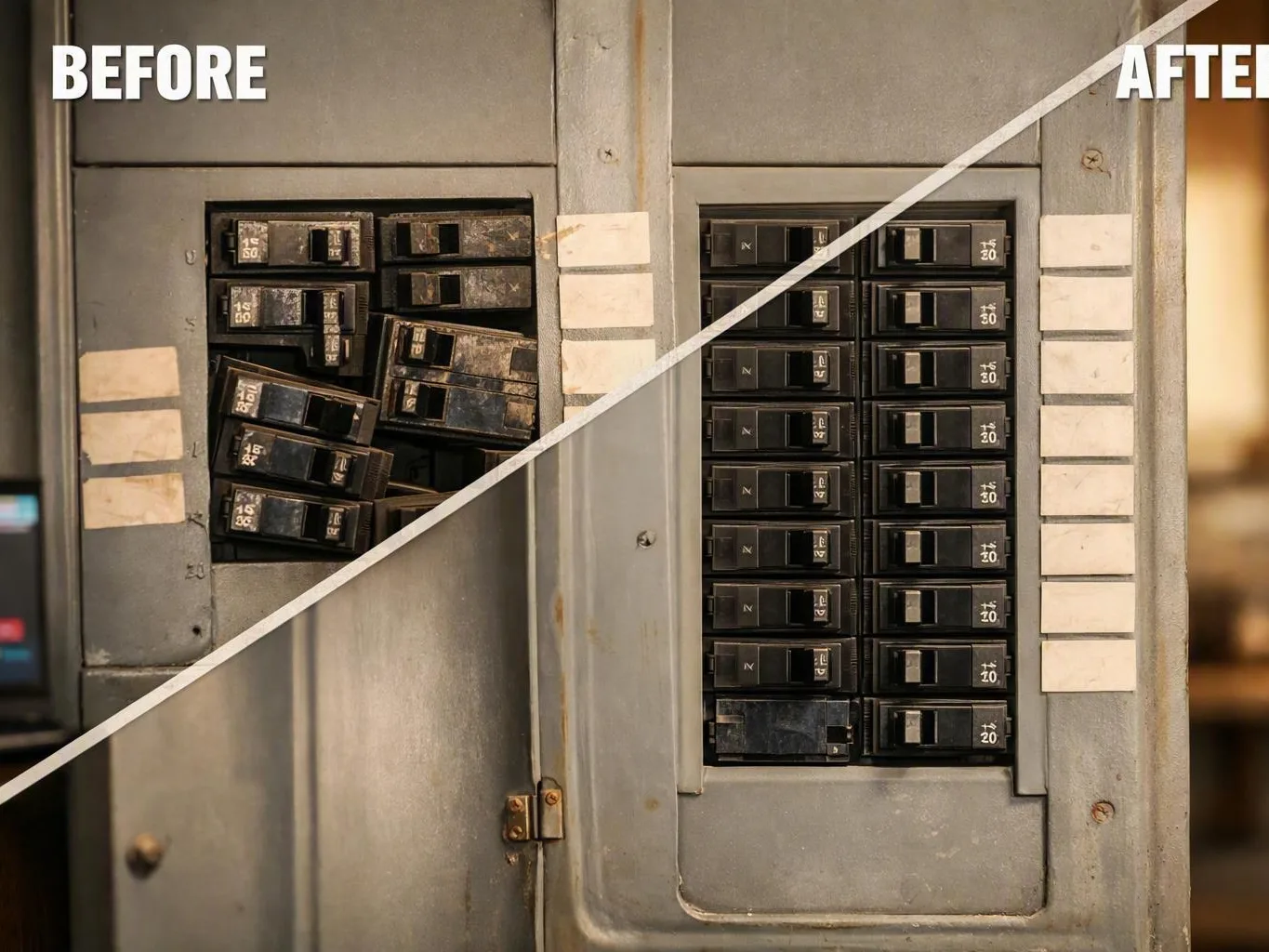
Busbar is a solid or shaped metal conductor. It carries current between power system parts. Equipment makers install busbars inside panelboards, switchboards, switchgear, motor control centers, and busway systems. The conductor usually uses copper or aluminum. Insulation or barriers protect people from energized parts.
Related glossary terms: Electrical Service, Overcurrent, National Electrical Code.
A busbar normally follows a fixed route inside equipment. A flexible cable does not. Its wide, flat shape provides more surface area. This shape helps with current and heat transfer. A round conductor has the same cross-sectional area. A complete design also includes insulators, mechanical supports, clearances, connection hardware, and enclosures. These parts keep the assembly stable during normal use and short circuits.
How Busbar Works, Is Measured, or Is Used?
A busbar receives power from an incoming feeder or service connection. It then sends power to branch breakers, disconnects, or other loads. In a panelboard, a breaker clips or bolts onto a bus assembly. The breaker then receives voltage without a separate feeder conductor. This applies to every position. The bus may have separate phases, a neutral bar, or a grounding bar. The equipment design determines the arrangement.
Engineers select a busbar by checking its ampere rating, system voltage, material, dimensions, and temperature rise. They also check the available fault current. The ampere rating shows the continuous current the assembly can carry. This rating applies under stated conditions. Connections need correct torque, contact area, and matching metals. A loose or poorly matched joint can create resistance and heat. Equipment markings and maker instructions control the final installation.
Busbars appear in several forms. A panel bus sits inside a distribution panel. A busway uses a protected bus system. It can distribute power through a building or industrial space. Flexible laminated busbars use thin bonded layers. They suit compact connections with limited movement. Each form needs listed components, correct spacing, and proper protection. The protection must suit its voltage and fault exposure.
Why Busbar Matters?
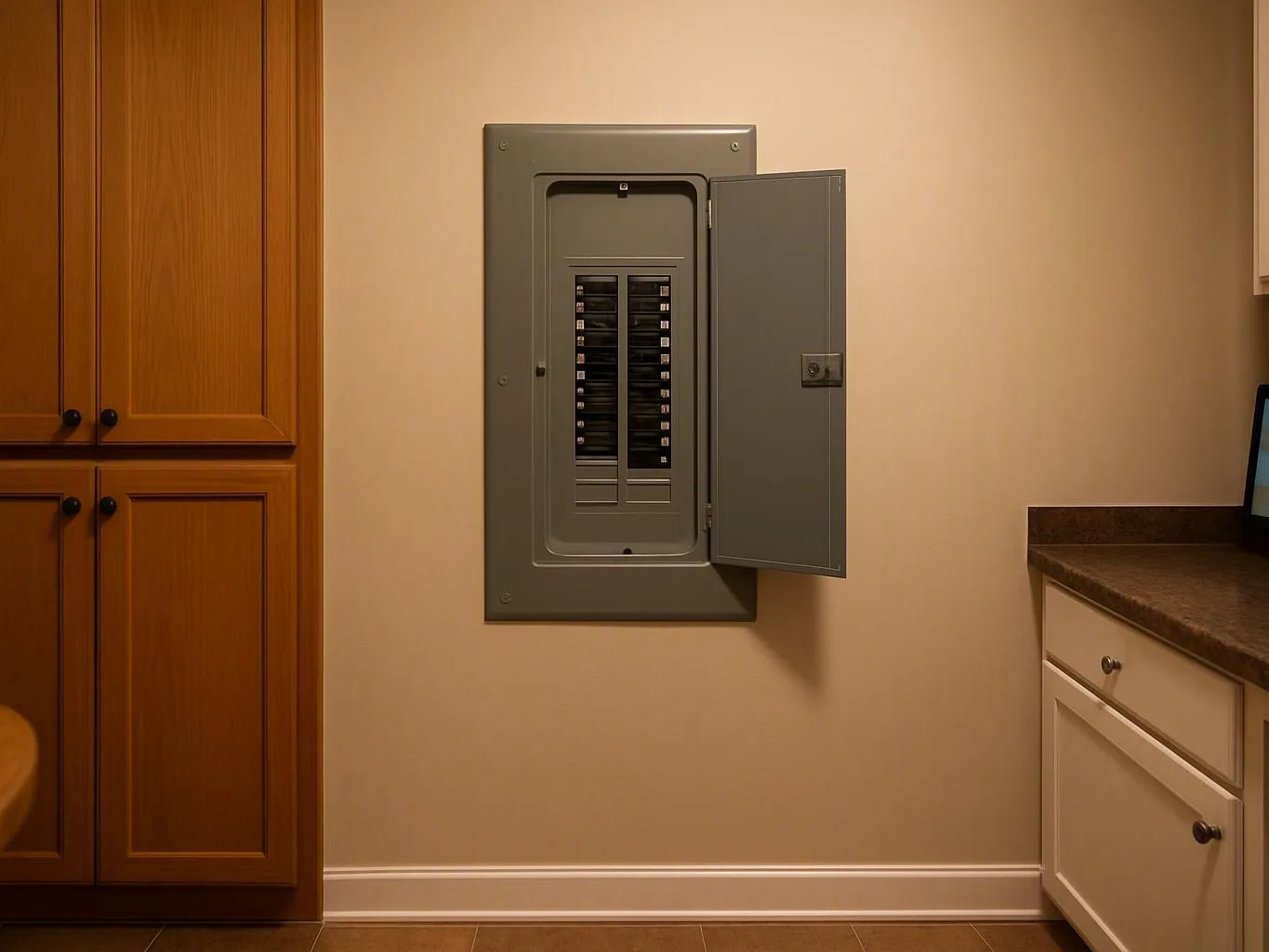
The busbar affects how much power equipment can safely distribute. It also affects how well equipment handles a fault. An undersized conductor can overheat during a steady load. Poor spacing can let an arc jump between phases. A short circuit can create strong magnetic forces. These forces can push conductors apart. Supports must match the equipment's fault rating.
Condition matters during inspection and repair. Discoloration, melted insulation, pitting, corrosion, and a burning odor can show trouble. Repeated breaker trips can also signal overheating or arcing. These problems may appear near a bus connection. A technician may need to de-energize the equipment. They must verify that no voltage remains. They must inspect contact surfaces and check the assembly listing. Then they can decide if repair or replacement is safe.
When Busbar Matters Most?
Busbars become important during a panel upgrade, service change, or generator connection. They also matter during large equipment installation or commercial load increases. New demand may exceed the panel bus rating. This can happen even when a spare breaker position looks available. A load calculation, equipment label review, and fault-current check help. These checks show whether the assembly can accept the change.
Emergency conditions require extra caution. A damaged bus may remain energized after one branch breaker is turned off. Warning signs include panel heat, crackling sounds, smoke, and visible arcing. A breaker that won't reset can also signal danger. Stop using affected equipment when safe. Keep clear of exposed electrical parts. Arrange qualified electrical testing before re-energization.
How to Evaluate Busbar?
- Check the busbar ampere and voltage ratings against the panel or switchgear nameplate.
- Confirm that the available fault current does not exceed the equipment short-circuit rating.
- Look for discoloration, melted barriers, pitting, corrosion, loose hardware, or burned insulation.
- Verify that conductor connections follow the manufacturer torque values and approved materials.
- Confirm phase, neutral, and grounding bars are identified and isolated as the equipment design requires.
Related Concepts Compared
Busbar vs. Wire
A wire is usually flexible and insulated for routing between terminals. A busbar is usually rigid and shaped for organized, high-current distribution inside equipment.
Busbar vs. Neutral Bar
A neutral bar is a specific bar connected to the grounded circuit conductor. A busbar is a broader term that can describe phase, neutral, or grounding conductors within an assembly.
Busbar vs. Grounding Bar
A grounding bar connects equipment grounding conductors and bonds metal parts to the grounding system. A power busbar normally distributes current to energized circuits.
Busbar vs. Busway
Busway is an enclosed distribution system that contains busbars and allows power to travel along a building or work area. A busbar is the conductor inside that system or inside other electrical equipment.
Expert Note
A busbar can look intact while a connection underneath has loosened or overheated. Inspection should include the termination, insulation barriers, support hardware, and equipment rating, not only the visible metal surface.
Common Mistakes or Myths About Busbar
- Assuming an empty breaker position means the busbar has enough capacity for another circuit.
- Treating visible corrosion or discoloration as harmless cosmetic damage.
- Mixing copper and aluminum connections without approved hardware or preparation.
- Working near an exposed busbar after switching off only one branch breaker.
- Replacing a damaged bus assembly without matching its voltage and fault ratings.
Busbar in Practice: A Real-World Example
A commercial panel has a 400-ampere busbar assembly that supplies several breakers. A loose feeder connection overheats, so technicians find darkened metal and melted insulation near one phase. They de-energize the panel, find damaged parts, and check the replacement assembly matches original ratings.
Sources & Further Reading on Busbar
- National Fire Protection Association, NFPA 70 National Electrical Code
- Occupational Safety and Health Administration, Electrical Safety
- National Electrical Manufacturers Association, Busways
Related Terms
Electrical Service
Electrical Service is the complete system that delivers electric power from a utility source to a…
Overcurrent
Overcurrent is an electrical condition in which current exceeds the safe rating of a conductor, circuit…
National Electrical Code
National Electrical Code is a widely adopted set of safety rules for electrical design, installation, inspection…
Wire Gauge
Wire Gauge is a numerical system that describes the diameter of electrical wire conductors. In the…
Chris Miller Electric
Have Questions About Busbar?
Contact Chris Miller Electric for practical guidance on Busbar and related 24/7 emergency electricians work in Fort Wayne.