What Buzzing and Crackling Sounds Mean in Your Electrical System
Buzzing or crackling electrical outlet panel sounds often signal a loose connection, overload, arcing, damaged wire, or failing part. A soft transformer hum may be normal. Sizzling, popping, burning smells, heat, flickering lights, smoke, or dark marks show a safety risk. Turn off the affected circuit if it's safe. Stay away from damaged equipment. Then contact a qualified electrician. Never remove a panel cover or test an outlet yourself. An electrician can find the source and make the needed repair.
Get a Free Estimate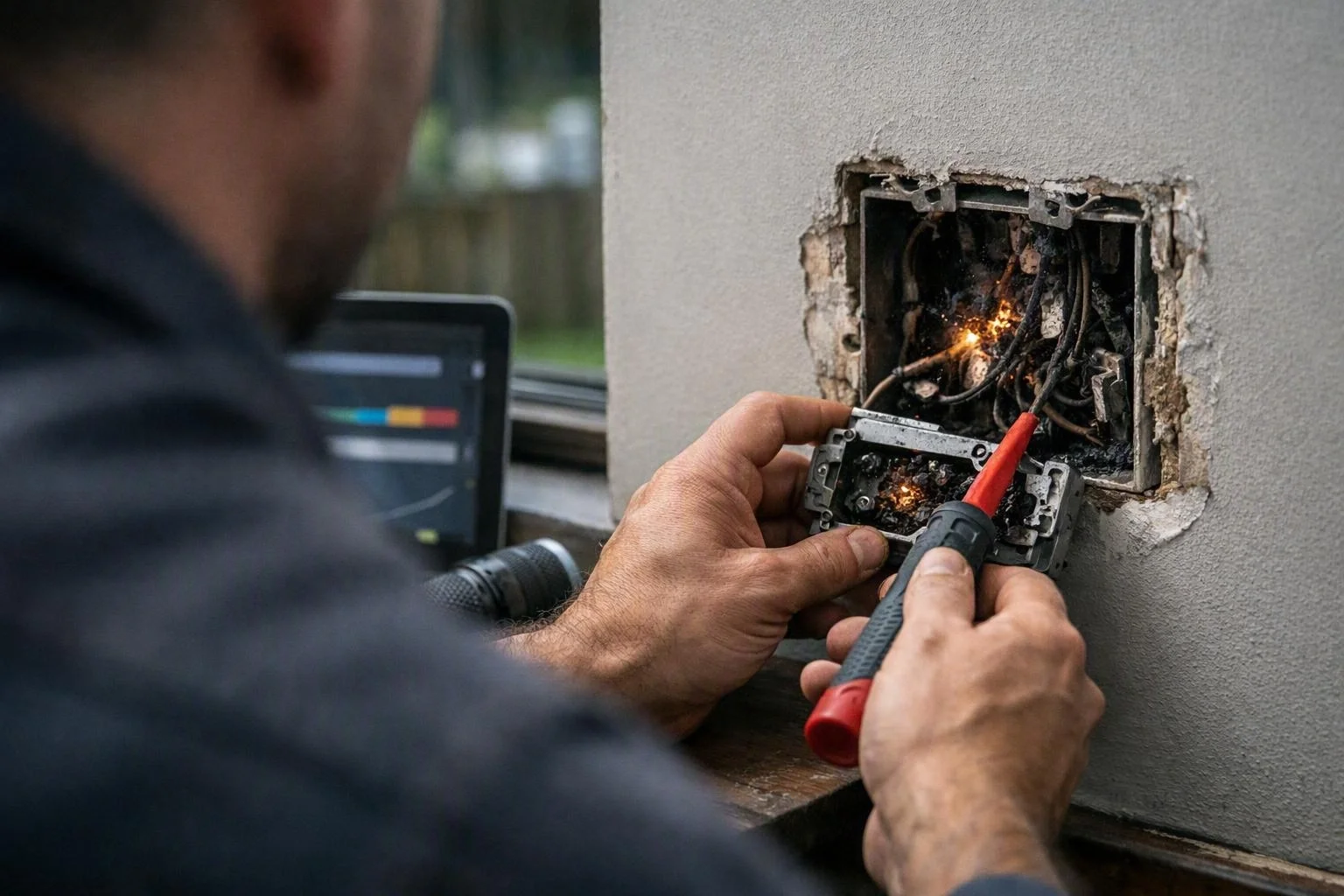
Electrical sounds are warning signs. Don't test them with homemade tools. Chris Miller Electric helps homeowners, renters, landlords, and property managers choose the right next step.
What Do Buzzing or Crackling Electrical Sounds Mean?
Electrical buzzing or crackling usually means current is moving through a loose connection, damaged part, overloaded circuit, or electrical arc. The sound may come from an outlet, switch, light, wire, or panel. Arcing creates heat and fire risk. Unusual noise needs prompt attention.
Some electrical noise is soft and steady. A transformer may make a faint hum during normal use. Sharp popping, sizzling, or changing sounds are different.
Electrical arcing happens when electricity jumps across a gap. It should flow through a safe path instead. Arcing can damage insulation, terminals, and nearby materials.
A loose connection may vibrate as current flows. The sound may change when the circuit load changes. Listen for the source, but don't touch or remove anything.
Note when the noise starts. It may happen when an appliance runs, a light turns on, or a breaker works. These details help an electrician find the problem safely.
Electrical safety matters in rental homes and shared buildings. Renters should stop using the equipment and tell the landlord. Owners and managers should arrange service quickly.
Why Is My Electrical Panel Buzzing?
An electrical panel may buzz when a breaker, connection, bus bar, or live part vibrates. A faint, steady hum may come from a transformer. Loud or changing noise can show an overload, loose wire, or electrical arc.
A circuit breaker may buzz when its parts wear out. It may also buzz under too much current. A poor bus bar connection can cause heat and vibration. The problem may grow when several large appliances run.
Common panel warning signs include the following:
Don't remove the panel cover. Some parts can stay live after the main breaker is off. An electrician can test the circuit and inspect its connections. They can also check the load and find the right repair.
Most diagnostic visits take about 30 to 90 minutes. Access and fault location can change that time. Repairs may take longer when wires or several parts are damaged.
Why Is My Outlet Making a Buzzing or Crackling Sound?
An electrical outlet may buzz or crackle when its wires, terminals, or device lack a safe connection. Causes include a loose wire, worn outlet, damaged plug, overload, or arcing behind the wall. Stop using the outlet. Arrange an inspection instead.
Use this safety response when a receptacle makes noise:
A backstab connection can loosen over time. This may happen faster with frequent use. A worn outlet may not hold a plug firmly. A damaged cord can also make noise at the connection.
A GFCI outlet may click or trip during a fault. Repeated unusual sounds still need expert care. Moisture, poor grounding, and overloads can raise the risk.
Our team can find the source. The issue may stay in the outlet or reach its wiring. It may also involve the whole circuit. Electrical Panel Repair in Fort Wayne may be needed when the panel caused the fault.
What Causes Buzzing Lights or Switches?
Buzzing lights or switches often have an incompatible LED bulb, worn switch, loose connection, or damaged part. A dimmer may buzz when it doesn't match the bulb. Replacing the bulb may stop a mild hum. Crackling, heat, or flickering points to a larger fault.
A loose neutral wire can make a light act in strange ways. The sound may come from a ballast, transformer, socket, or switch contact. Turn off the circuit if it's safe. Leave the device alone until it's checked.
Our electricians can inspect the fixture or repair the light switch. They can also fix damaged wiring. Renters should report the issue to the landlord. Landlords and property managers should treat repeated noise as a safety problem.
Is a Sizzling Electrical Sound Dangerous?
A sizzling electrical sound can be dangerous. It often points to arcing, overheating, or a failing connection. Treat sizzling, popping, smoke, burning smells, heat, dark marks, or flickering as warning signs. Move away and don't touch the equipment.
Watch for these signs of a possible electrical fire risk:
Leave the building during an active fire or spreading smoke. Call emergency services from a safe place. Never use water on an electrical fire.
If there's no fire, keep people away from warm or noisy equipment. Request urgent electrical service. Renters should contact the landlord after reaching safety.
Landlords and property managers should secure the area. They should then send a qualified electrician. Homeowners shouldn't open the panel or replace parts.
Arcing can continue inside a wall. The sound may stop while the danger remains.
What Should I Do When an Electrical System Starts Making Noise?
When an electrical system starts making noise, stop using the affected outlet, switch, light, or appliance. Look for warning signs without opening anything. Turn off the breaker only if it's safe. Call an emergency electrician for smoke, fire, severe heat, sparks, or worsening panel noise.
Our team isolates the affected circuit. We test equipment with proper tools. We check the panel, outlet, switch, fixture, and wiring as needed.
The repair may need a new outlet or breaker service. It may also need a loose terminal repair or hidden wire work.
We find the cause instead of guessing from the sound. People may search for 24/7 Emergency Electricians when a panel gets loud at night. Emergency help is needed when danger signs appear.
A quiet hum without heat, smell, flicker, or damage usually needs a repair visit soon. Watch it from a safe distance. Never open live equipment or use a tool inside it.
How Can You Prevent Buzzing and Crackling Electrical Problems?
Preventive electrical maintenance can lower the risk of buzzing and crackling. Avoid overloaded circuits. Replace damaged cords and outlets. Use matching bulbs and dimmers. Keep moisture away from electrical devices.
Persistent noise still needs a professional check. Maintenance can't fix hidden arcing or unsafe wiring.
Use these practical prevention steps:
Don't use extension cords as permanent wiring. Don't use power strips to fix an overload. A new outlet won't help if its wiring is damaged.
Homeowners can schedule checks for older or remodeled homes. They should also call after warning signs appear. Renters should report problems in writing and avoid the equipment.
Landlords and property managers should record the complaint. They should limit unsafe use and arrange service quickly.
Questions About 24/7 Emergency Electricians
Why Is My Electrical Panel Buzzing?
A panel may buzz because of a loose terminal, overloaded circuit, bad breaker, bus bar fault, or transformer hum. Loud or changing noise, heat, burning smells, dark marks, flickering lights, or repeated trips need prompt inspection. Don't remove the panel cover.
Why Is My Outlet Making a Buzzing or Crackling Sound?
An outlet may make noise because of a loose connection, worn receptacle, damaged plug, backstab connection, overload, moisture, or arcing. Stop using it. Turn off the circuit only if safe. Arrange Outlet Repair or an inspection by a qualified electrician.
Is a Sizzling Electrical Sound Dangerous?
Yes. Sizzling can signal arcing, overheating, or a bad connection. Move away and don't touch the equipment. Call emergency services for smoke, fire, sparks, or immediate danger. Otherwise, keep the area unused and request urgent service.
What Causes Buzzing Lights or Switches?
Common causes include an incompatible LED bulb, bad dimmer, worn switch, loose neutral wire, damaged fixture, or failing part. A mild hum may come from bulb fit. Crackling, heat, smell, or flickering needs professional light switch or fixture service.
Should I Call an Emergency Electrician for a Buzzing Panel?
Call an emergency electrician when panel buzzing comes with smoke, sparks, severe heat, burning smells, dark marks, fire, or worsening noise. A faint steady hum without warning signs usually needs a planned inspection. Never open or test the panel yourself.
Our team can help find unsafe equipment. We can explain repair options for panels, outlets, switches, fixtures, and wiring. Contact us to arrange a safe electrical inspection.
Contact our electrical teamRelated Resources
How Much Does an Emergency Electrician Cost in Fort Wayne?
emergency electrician cost Fort Wayne IN
What It CostsCircuit Breaker and Fuse Replacement: What It Costs and How It Works
circuit breaker replacement cost emergency electrician
What It CostsCommercial Emergency Electrical Repairs: Cost, Response, and Process
commercial emergency electrical repair cost Fort Wayne
Compared ToEmergency Electrician vs. Regular Electrician: Which Service Do You Need?
emergency electrician vs regular electrician