How to Handle Outlet and Light Switch Safety Problems
Outlet and light switch safety starts with spotting danger early. Turn off power when needed. Choose repair or replacement based on the damage. Sparks, burning smells, heat, buzzing, loose parts, and dark marks need quick attention. A GFCI outlet that won't reset may have a wiring fault, overload, or failed device. Stop using unsafe equipment. Call a qualified electrician when testing can't find the cause.
Get a Free EstimateWhy Is My Outlet Sparking, Hot, or Discolored?
Electrical outlet sparks, heat, or dark marks can signal arcing, overheating, loose connections, overloads, or damaged wires. Stop using the outlet. Unplug equipment only if it's safe. Turn off the breaker when needed. An electrician should inspect the outlet before repair or replacement.
A tiny spark can happen when you remove a working appliance's plug. A bright flash means something else, so does repeated sparking, crackling, or sparking inside the receptacle. Current may be jumping across a gap. This is called electrical arcing. It creates strong heat and can damage the cover or wires.
Heat often starts at a loose terminal or plug connection. An overloaded circuit can also heat an outlet. Several large appliances may share that circuit. Burn marks, melted plastic, brown spots, or a burning smell need action. Stop using the device. Don't cover the mark and keep using it.
Room use also matters. Kitchen outlets may handle heavy appliance loads. Bathroom, laundry, garage, and outdoor outlets may face moisture. Children and pets may pull cords or touch broken covers. Our team provides Outlet Repair in Fort Wayne for safe, repairable faults. Hidden damage may need replacement or electrical wiring work.
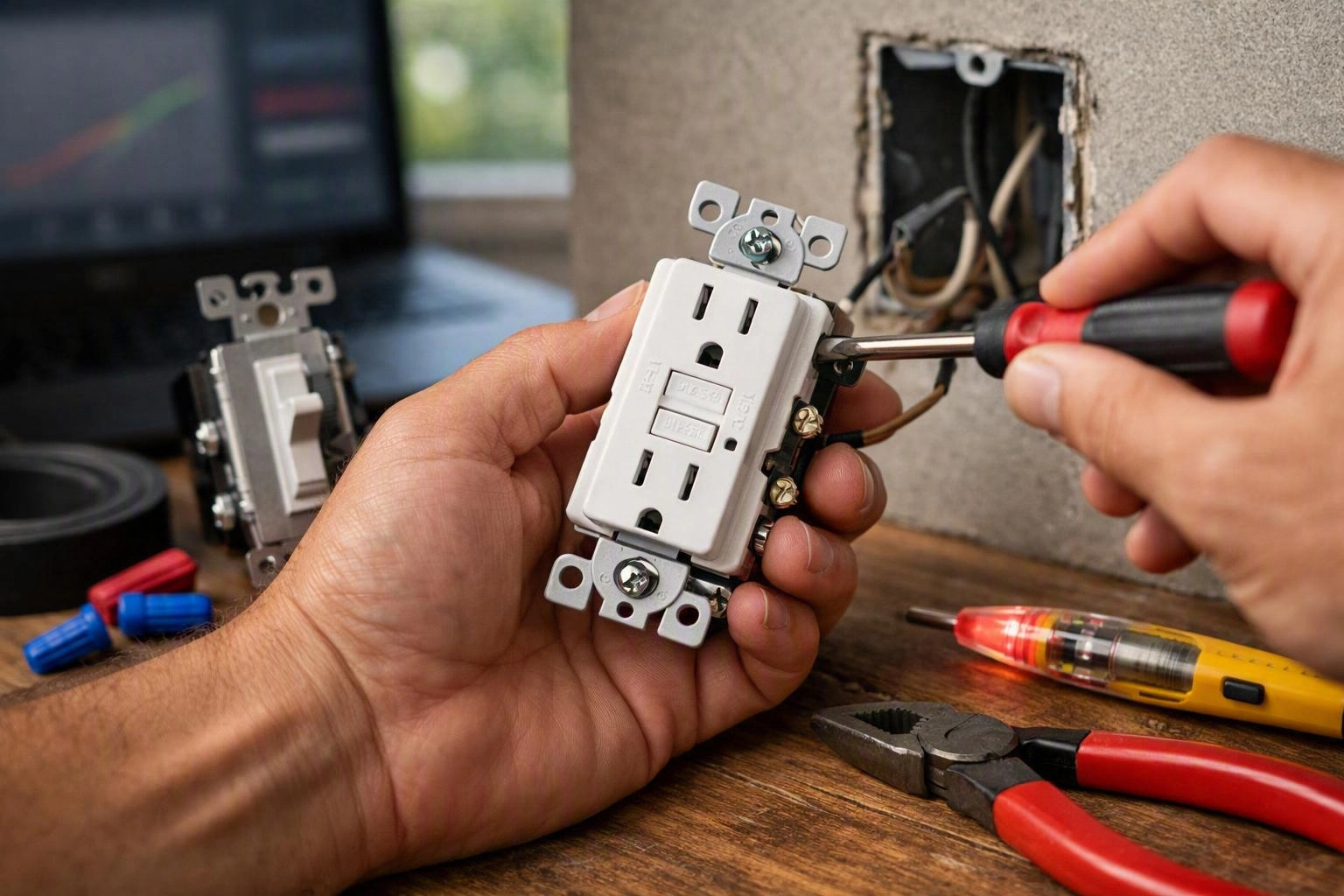
Basic device service often takes 30 to 90 minutes. This estimate assumes easy wire access and no larger fault. Older systems can take longer. Crowded boxes and repeated breaker trips can also add time.
Should a Hot Outlet or Buzzing Light Switch Be Replaced?
A hot electrical outlet or buzzing light switch should be turned off and checked. Heat and noise can signal loose wiring, arcing, or a failing device. Replacement often makes sense when parts are burned, cracked, loose, or worn.
A warm cover isn't always an emergency. Still, you shouldn't ignore it. A hot electrical outlet may have a weak plug connection or loose terminal. It may also have a damaged receptacle or overloaded appliance. Turn off the breaker if the outlet smells burned, smokes, melts, or feels very hot.
A buzzing light switch may have worn contacts or a loose wire. An incompatible dimmer can also cause noise, so can a load that's too large. Turn off power before opening the box. Never touch exposed wires. Don't keep resetting a breaker that trips after buzzing starts.
Replacement is safer when switch contacts are damaged or an outlet face is cracked. It also helps when a device won't hold a plug. A loose or damaged electrical box needs attention too. Our crews first look for the cause. We check the breaker, appliance load, and nearby connections. A new device can't fix bad wiring.
Room needs also guide the choice. A tamper-resistant receptacle can help protect children. A weather-resistant device may fit a damp or outdoor spot. Light switch replacement often beats repair when the switch sticks, feels loose, or stays noisy.
When Should an Outlet Be Repaired or Replaced?
An outlet should be repaired when a safe device has a correctable wiring or terminal problem. Replacement is better when the outlet is cracked, burned, loose, worn, or damaged. It may also need replacement if it can't hold plugs securely.
Outlet Repair may include tightening a terminal screw or fixing a loose connection. It may also include restoring a ground wire. The receptacle must still be safe and undamaged. Damaged insulation or heat marks need a wider check before power returns.
Outlet Replacement is common for cracked or burned receptacles. It also fits loose faces, worn contacts, or devices that won't grip plugs. A new outlet may be needed for a GFCI outlet, tamper-resistant receptacle, or weather-resistant model. The device must match the circuit and room.
We check the terminals, ground, wire size, box, and electrical code needs. Missing mounting screws may cause a simple problem. A loose box may need added support. Don't force a plug into a worn outlet. Don't use an adapter to hide a grounding problem.
Access can affect the repair choice. Older systems may have brittle insulation or crowded boxes. They may also have shared circuits or hidden junctions. If safe testing can't confirm the cause, leave the circuit off. A qualified electrician should finish the diagnosis.
Why Will My GFCI Outlet Not Reset?
A GFCI outlet may not reset because it has no power or senses a ground fault. A downstream device may also have a fault. Loose wiring, reversed wiring, overloads, or device failure can stop reset. Unplug appliances and press reset firmly. Check the breaker. If reset still fails, arrange GFCI repair or installation.
A GFCI outlet helps prevent shocks. It compares power moving through the hot and neutral wires. The device trips when power takes an unsafe path. That path could include a person, water, or damaged wiring. GFCI protection helps in kitchens, bathrooms, garages, and outdoor areas.
First, unplug appliances and extension cords. Include nearby outlets protected by the GFCI. Press the test button. Then press reset firmly. Check the breaker if reset won't stay in. Stop if there's moisture, smoke, burning odor, or visible damage.
Some GFCI devices protect outlets farther along the circuit. A fault there can make the first outlet seem broken. Reversed polarity or loose neutral wiring can also block reset, so can a missing ground, overload, water, or internal failure.
GFCI outlet repair or installation includes wiring checks. It also includes testing the test and reset buttons. Our team doesn't treat every failed reset as a simple swap. The cause may involve the device, wiring, appliance, or breaker.
Why Homeowners Need Safer Outlets and Switches?
Safe outlets and switches help prevent shocks, fires, and lost circuit protection. Quick service matters in homes with children, pets, old wiring, or damp rooms. It also matters with heavy appliances, loose outlets, or repeated trips.
Busy rooms need close checks. Repeated use can wear outlets and switches. Moisture creates another risk. Old wiring may lack proper grounding or enough capacity. These details guide the choice between repair, replacement, and safer devices.
What Should You Look for in Outlet and Switch Service?
Good outlet and switch service starts with finding the cause. It doesn't just replace the visible device. Service should include circuit tests, GFCI checks, wiring checks, and secure connections. It should also include the right device and clear safety advice.
Ask if the work includes the box, ground wire, neutral wire, and nearby devices. A good diagnosis should explain the failure. It should also explain signs that need more service. We can discuss Outlet Replacement, outlet repairs, GFCI outlet installation, GFCI outlet repair, light switch repair, or light switch replacement.
24/7 Emergency Electricians may help with smoke, active arcing, or a strong burning odor. They can also help after losing safe power. Keep people away from the area. Use the breaker to isolate the hazard when safe.
How an Electrician Diagnoses an Unsafe Outlet or Switch?
An electrician first makes the circuit safe. Next, they identify the device and test voltage and grounding. They inspect the wires and box. They also check nearby loads and safety devices. These findings guide outlet repair, outlet replacement, GFCI service, or light switch replacement.
Testing should match the symptom. Continuity testing happens only on a dead circuit. Voltage testing shows if power is present. It also shows if power follows the right path. Load checks can find an overloaded circuit.
Older homes may have crowded boxes or hidden wires. They may also have shared neutrals or damaged insulation. These problems make guessing unsafe. The breaker helps isolate power. It doesn't prove every wire is safe. Testing must confirm that.
Common Challenges with Outlet, Switch, and GFCI Problems
Outlet, switch, and GFCI problems can be hard to find. Symptoms may come and go. Several devices may share one circuit. Hidden wires can add trouble. A downstream fault may cause repeated trips. Safe testing works better than repeated resets or guessing.
Shared neutral wiring can cause odd GFCI behavior. This may happen after circuit changes. Hidden wires may need tracing from another box or outlet. Intermittent power also needs attention. A loose connection can heat up before the breaker trips.
Stop checking the circuit when power can't be confirmed. Stop when the cause is unclear. Don't handle live wires. Safe residential electrical services fix the cause. They don't just restore power for a short time.
Questions About 24/7 Emergency Electricians
Why Is My Outlet Sparking?
An outlet may spark when a plug is removed under load. It may also have arcing, loose connections, damaged wires, or an overload. Stop using it. Unplug equipment only if safe. Turn off the breaker for heat, smoke, burning smells, or repeated sparks.
Should a Hot Electrical Outlet Be Replaced?
A hot electrical outlet should be turned off and inspected. Replacement often helps when it's cracked, burned, loose, worn, or damaged. The electrician should check the plug, wires, box, appliance load, and breaker. This helps find the true cause.
Why Will My GFCI Outlet Not Reset?
A downstream outlet may have a fault. Loose or reversed neutral wires can also cause trouble. Unplug devices and check the breaker. If reset still fails, arrange professional testing.
When Should an Outlet Be Repaired or Replaced?
An outlet may be repaired when a safe receptacle has a fixable wire or terminal problem. Replacement is better when it's cracked, burned, loose, worn, or unable to hold plugs. The room, box, and electrical code also affect the choice.
Why Is My Light Switch Hot or Buzzing?
A light switch may buzz or feel hot because of worn contacts, arcing, loose wires, or an incompatible dimmer. An oversized load can also cause it. Turn off the breaker and stop using the switch. Professional testing can find the needed repair.
Chris Miller Electric helps find problems with receptacles, switches, and GFCI devices. We explain when repair, replacement, or wider wiring work makes sense. We also test the circuit before returning it to use.
For a safety assessment, contact our team through our contact page.
Related Resources
How Much Does an Emergency Electrician Cost in Fort Wayne?
emergency electrician cost Fort Wayne IN
Compared ToOutlet Repair vs. Replacement: Costs, Safety, and What to Expect
outlet repair vs replacement cost electrician
What It SolvesWhat It Means When an Electrical Outlet Sparks
sparking electrical outlet
What It SolvesWhat Buzzing and Crackling Sounds Mean in Your Electrical System
buzzing or crackling electrical outlet panel