What It Means When an Electrical Outlet Sparks
A sparking electrical outlet may have loose wiring, damage, or an overload. It may also have a short circuit. A brief spark can happen when a plug makes contact. Repeated, loud, blue, or yellow sparks need quick attention. Burning smells, heat, or smoke also signal danger. Stop using the outlet. Turn off its circuit breaker if it’s safe. Stay away from smoke or heat. Never remove the cover or repair live wiring. An electrician can check the outlet and wiring. The repair may need one outlet or the wider circuit.
Get a Free Estimate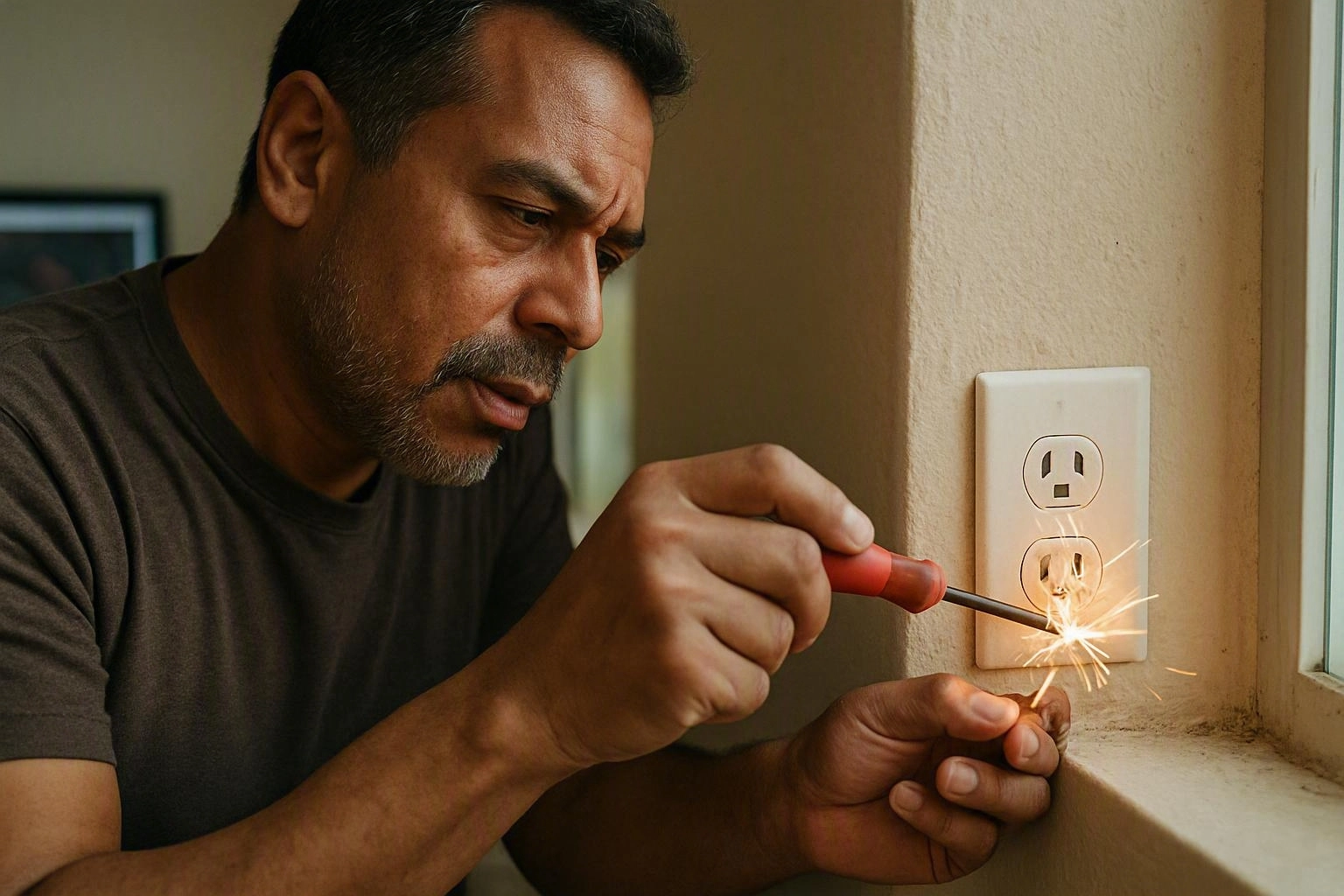
What Does a Sparking Electrical Outlet Look and Sound Like?
A sparking electrical outlet may flash, snap, or crackle. It may also feel hot or smell burnt. Smoke and dark marks are serious warning signs. A loose plug, melted plastic, or buzzing also needs care.
These signs can show the level of risk. They can’t prove the exact cause. A quick flash may happen as a plug enters. An arc inside a damaged outlet is more serious. Watch from a safe distance. Don’t touch the outlet to check its heat.
Some appliances make sparks easier to notice. Older homes may have worn contacts or wiring. Moist rooms also need extra care. These include kitchens, bathrooms, and garages.
Why Is My Outlet Sparking When I Plug Something In?
An outlet can spark when a plug enters. Electricity may jump across the small gap. This can happen before the plug makes full contact. Large or repeated sparks may show a fault. Worn contacts, loose wires, overloads, and bad appliances can cause it.
A small spark is more common with motor appliances. These include fans, vacuums, and refrigerators. Motors draw extra power when they start. A plug may also carry power as it enters.
Concern rises when the spark is large, blue, yellow, or loud. Heat and burning smells also need quick action. A worn outlet may not grip the plug well. Poor contact creates heat. Loose wires behind the outlet can cause the same signs.
Don’t test the outlet with more devices. Unplug the appliance and stop using that outlet. Note if the breaker trips. If the same appliance sparks elsewhere, it may need service. If many devices spark there, the outlet may have a fault.
Our team checks the contacts, wires, grounding, and circuit load. We also check breaker action. A usual inspection takes about 30 to 90 minutes. Time may vary with access and damage.
What Common Problems Cause an Electrical Outlet to Spark?
Worn contacts, loose wires, and damaged conductors can cause sparks, so can overloads, short circuits, moisture, and bad appliances. A spark shows a symptom. It doesn’t show one exact cause. Repeated arcing needs power shutoff and professional testing.
Some faults sit inside the outlet. Others hide in the box or circuit. Homeowners should only look, listen, and stop using the outlet. A trained electrician should repair live wiring.
Older homes need added care. Insulation, grounding, and wire methods may have aged. Tools and appliances can add heavy loads in garages and kitchens.GFCI outlet can trip when it finds current leakage. It doesn’t make visible arcing safe.
Is a Sparking Outlet Dangerous?
A sparking outlet can cause shock, fire, or wiring damage. A tiny spark may happen during plug-in. Heat, smoke, odors, noise, and dark marks show a fault. Repeated sparks and breaker trips also need prompt help.
An arc fault happens when current jumps across an unwanted gap. That jump creates heat. The heat can damage insulation and nearby parts. A breaker may stop some shorts and overloads. It may miss small arcs that happen on and off.
Grounding gives fault current a safer path. Missing or damaged grounding raises shock risk. Don’t assume the outlet is safe after the sparks stop. The fault may still hide behind the cover.
Keep paper, curtains, and furniture away from a hot outlet. Leave the home if you see flames or heavy smoke. Call emergency services first. Then arrange electrical work.
Our electricians test the outlet and circuit protection. We check grounding and nearby devices. We explain the results and safe next steps. You won’t need to guess about live wiring.
What Should I Do if an Outlet Sparks Without Anything Plugged In?
An empty outlet that sparks may have an active electrical fault. Keep people away. Don’t touch the outlet or remove its cover. Turn off the breaker only if it’s safe. Leave the area if you see smoke, heat, flames, or smell burning.
Follow these steps in order. Don’t stand in water or touch a wet panel. Don’t work near exposed wires. If you can’t find the right breaker, leave the outlet alone.
A breaker may trip from an overload or short circuit. It may also trip from an arc-fault condition. Don’t keep resetting it. Repeated resets can worsen hidden damage.
24/7 Emergency Electricians may help during smoke, flames, or severe heat. They may also help after an urgent loss of safe power. Our team can isolate the circuit and test the outlet. We’ll find out if one outlet or more wiring needs repair.
When Does a Sparking Outlet Need Repair or Replacement?
A sparking outlet needs repair or replacement when it’s hot, loose, cracked, or melted. Dark marks, buzzing, and repeated arcs also need attention. Damaged wire ends may need repair. The fault may reach the box, cable, or circuit.
Replacing the outlet may not fix everything. An electrician checks its rating, mounting, grounding, and wires. We also check the box and circuit. Damaged insulation or heat damage must be fixed first.
Some places need a tamper-resistant receptacle. This can help protect children. Bathrooms, kitchens, garages, laundry rooms, and outdoor areas may need GFCI protection. The right choice depends on the location and circuit.
Safe observation means noting sounds, odors, marks, and breaker trips. It also means noting recent water exposure. Don’t remove the cover or tighten screws. Don’t replace the outlet while power may still be on. Our crews can recommend outlet repair, outlet replacement, or wiring repair.
Can a Sparking Electrical Outlet Cause a Fire?
A sparking electrical outlet can cause a fire. Arcing and overloads can create enough heat to ignite nearby materials. Risk rises with smoke, warmth, dark marks, melted plastic, or burning smells. Stop using the outlet. Turn off power when safe. Have the circuit checked before use.
A fire may start inside the box or behind the cover. It may also start at a damaged plug. Heat can move through walls and insulation. A breaker may trip during a short. Small repeated arcs can still damage parts.
An arc fault circuit interrupter can add protection. It can detect some harmful arc patterns. It can’t replace good wiring or quick repairs. Never install a larger breaker to stop trips. That can overheat the wires.
Stop using an outlet at the first warning sign. Don’t chain power strips together. Don’t cover cords or use warm outlets. Evacuate if you see fire or active smoke. Call emergency services. Never use water on a live electrical fire.
How Can You Prevent Outlet Sparking?
You can lower the risk of outlet sparks. Don’t overload power strips. Replace damaged plugs and outlets. Keep electricity away from water. Insert plugs fully. Arrange an inspection for repeat problems.
Use the right GFCI protection in wet areas. Never force a loose plug into an outlet. Poor contact creates heat and arcing. Good habits help, but they can’t fix hidden wiring faults.
Insert plugs fully. Pull them out by the plug body, not the cord. Don’t use grounding adapters. Don’t force loose plugs to stay in place. If an outlet keeps arcing, our team provides Sparking Outlet Repair in Fort Wayne. We’ll inspect and repair it safely.
Questions About 24/7 Emergency Electricians
Why Is My Outlet Sparking When I Plug Something In?
A brief spark can happen when plug blades meet outlet contacts. Motor appliances may cause this spark more often. A large, loud, blue, or repeated spark may show a fault. Worn contacts, loose wires, overloads, or bad appliances can cause it. Stop using the outlet and arrange an inspection.
Is a Sparking Outlet Dangerous?
It can be dangerous. Ongoing arcing may cause shock, wiring damage, or fire. Heat, smoke, burning smells, dark marks, buzzing, and melted plastic are warning signs. Repeated sparks and breaker trips also need help. Stay clear and call a qualified electrician.
What Should I Do if an Outlet Sparks Without Anything Plugged In?
Treat it as an active electrical fault. Keep people away and don’t touch the cover. Turn off the breaker only if the panel and floor are dry. Leave if you see smoke, flames, heat, or a burning smell. Contact emergency services.
When Does a Sparking Outlet Need Replacement?
Replacement may be needed when an outlet is cracked, loose, hot, or discolored. Melting, buzzing, and repeated arcing also require attention. An electrician should inspect the wires, grounding, box, circuit load, and breaker. Wiring damage may need more than outlet replacement.
Can a Sparking Outlet Cause a Fire?
Yes. Arcing and heat can ignite nearby materials. Risk rises when an outlet is warm, dark, melted, smoky, or smells burnt. Stop using it and turn off power when safe. Have the circuit inspected. Never use water on a live electrical fire.
Get Safe Outlet Repair and Electrical Diagnosis
A sparking electrical receptacle needs a check before normal use resumes. Our team inspects the outlet, wiring, grounding, circuit load, and breaker. We also check for moisture. Then we explain if you need Outlet Repair, outlet replacement, or wider electrical work.
For safe next steps, contact Chris Miller Electric through our service team. We can find the fault and plan the right repair. You won’t need to work on live wiring.
Related Resources
How Much Does an Emergency Electrician Cost in Fort Wayne?
emergency electrician cost Fort Wayne IN
What It CostsCircuit Breaker and Fuse Replacement: What It Costs and How It Works
circuit breaker replacement cost emergency electrician
Compared ToEmergency Electrician vs. Regular Electrician: Which Service Do You Need?
emergency electrician vs regular electrician
Compared ToOutlet Repair vs. Replacement: Costs, Safety, and What to Expect
outlet repair vs replacement cost electrician