
What Is a Wire Nut?
A wire nut is a twist-on connector that joins compatible electrical conductors inside an electrical box or enclosure. Its internal spring grips the stripped wire ends as the connector turns onto them. Wire nuts come in different sizes and colors, so the connector must match the wire combination and conductor capacity.
Quick Facts About Wire Nut
Category
Twist-on wire connector
Used for
Joining electrical conductors
Common confusion
Often confused with terminal blocks
Also called
Wire connector, Twist-on wire connector
Often discussed with
Electrical Wiring Repair
Key Takeaways About Wire Nut
- Its spring creates mechanical grip and electrical contact.
- The connector must match the wire group.
- A wire nut is not the same as a terminal block.
How Wire Nut Works
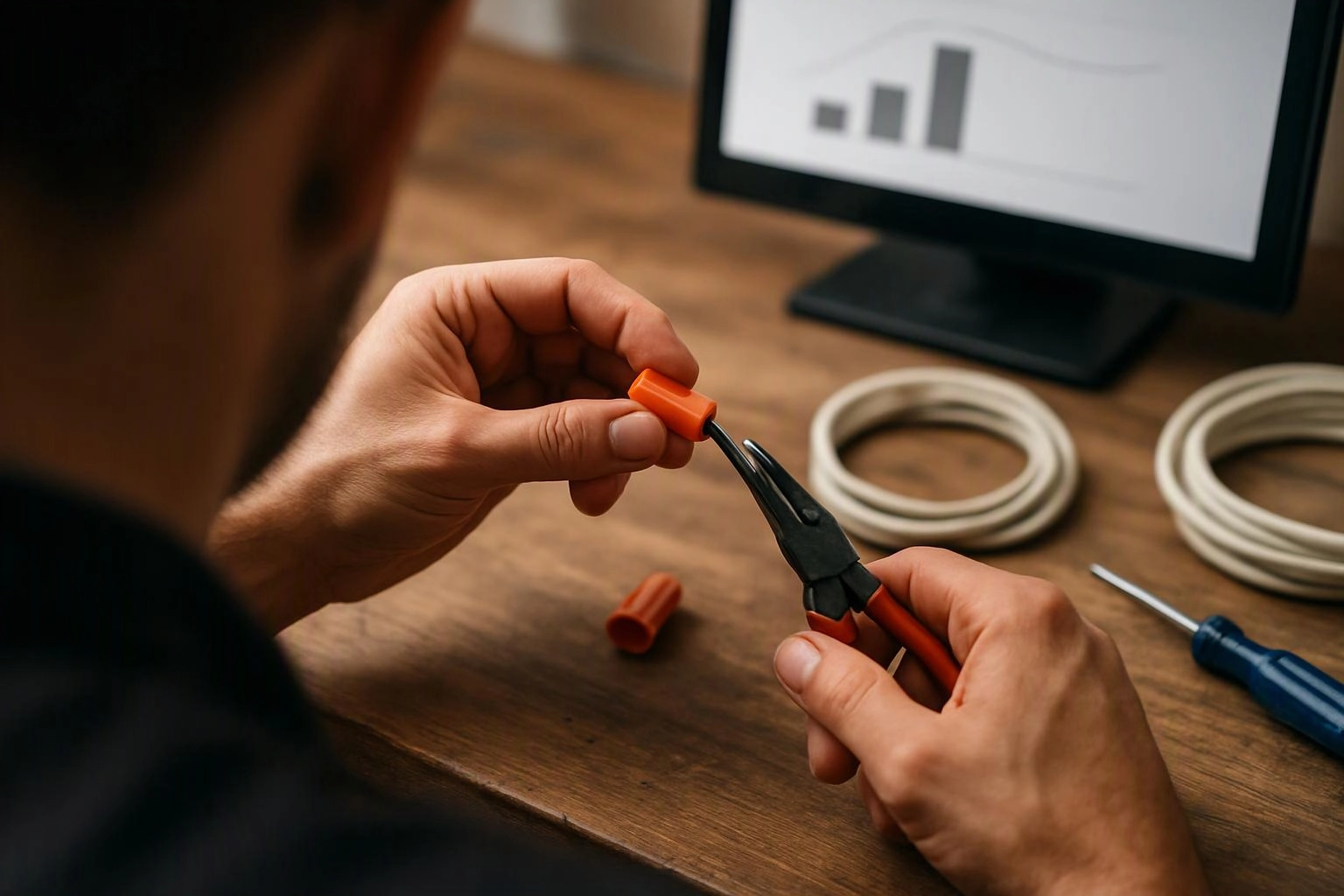
A wire nut joins conductors through a threaded insulating shell and an internal spring. An electrician strips the conductor ends, aligns the wires, and twists the connector over the group. The spring presses against the conductors, while the shell covers the connection and helps prevent accidental contact.
Related glossary terms: Branch Circuit, Electrical Box, Neutral Wire.
Wire nuts are selected by the wire type, conductor size, and number of wires in the connection. A connector that is too small may not grip the conductors securely. A connector that is too large may not hold the group firmly. The finished connection should keep the conductors together without exposed copper extending beyond the connector.
Terminal blocks use screws or clamps to secure wires at a fixed point. Wire nuts are more common for spliced conductors inside an electrical box, while terminal blocks suit organized connection points in equipment and control systems.
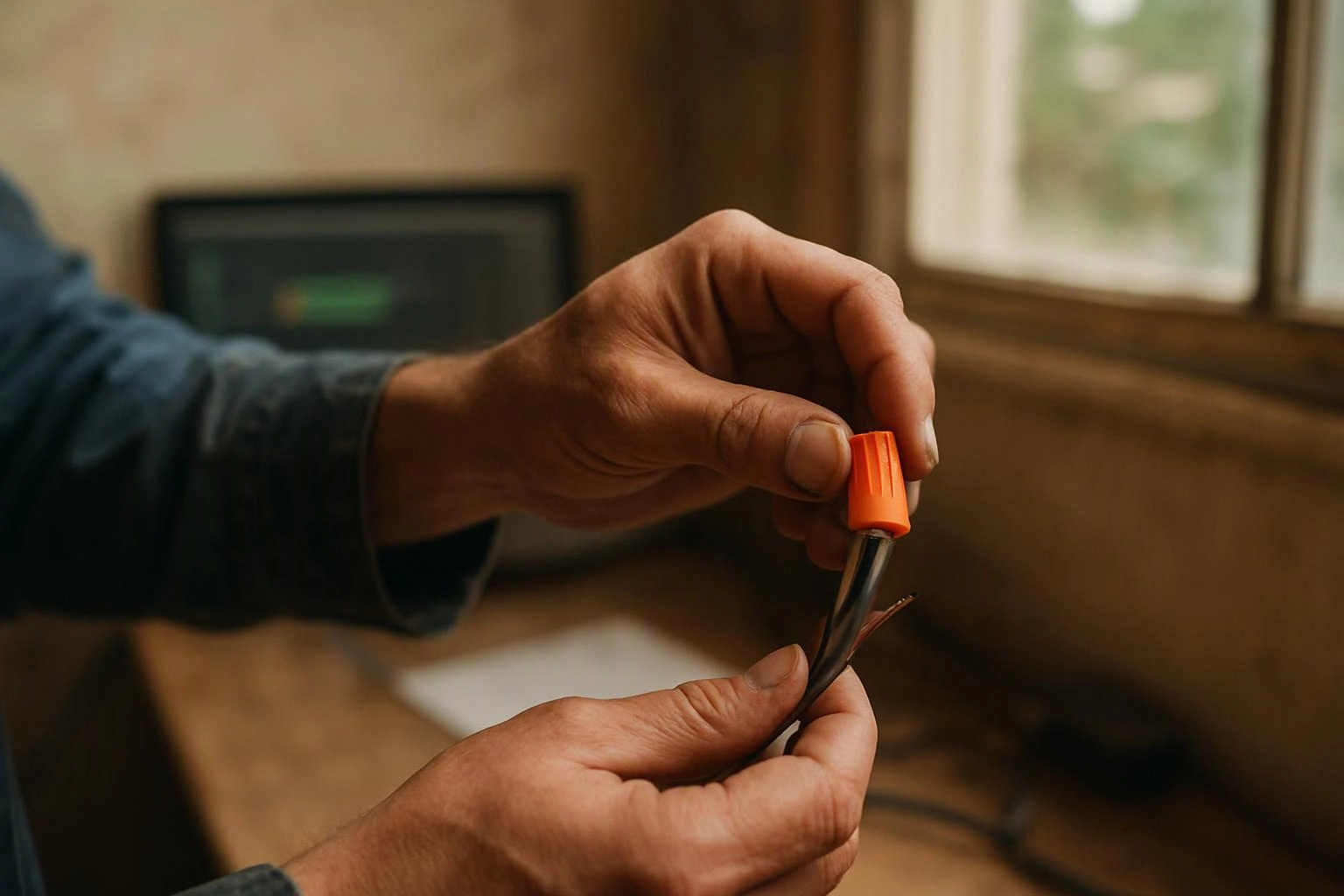
From the Chris Miller Electric team
When we inspect a wire nut, we check that the conductors are compatible, evenly aligned, and fully captured by the connector. We also look for loose wires, exposed copper, heat damage, and signs that the connection has been disturbed. Our team corrects the connection as part of Electrical Wiring Repair when needed.
Wire Nut in Practice: A Real-World Example
A ceiling light circuit may need a wire nut to join the incoming hot conductor to the fixture lead inside the electrical box. The connector must fit the wire group securely, with no loose conductor outside the shell.
Related Services
Related Terms
Branch Circuit
A branch circuit is the wiring path that carries power from a load center to outlets…
Electrical Box
An electrical box is an enclosure that protects wire connections and supports devices such as switches…
Neutral Wire
A Neutral Wire is a current-carrying conductor that completes the electrical path from a connected load…
Terminal Block
A Terminal Block is an insulated electrical connector that joins wires to a common connection point…
Chris Miller Electric
Have Questions About Wire Nut?
Contact Chris Miller Electric for practical guidance on Wire Nut and related 24 hour electrician work in Fort Wayne.