What Is An Ohm?
Ohm is the unit used to express electrical resistance, which describes how strongly a material or component opposes current flow. The symbol is Ω. A higher resistance allows less current under the same voltage, while a lower resistance allows more current. Electricians use ohms when testing wires, heating elements, motors, and other circuit parts.
Quick Facts About Ohm
Category
Electrical measurement unit
Used for
Measuring resistance
Common confusion
Resistance is not current
Also called
Ω, unit of resistance
Often discussed with
Electrical Troubleshooting
Key Takeaways About Ohm
- An ohm measures resistance, not current or voltage.
- Resistance readings help identify damaged wires and components.
- Ohms are often confused with amps and volts.
How Ohm Works
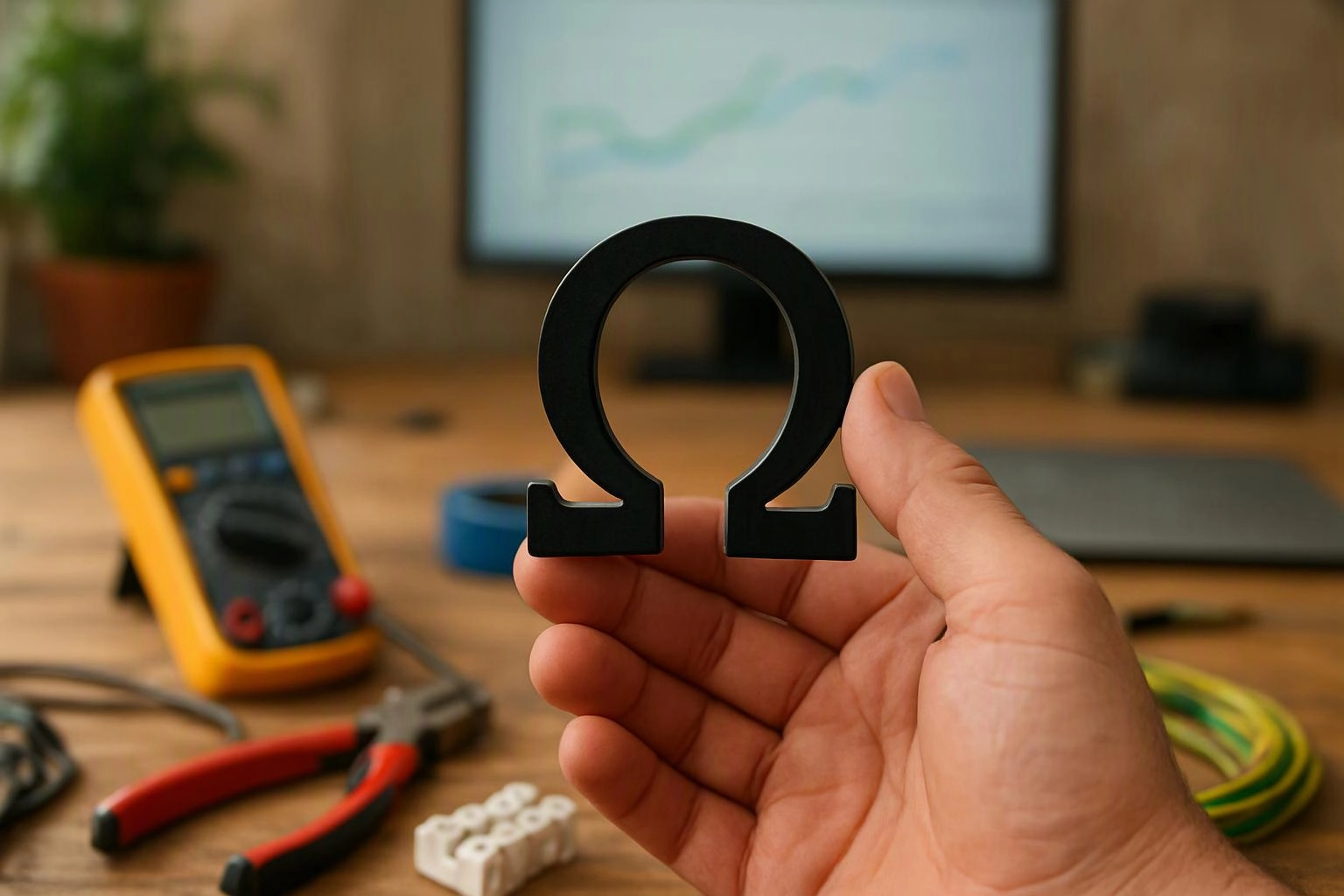
Ohm describes the resistance that a circuit material or component presents to electrical current. A meter applies a small test signal and reads how strongly the circuit opposes that signal. The result helps an electrician assess whether a conductor or component behaves as expected.
Related glossary terms: Current, Voltage, Continuity.
Resistance depends on the path being tested and the condition of the part. A continuous wire usually shows very little resistance, while a heating element shows a designed resistance. A damaged connection can produce an unexpected reading, which gives troubleshooting a useful clue. Ohm's law connects resistance with voltage and current, so electricians can compare related measurements during a diagnosis.
From the Chris Miller Electric team
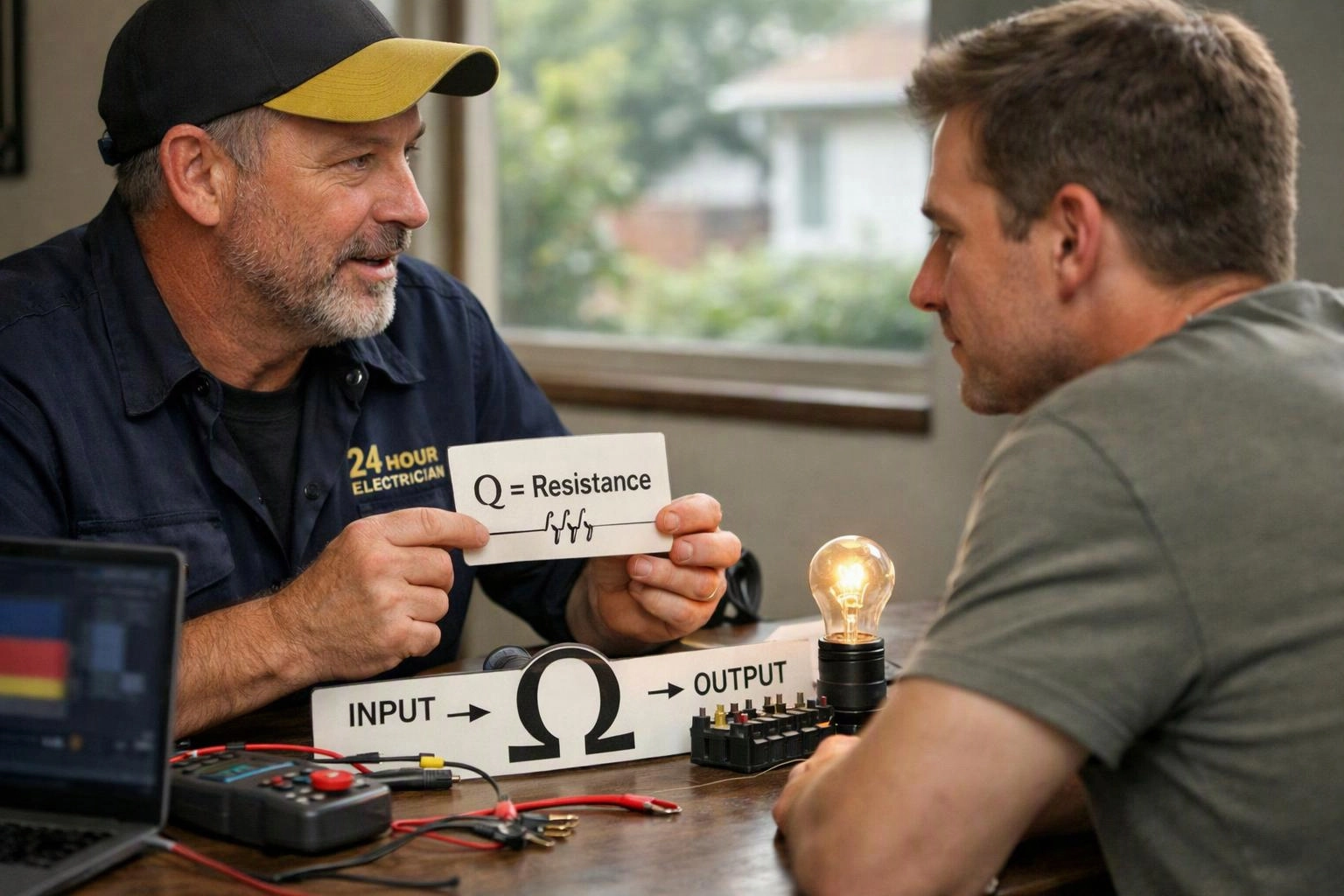
When we troubleshoot a circuit, we isolate the part being tested and check resistance with the power off. We compare the reading with the component's expected behavior and inspect connections when the result points to an open path or an unwanted path.
Ohm in Practice: A Real-World Example
A bathroom exhaust fan that will not run may have a motor winding with an abnormal resistance reading. During electrical troubleshooting, an electrician can test the winding and its connections to help separate a motor problem from a supply problem.
Related Services
Related Terms
Current
Current is the movement of electric charge through a conductor, such as a wire or cable…
Voltage
Voltage is the electrical pressure that drives current through a circuit. It describes the difference in…
Continuity
Continuity is an unbroken electrical path that allows current to move between two points in a…
Short Circuit
A short circuit is an unintended electrical path with very low resistance between conductors at different…
Chris Miller Electric
Have Questions About Ohm?
Contact Chris Miller Electric for practical guidance on Ohm and related 24 hour electrician work in Fort Wayne.