
What Is Bonding?
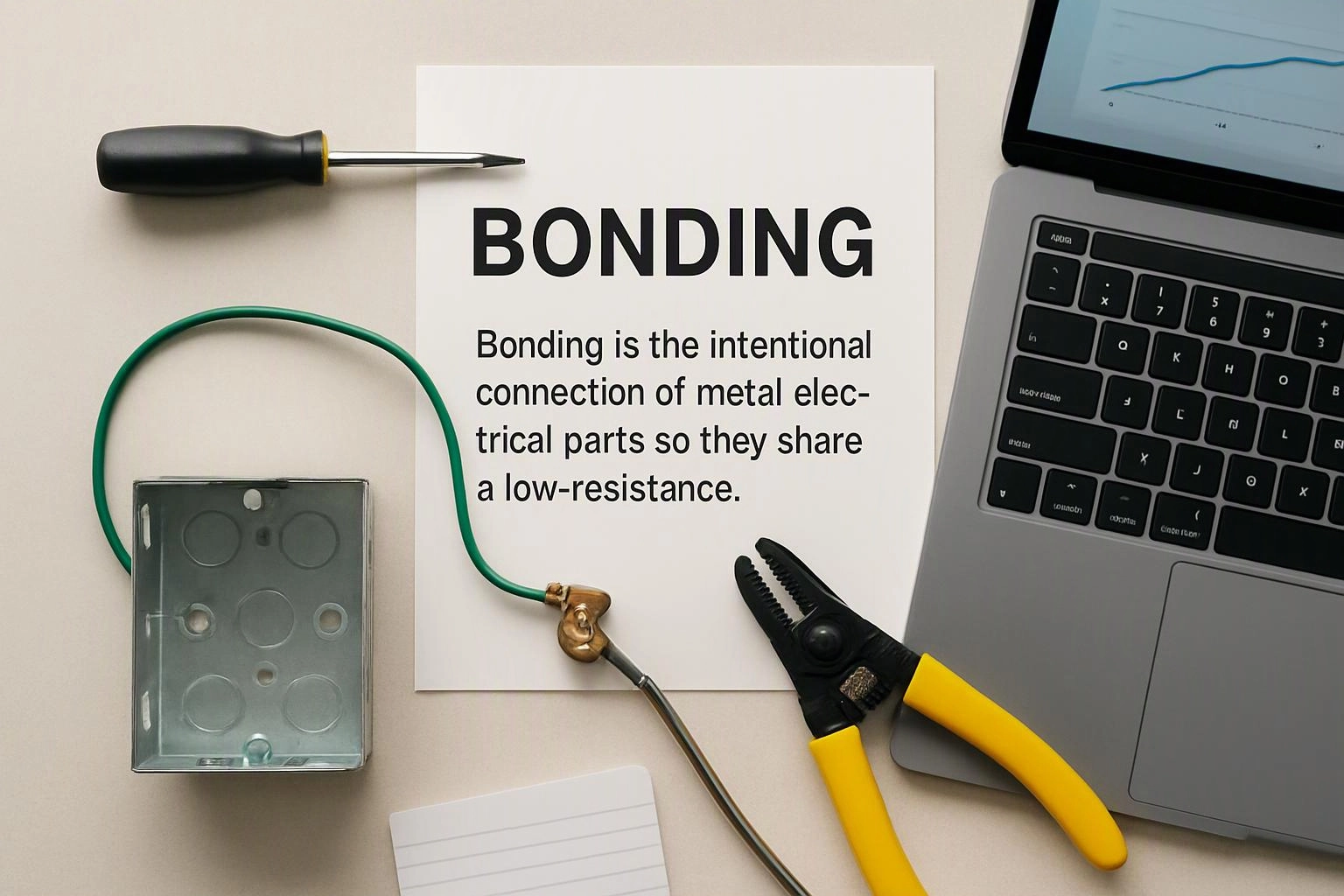
Bonding is the intentional connection of metal electrical parts so they share a low-resistance path for fault current. This connection may join equipment enclosures, metal raceways, grounding conductors, and other conductive parts. Bonding helps protective devices respond when energized wiring contacts metal that should not carry normal current.
Quick Facts About Bonding
Category
Electrical safety connection
Used for
Fault-current paths
Common confusion
Same as grounding
Also called
Bonding jumper, Equipment bonding
Often discussed with
Electrical Code Correction
Key Takeaways About Bonding
- Bonding connects conductive metal parts together.
- The path carries fault current toward protective devices.
- Bonding and grounding perform related but different functions.
How Bonding Works
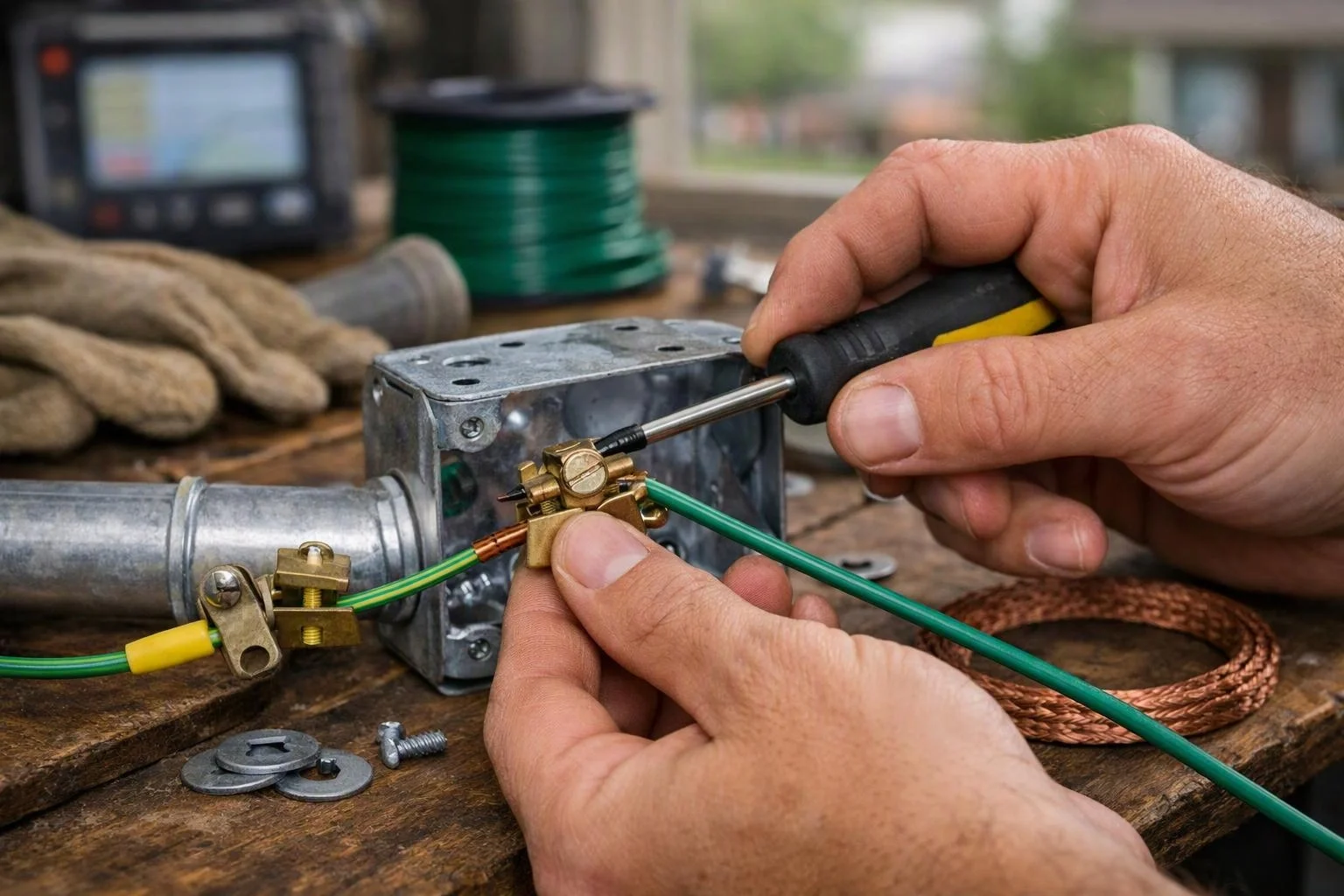
Bonding connects exposed metal parts so a fault can travel through a planned conductive path. The path may include a bonding jumper, a grounding conductor, metal raceway, or a panel enclosure. Fault current then returns toward the electrical source, allowing protective equipment to interrupt the circuit.
Related glossary terms: Electrical Grounding, Continuity, Grounding Electrode.
Bonding differs from grounding because bonding joins conductive parts, while grounding connects an electrical system or equipment to earth or a grounding source. A technician checks bonding by tracing connections and testing continuity between metal parts that should remain electrically connected. Loose terminations, paint, corrosion, or incompatible fittings can weaken that path.
From the Chris Miller Electric team
When we perform Electrical Code Correction work, we inspect bonding paths at panels, raceways, boxes, and equipment enclosures. We look for loose connections, missing jumpers, damaged conductors, and fittings that interrupt continuity. Our team documents the correction and checks the completed path before closing the work area.
Bonding in Practice: A Real-World Example
An older service panel has a metal enclosure and a raceway that do not maintain a dependable bonding path. Electrical Code Correction may require repairing the connection so fault current can return through the intended path and protective equipment can respond.
Related Services
Related Terms
Electrical Grounding
Electrical Grounding is a conductive path that connects electrical systems and exposed metal parts to the…
Continuity
Continuity is an unbroken electrical path that allows current to move between two points in a…
Grounding Electrode
A grounding electrode is a conductive connection between an electrical system and the earth. Common examples…
Ground Fault
A ground fault is an unintended path that lets electrical current flow from an energized conductor…
Chris Miller Electric
Have Questions About Bonding?
Contact Chris Miller Electric for practical guidance on Bonding and related 24 hour electrician work in Fort Wayne.