
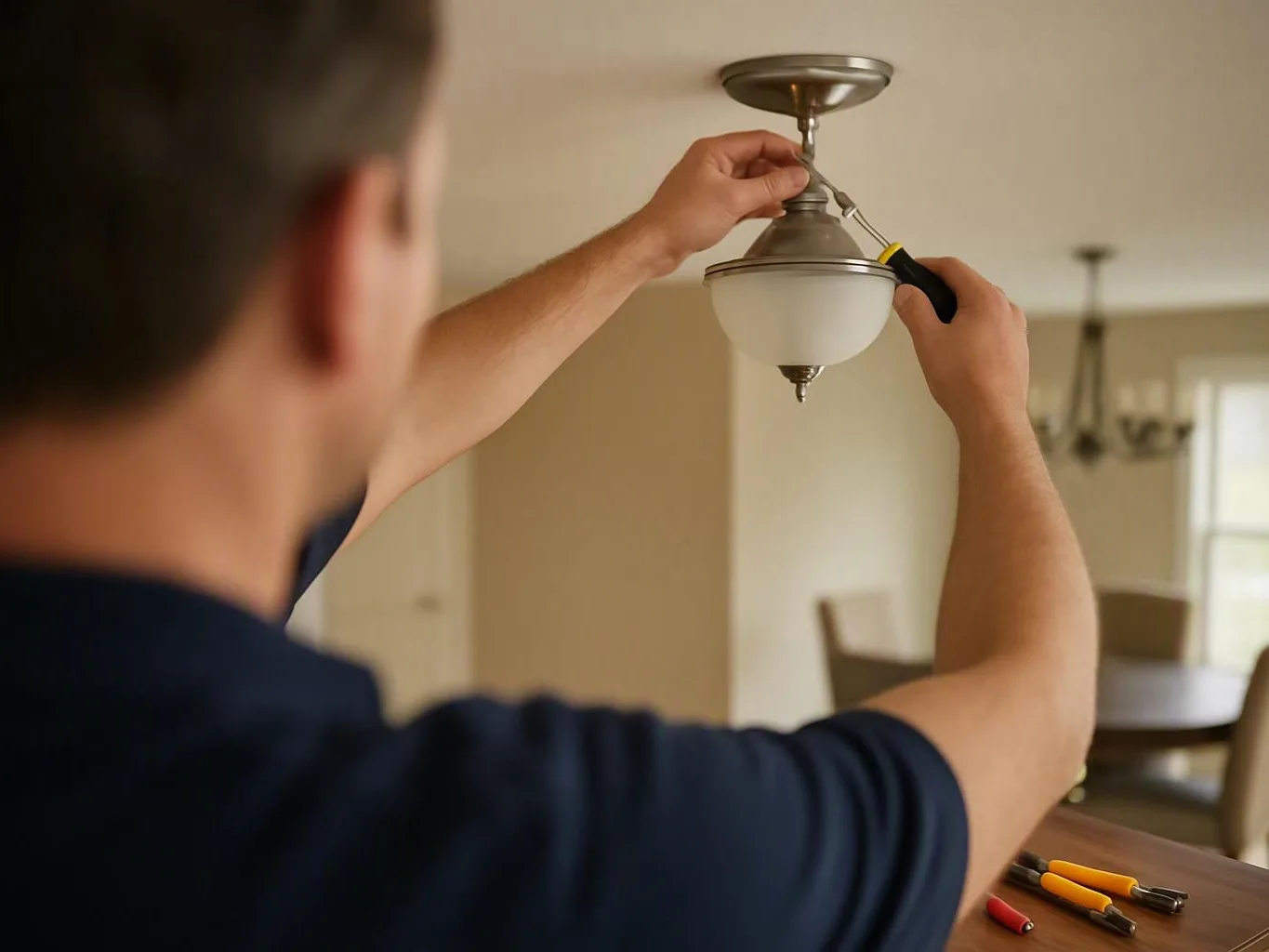
Visual Hazard Scan
A visual hazard scan checks heat marks, soot, loose plates, damaged sockets, and exposed wire. You learn whether the light can stay in use.
Flickering lights can point to loose parts, wiring faults, or panel trouble. Cold winters and older homes make safe checks worth doing early.
Stops repeated bulb changes caused by hidden faults.
Separates a bad socket from a panel problem.
Helps protect older Fort Wayne homes from heat damage.
Limits lighting disruption for shops and medical offices.
Supports safer checks after storms and power changes.
Gives property managers a documented repair scope.
According to the U.S. Bureau of Labor Statistics (2024), electricians had a median annual wage of $62,350 in May 2024, providing a labor-cost benchmark for professional residential electrical repair work.
Source: U.S. Bureau of Labor Statistics·Year: 2024
Data from the National Fire Protection Association(2019) shows that electrical distribution or lighting equipment was involved in an estimated annual average.34,000 reported home structure fires in the United States during 2015–2019, highlighting the safety importance of diagnosing symptoms such as persistent flickering lights.
Source: National Fire Protection Association·Year: 2019
An estimated annual average of 470 civilian fire deaths resulted from U.S. home structure fires involving electrical distribution or lighting equipment during 2015–2019, as reported by the National Fire Protection Association (2019).
Source: National Fire Protection Association·Year: 2019
Flickering Light Repair is a specialized service that solves a specific on-site problem for homes and businesses in the area. The work is shaped by the scope, method, and decision factors that fit this service instead of a generic package. Flickering Light Repair in Fort Wayne, in depends on the property, the request, and how far the team travels to take the job.
A visual hazard scan checks heat marks, soot, loose plates, damaged sockets, and exposed wire. You learn whether the light can stay in use.
A voltage drop test compares power at the panel, switch, and light. The readings show whether resistance sits in the circuit or fixture.
Circuit tracing follows the light back through switches, junctions, and breakers. You get a focused repair scope instead of guesswork.
A load check observes the light while nearby equipment runs. This finds flicker tied to motors, heaters, or shared circuits.
Repair verification retests the light, switch, and circuit after work. The result confirms steady operation and records any follow-up need.
The cost of Flickering Light Repair depends on factors like scope, materials needed, and complexity. Here are typical ranges for Fort Wayne:
One affected light
Tests the bulb, socket, switch, and driver.
Several flickering lights
Checks shared wiring, loads, and breaker paths.
Heat, smoke, or sparks
Makes the area safer before full repair planning.
Prices are estimates. Call for an exact quote—we always provide upfront pricing before starting work.
Small details help an electrician trace flicker without unsafe testing by the customer.
A loose socket, switch, wire, or LED driver can keep one light flickering after a bulb change.
A breaker reset may restore power, but repeated trips or flicker need professional testing.
Flickering Light Repair finds loose parts, wiring faults, and circuit trouble behind changing light levels.
Winter storms and older wiring can worsen flicker, so request a repair estimate with same-day scheduling or emergency dispatch.
Call Chris Miller Electric now for electrical emergencies, wiring repairs, panel work, and breaker service in Fort Wayne.
Fort Wayne, IN
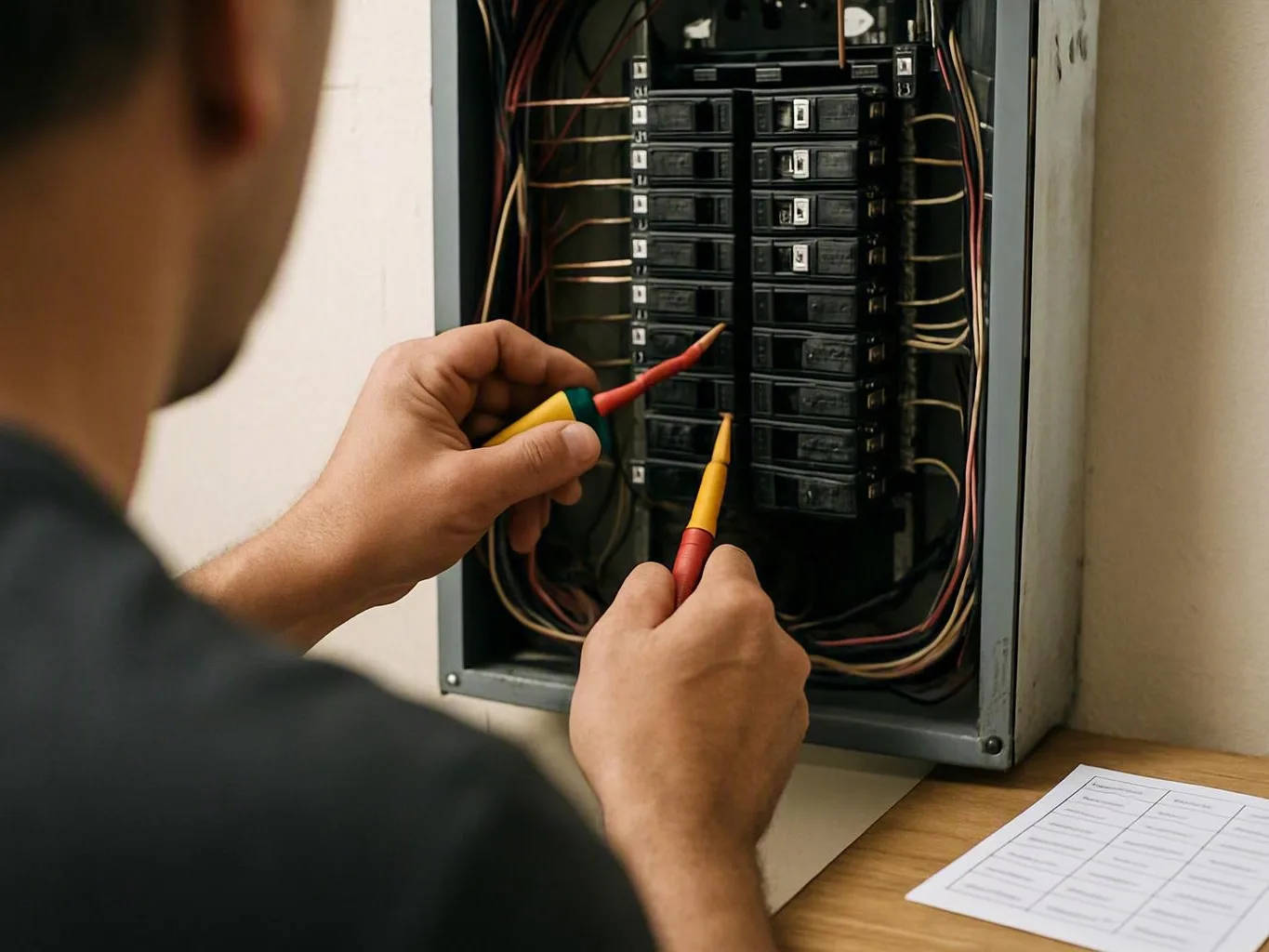
A homeowner worries about a light that flickers after a Fort Wayne, in storm. The visible symptom may be a loose bulb, but water or movement near an outdoor connection can hide the cause. We start with isolation and a visual check before testing voltage. The safe step is to stop using any warm or sparking fixture and share when the flicker began.
A shop in Fort Wayne, in sees dim lights before opening. Staff need a safe answer before customers enter, not a quick bulb swap. We check the fixture, switch, and shared circuit, then note any code or permit issue tied to the repair.
A resident notices rapid flicker after dark in a Fort Wayne, in home. The house may have aging sockets or a loose connection that worsens under load. We isolate the affected circuit, check heat and voltage, and explain whether the repair stops at the fixture or reaches the panel. If smoke or burning smell appears, the resident should leave the circuit off and avoid opening the box. Emergency service is available around the clock for urgent containment and safe next steps.