Why Your Home EV Charger Stopped Working
A home EV charger stopped working when its power supply, circuit protection, wiring, vehicle connection, or internal electronics develops a fault. Check whether the charger has power, inspect the plug and cable for heat or damage, confirm the vehicle is ready to charge, and reset the dedicated breaker only once if it has tripped. Stop using the charger if you see melting, scorching, exposed conductors, smoke, or a hot plug. An electrician should diagnose repeated breaker trips, damaged wiring, installation faults, or a charger that remains unresponsive after safe checks.
Get a Free Estimate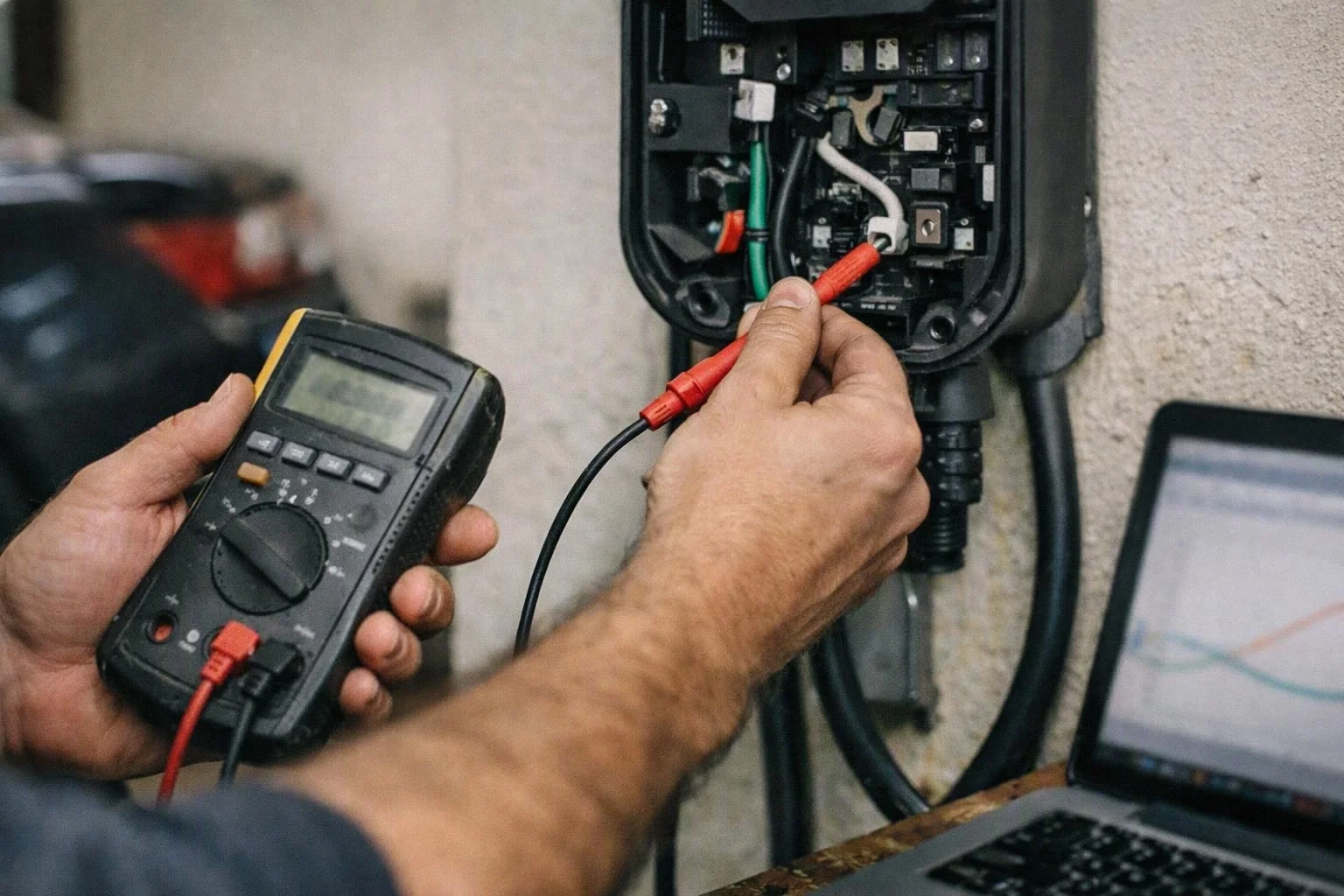
Why Is My Home EV Charger Not Working?
A home EV charger may stop working because it has lost power, detected a ground fault, tripped its dedicated breaker, encountered a vehicle communication error, or developed damaged wiring or internal components. The charger display, indicator lights, vehicle settings, and household electrical panel can help distinguish a simple connection issue from an electrical repair problem.
A residential charging station depends on several systems working together.electrical wiring before reaching the unit. The charging cable and vehicle connection then link the equipment to the electric vehicle battery and onboard charger.
Overnight charging can hide a problem until the vehicle is needed in the morning. A scheduled charging setting, low vehicle battery temperature, or a software fault may look like a failed EV charging station. First compare the vehicle’s charging message with the station’s display or lights.
Some units stop charging as a safety response. Ground-fault detection can interrupt power when current travels an unsafe path. Moisture, a damaged connector, or an installation problem may cause this response. Chris Miller Electric can help separate a vehicle charging problem from an electrical equipment failure through safe testing.
Look for simple clues before touching the electrical panel. A dark display suggests a power issue, while an active display with an error code may point to communication, grounding, temperature, or internal electronics. Do not open the charger enclosure or remove protective covers.
Signs Your EV Charger Has a Fault
These signs usually mean the equipment, connection, or vehicle-side charging system needs closer attention. Record any message shown on the station or vehicle before disconnecting the cable.
- Flashing charging indicator light that changes color or never reaches the normal charging status.
- An error code on the charger, vehicle screen, or mobile app that returns after a restart.
- A charging cable or connector that feels unusually warm, looks discolored, or does not lock firmly.
- Ground-fault detection that shuts the station down as soon as charging begins.
- The vehicle battery level does not rise even though the car says it is plugged in.
- The station repeatedly starts and stops during a normal charging session.
A fault can be on either side of the connection. Test the vehicle with another approved charging point if available, but do not continue using equipment that shows heat, burning odor, or physical damage.
What Should I Check When an EV Charger Stops Charging?
When an EV charger stops charging, check the vehicle’s charging schedule, confirm the connector is fully seated, inspect the cable for visible damage, look for charger error codes, and check the dedicated circuit breaker. Reset a tripped breaker only once if there is no damage or burning smell, repeated failure requires expert electrical diagnosis.
Most basic checks take about 10 to 15 minutes when no damage is present. Stop sooner if anything looks unsafe. Never use an extension cord, adapter not approved by the manufacturer, or improvised repair with a high-current charging load.
Overnight charging depends on a reliable residential circuit. If the station loses power during heavy household use. The circuit may need a load calculation or other design review. A network reset cannot correct undersized electrical wiring, poor grounding, or a loose connection.
Can a Tripped Breaker Cause an EV Charger to Stop Working?
Yes. A tripped circuit breaker can stop an EV charger because it interrupts power as overcurrent protection. The dedicated EV circuit may trip after a short circuit, ground fault, overload, loose connection, or internal charger failure.
One trip can happen during a temporary fault, but a breaker that trips again is giving an important warning. Do not keep resetting it. Repeated trips may indicate damaged electrical wiring, a failing charging station, moisture, incorrect circuit sizing, or a ground-fault condition.
Check only the breaker handle from a safe position. If the panel is hot, wet, smoky, buzzing, or damaged, leave it alone and seek expert help.
The charger should normally have its own correctly sized circuit and suitable grounding. Sharing that circuit with large appliances can create nuisance trips or unsafe loading. Especially when charging overnight during other household demand.
Common Causes of a Home EV Charger Failure
Several problems can produce the same charging error. These common causes should guide safe observation, not DIY work inside the charger or electrical panel.
Older installations may also have worn breakers, weak terminations, or grounding problems. The vehicle battery and onboard charger can fail independently of the home equipment, so a complete diagnosis considers both sides.
When Does an EV Charger Need Electrical Repair?
An EV charger needs electrical repair when it repeatedly trips the breaker, loses power, shows signs of overheated wiring, delivers inconsistent charging, or remains unresponsive after basic checks. Expert service is appropriate for circuit, panel, wiring, grounding, installation, and voltage problems because testing energized equipment can expose homeowners to shock, arc-flash, or fire hazards.
The same applies when the unit was recently installed and never worked correctly. The installer may need to review the EV charger installation, terminal torque, conductor size, grounding, and protective devices.
A proper diagnosis may include checking voltage at the electrical panel and charger, examining electrical wiring for heat damage, confirming circuit capacity, and completing a load calculation. It may also include testing the ground-fault protection and checking whether the vehicle or onboard charger is sending a valid charging request.
Do not open the charger, bypass protection, replace a breaker with a larger one, or splice a charging cable. These actions can hide a fault and increase fire risk. Our team can explain whether the problem is a repair, replacement, circuit upgrade, or vehicle-side service issue.
Emergency EV Charger Repair in Fort Wayne, in may be appropriate when a melted connector, smoke, exposed wiring, or active electrical smell makes continued use unsafe. If there is active fire or smoke, move away and contact emergency services first. Some homeowners also search for 24/7 Emergency Electricians when a charging fault affects essential overnight transportation.
Is It Safe to Use an EV Charger with a Hot Plug or Melted Plastic?
A hot EV charging plug or melted plastic is not safe to use. Stop charging, turn off the charger’s circuit if it can be done safely, and keep the connector disconnected. Heat, discoloration, burning odor, or melted insulation can indicate loose contacts, excessive resistance, arcing, or overloaded wiring that requires electrical repair before reuse.
Do not touch a severely hot charging connector until it has cooled, and do not pull on a damaged charging cable. Keep people away from the equipment. If you see smoke, active sparking, flame, or a strong burning smell, leave the area and contact emergency services.
Burn marks can show electrical arcing inside the charging connector or receptacle. Melted plastic may also mean the plug and socket are not making a firm contact. Replacing only the visible connector may not correct damage in the cable, receptacle, breaker, or electrical wiring.
A qualified expert should inspect the complete charging path before it is used again. This includes the charging connector, cable, wall unit, circuit terminations, grounding, and protective equipment. Do not rely on a reset if heat or damage is present.
How Can You Prevent Home EV Charger Problems?
You can prevent many home EV charger problems by keeping the connector clean and dry, checking the cable and plug for heat or damage, avoiding extension cords, maintaining clear airflow around the equipment, installing the charger on a properly sized circuit, and addressing nuisance breaker trips instead of repeatedly resetting them.
Professional Electric Vehicle Charger Installation helps match the equipment to the home’s service, panel, grounding, and circuit capacity. Our crews can also explain normal indicator lights and safe shutdown steps, making it easier to spot a change before it becomes a larger failure.
Questions About 24/7 Emergency Electricians
Why Is My Home EV Charger Not Working?
A home EV charger may not work because of a tripped breaker, lost power, a ground fault, a damaged connection, a network problem, or a vehicle-side charging fault. Check the indicator lights, vehicle settings, connector, and dedicated breaker once. Stop if you see heat, smoke, melting, or exposed wiring.
What Should I Check When an EV Charger Stops Charging?
Check the vehicle’s charging schedule, confirm the connector is fully seated, inspect the cable, read any error code, and check the dedicated breaker. A network-connected unit may also show a pause or offline status in its app. Reset a tripped breaker only once when no damage is present.
Can a Tripped Breaker Cause an EV Charger to Stop Working?
Yes. The breaker interrupts power to protect the dedicated circuit from overcurrent, a short circuit, a ground fault, overheating, or another electrical problem.
When Does an EV Charger Need Electrical Repair?
Electrical repair is needed when the unit repeatedly trips its breaker, loses power, charges inconsistently, shows heat or burn marks, has damaged wiring, or remains unresponsive after safe checks. An expert should handle circuit, grounding, panel, voltage, and installation faults.
Is It Safe to Use an EV Charger with a Hot Plug or Melted Plastic?
No. Stop charging and disconnect the equipment only when it is safe to do so. A hot plug, melted plastic, discoloration, or burning odor can indicate excessive resistance or electrical arcing. Keep the charger out of service until the cable, connector, receptacle, wiring, and protection are inspected.
If your charging equipment remains unreliable or shows a safety warning. Our team can help identify the fault and recommend the next safe step.
Contact our electrical teamRelated Resources
How Much Does an Emergency Electrician Cost in Fort Wayne?
emergency electrician cost Fort Wayne IN
What It CostsCircuit Breaker and Fuse Replacement, What It Costs and How It Works
circuit breaker replacement cost emergency electrician
Compared ToEmergency Electrician vs. Regular Electrician, Which Service Do You Need?
emergency electrician vs regular electrician
Compared ToElectrical Panel Repair vs. Replacement, Cost, Options, and Timing
electrical panel repair vs replacement cost