Planning Smoke and Carbon Monoxide Detector Installation
Smoke and carbon monoxide detector installation requires planning for sleeping areas, fuel-burning appliances, airflow, power sources, testing access, and local safety requirements. Chris Miller Electric evaluates these conditions, coordinates both detector services, and provides Free Estimates Available.
Get a Free EstimateWhat Should You Consider Before Planning Detector Installation?
Detector installation planning should account for where people sleep, where combustion equipment operates, how air moves through the home, and how each alarm will receive power and be tested.
A smoke detector protects against fire conditions, while a carbon monoxide detector senses a dangerous gas that can come from combustion equipment. We review the home layout, sleeping areas, fuel-burning appliances, and testing access before planning alarm locations.
Furnaces, water heaters, fireplaces, and other fuel-burning appliances can affect carbon monoxide safety. We also check whether walls, ceilings, doors, and airflow could affect coverage or alarm audibility.
How to Plan Smoke Detector Placement in a Home
Smoke detector placement should create practical coverage near sleeping areas and along the paths people use to leave the home while avoiding locations that can cause nuisance alarms.
We plan each alarm location around the home’s movement paths and the conditions that may affect smoke detection. Ceiling and wall locations require attention to airflow, room shape, and access for future testing.
Our team checks the planned smoke detector placement against the home’s layout before completing electrical wiring or mounting work.
How to Plan Carbon Monoxide Detector Placement
Carbon monoxide detector placement should reflect the locations of fuel-burning appliances, sleeping areas, airflow patterns, and the need for occupants to hear an alarm.
We look at equipment such as a furnace, water heater, fireplace, or other combustion source when planning alarm coverage. A carbon monoxide detector should provide useful warning without being hidden by furniture, doors, or other barriers.
An attached garage also matters because vehicle exhaust can affect carbon monoxide safety. We consider air movement between the garage, living spaces, and sleeping areas while planning detector locations.
Alarm audibility is part of the assessment. We place units where occupants can hear them and where our crew can reach the sensor, horn, test button, and battery for future maintenance.
When Do Homes Need Smoke and Carbon Monoxide Detectors Together?
Homes often need both alarm types when fire risks and combustion risks exist in the same living space. We review both conditions during an installation assessment so detector coverage works as one life safety plan.
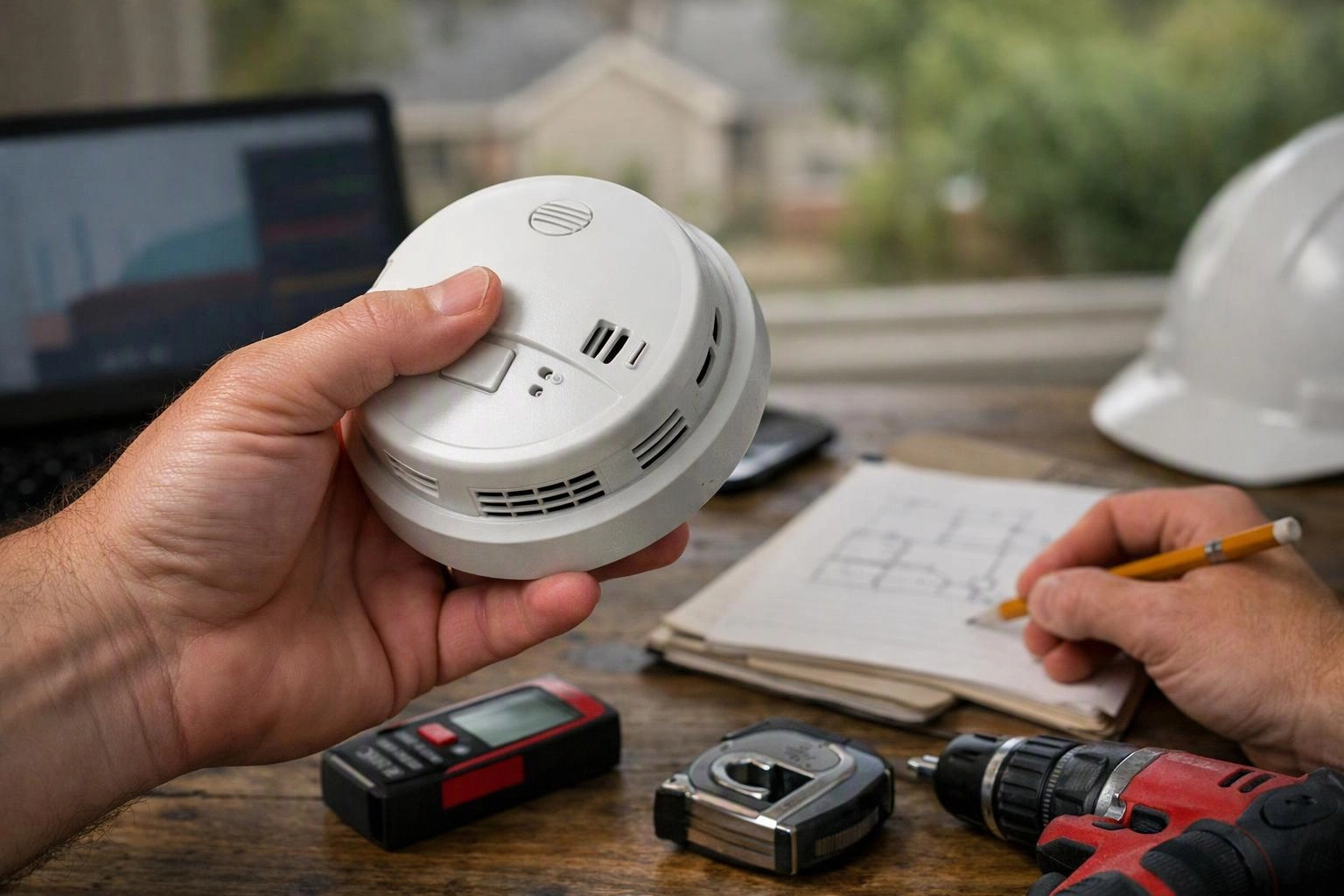
We coordinate the two services when the home’s layout or equipment makes combined coverage useful.
How Do Smoke and Carbon Monoxide Detector Services Work Together?
Smoke and carbon monoxide detector services work together through a shared assessment, coordinated placement, compatible electrical work, and complete alarm testing.
We explain the installation scope before work begins and prepare a quote based on the conditions found during the assessment.
What Power and Interconnection Options Should You Plan For?
Detector power and interconnection planning depends on the existing electrical system, the selected alarm type, backup power needs, and compatibility with other alarms in the home.
A hardwired detector connects to the home’s electrical circuit and may include a battery backup for continued protection during a power interruption. We check the wiring connection, circuit condition, mounting base, and replacement compatibility before installing or changing units.
A battery-powered detector can suit locations where new electrical wiring is not part of the installation scope. We still plan battery access, alarm placement, and future replacement needs.
Interconnected alarms communicate so an alarm signal can reach other units in the system. We verify that the selected smoke alarm, carbon monoxide alarm, or combination unit is compatible with the existing interconnection.
What Should You Check After Detector Installation?
Detector installation should be checked by testing each alarm, confirming that interconnected units communicate, verifying power and backup batteries, and ensuring occupants can hear the alerts.
We complete alarm testing after the installation so the system is checked as a group, not only as separate devices.
Our crew explains the test process and points out the access areas that occupants will need for ongoing maintenance.
How Chris Miller Electric Helps Plan the Installation
Chris Miller Electric reviews the home layout, existing electrical conditions, detector locations, and installation scope before explaining the work and preparing a quote; Free Estimates Available.
We assess smoke detector placement and carbon monoxide detector placement together when the home includes sleeping areas, fuel-burning appliances, an attached garage, or remodeling changes. Our team also reviews wiring, power sources, interconnection, alarm testing, and maintenance access.
Smoke Detector Installation and Carbon Monoxide Detector Installation may involve different placement concerns, but our crew coordinates both services through one installation assessment. We explain the selected alarm types, replacement compatibility, electrical work, and cost drivers before the work begins.
Contact Chris Miller Electric to discuss your detector installation plan and request an estimate.
Questions About Detector Installation Planning
Can smoke and carbon monoxide detectors be interconnected?
Yes, smoke and carbon monoxide detectors can be interconnected when the selected alarm units and existing wiring are compatible. Chris Miller Electric checks the interconnection, power source, and alarm response during installation and testing.
Where should a carbon monoxide detector be placed near a furnace?
A carbon monoxide detector near a furnace should provide useful coverage for nearby living and sleeping areas while remaining accessible and clear of airflow or obstructions that could affect performance. We review the furnace location, nearby rooms, air movement, and alarm audibility before choosing the final placement.
Should smoke detectors be hardwired or battery powered?
Smoke detectors should be hardwired or battery powered based on the existing electrical circuit, the desired interconnection, backup battery needs, and replacement compatibility. We assess those conditions and explain which option fits the planned installation.
How do you avoid nuisance alarms when planning smoke detector placement?
Smoke detector placement avoids nuisance alarms by accounting for cooking vapors, moisture, strong airflow, dust, and other conditions that may affect the sensor. We review room use and airflow before selecting each alarm location.