A Complete Guide to Standby Generator Installation, Repair, and Maintenance
Standby generators provide backup power when utility service fails. They sense an outage, start the engine, and power chosen circuits. Professional installation covers sizing, placement, fuel lines, transfer-switch wiring, permits, and safety tests. Emergency repair can fix start failures, transfer problems, fuel issues, battery faults, and wiring damage. Routine service usually happens at least once a year. Your use, the maker’s rules, and weather may require more care.
Get a Free EstimateHow Does a Standby Generator Work?
Standby generators watch utility power through an automatic transfer switch. During an outage, the switch starts the engine. It then disconnects the home from utility power and sends power to chosen circuits. When utility service returns, the switch restores normal power and shuts down the engine.
Chris Miller Electric helps homeowners plan backup power around their electrical panel. A home standby generator connects through an automatic transfer switch. This control device senses utility voltage. It keeps generator power from reaching utility lines. That backfeed can create a serious safety risk.
During normal use, utility power runs the home. The generator stays ready but carries no home load. After a steady outage, the switch tells the engine to start. The engine uses natural gas or propane to make electricity.
Once the engine reaches speed, the switch moves chosen loads to generator power. These loads may include a refrigerator, heating controls, sump pump, security system, or communication gear. The generator won’t power every circuit unless the system supports whole-home coverage.
When utility power stays stable, the switch restores normal service. The engine may run without a load for a short cool-down. It then stops. This process protects key equipment, even when nobody’s home.
Most systems also run a set exercise cycle. This short test keeps the engine ready. It may show a weak battery, fault code, or fuel issue. Keep the generator area clear. Never block its vents.
What Does Standby Generator Installation Include?
Generator installation includes load checks, equipment choice, outdoor placement, fuel work, transfer-switch setup, wiring, permits, and system testing. A qualified electrician also checks clearances, grounding, airflow, shutdown controls, and local rules.
Most home projects take one or two workdays. Equipment, permits, and site work must be ready first. Trenching, fuel work, panel changes, inspections, and distance can change the time.
Installation in Fort Wayne may be called “Standby Generator Installation in Fort Wayne.” The same planning rules apply elsewhere. Our team checks local rules for each property.
Good planning separates chosen-circuit backup from whole-home coverage. Chosen circuits protect key equipment while limiting generator demand. Whole-home power offers more coverage. It needs a larger load check, matching transfer gear, and enough fuel.
Why Do Homeowners Need Standby Generator Service?
Homeowners use standby generator service to keep key systems running during outages. Properly installed equipment can power refrigeration, heating controls, sump pumps, security systems, communication devices, and medical equipment. It can also reduce unsafe extension-cord use.
Backup needs differ by home. A basement sump pump may come first. Another home may need its refrigerator and freezer. Heating controls matter during cold weather. Security and communication devices may matter during any long outage.
Our team can sort essential loads from optional loads. Medical equipment also needs a plan from the care provider. A generator offers support. It shouldn’t be the only safeguard for life-support equipment.
Why Is My Emergency Generator Not Working?
An emergency generator may fail because of a weak battery, low fuel, a closed valve, a fault code, a tripped breaker, poor service, or a transfer-switch problem. Check the display, fuel supply, and visible breakers. Don’t open powered equipment. Call a pro if the unit won’t start or transfer power.
Begin with safe visual checks. Confirm that the fuel supply is on. Check that an outside shutoff wasn’t closed. Look for an error code or warning light. Check only breakers you can identify safely. Don’t remove covers or touch wiring inside the generator, switch, or panel.
A weak battery often causes start failure. Age, cold weather, poor connections, or a bad charger can drain it. The unit may click, start slowly, or show a battery alarm. Battery testing can cause shock, arc, and chemical hazards.
Fuel trouble can also stop the engine. Low natural gas pressure, low propane, a blocked line, or a bad regulator may cause problems. Never use a flame to test for leaks. If you smell fuel, leave the area. Avoid switches and sparks. Call the right emergency service or a qualified technician.
If the engine starts but the home has no power, check the transfer switch, breaker, control wires, or load size. The switch must confirm safe generator voltage first. A fault can leave the generator running without powering the panel.
Repeated shutdowns may point to low oil, heat, blocked airflow, fuel limits, overload, or control trouble. Our Generator Repair service tests the start system, engine controls, fuel path, alternator, transfer equipment, and circuit protection.
Call for electrical wiring repair when connections look burned, loose, wet, or damaged. Professional testing also helps after floods, lightning, smoke, or impact.
How Often Should a Standby Generator Be Serviced?
Generator maintenance should usually happen at least once a year. Extra checks may be needed based on use, weather, fuel type, and the maker’s schedule. Service often includes oil, filters, battery tests, air intake, spark plugs, fuel checks, exercise tests, and transfer-switch tests.
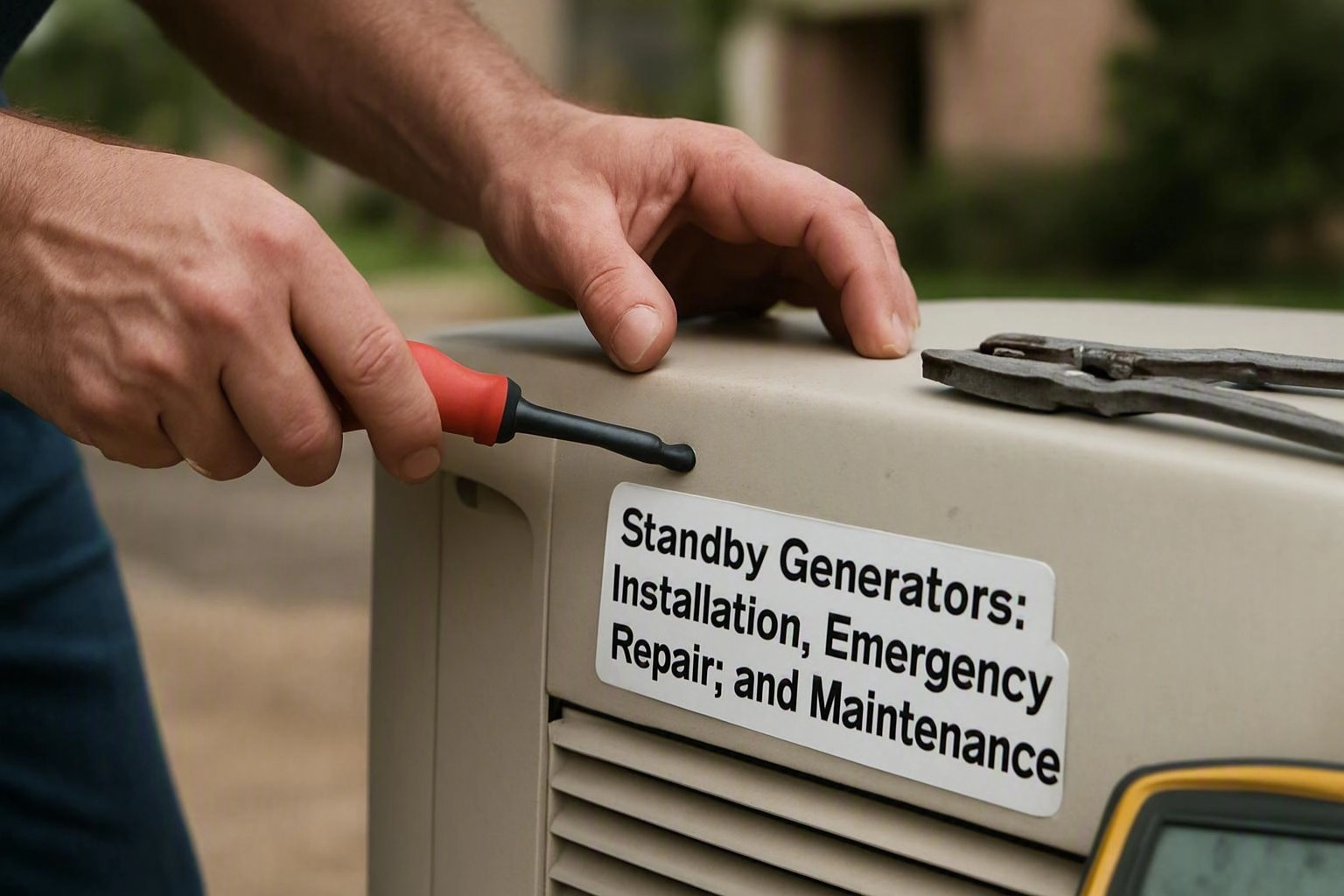
The maker’s service plan is the main guide. Service times differ by model and engine. A unit used during long outages may need service sooner. Dust, moisture, heat, cold, and animals can also increase service needs.
An oil change often forms part of engine care. The right oil and timing depend on the unit. A technician may check the oil, change it, replace the filter, and look for leaks. Low or dirty oil can damage the engine.
The air filter must stay clean. A blocked filter can affect starting and running. A technician may also check the spark plug, ignition parts, charger, and battery connections. The battery provides start power during an outage.
Service should include a safe operating test. We can check the exercise cycle, start time, output, transfer switch, utility return, alarms, and shutdown. A load test may find problems that a simple start misses.
Keep leaves, stored items, snow, and plants away from the unit. Don’t use a pressure washer. Don’t change the cover without advice. Keep service records. Report new sounds or alarms before an outage.
Preventive maintenance can’t remove every risk. It can improve readiness and catch small issues early. We can suggest a schedule for your unit, key circuits, weather, and owner’s manual.
Which Generator Features and Challenges Matter to Homeowners?
Key standby generator needs include power capacity, automatic use, fuel supply, noise, service access, weather protection, and panel fit. Homeowners must also plan for space, fuel lines, exercise noise, code rules, and circuit coverage.
Before choosing equipment, compare the features that affect daily use and outage safety.
Key Features to Consider
Common Homeowner Challenges
Our team explains these tradeoffs before work starts. The biggest model isn’t always best. The right system fits your panel, fuel, property, service plan, and key loads.
Does a Standby Generator Require a Permit in Indiana?
A standby generator permit may be needed for electrical, building, zoning, or fuel work. Rules depend on the project and local authority. The contractor or owner should check with the local building department before work starts. Required inspections should also be arranged.
Permit needs may depend on location, size, service connection, fuel, trenching, setbacks, and panel work. Natural gas work may need a fuel review. Propane work may need tank, pipe, and clearance checks. Confirm these details before ordering materials.
Indiana electrical code sets rules for electrical work. Local departments handle many project steps. Local rules may affect placement, zoning, inspections, and records. Check the actual property instead of relying on a general list.
Our team can help list the questions to ask before work begins. We review the transfer switch, panel, grounding, disconnects, fuel route, and location. An electrical inspection may follow installation.
Keep permits, inspection results, equipment details, and the owner’s manual. These records can help during a sale or remodel. Don’t assume an existing generator has a permit.
When Should You Call a Generator Repair Professional?
Call a generator repair professional when the unit won’t start, shuts down often, shows an open fault, or fails to transfer power. Call also for odd smoke, noise, fuel smells, or electrical damage. A pro can find generator, wiring, switch, and fuel faults safely.
Don’t open powered equipment to find a problem. A generator can start on its own. Follow the maker’s shutdown steps before service. Keep people away from damaged equipment. Leave if you see smoke, fire, smell fuel, or hear a carbon-monoxide alarm. Call emergency services when needed.
Our crews handle Generator Repair for start failures, weak batteries, fault codes, transfer problems, control issues, fuel limits, and bad connections. We first ask what happened and what the display shows.
A repair visit may check the battery, charger, fuel supply, engine controls, oil, air intake, alternator, breakers, transfer switch, and control wires. We look for the cause. Repeated resets may hide the real problem.
Call soon after water entry, lightning, impact, burning smells, repeated alarms, or new sounds. Electrical wiring repair may be needed for damaged transfer gear, panel connections, or control wires. Our 24/7 Emergency Electricians can help with urgent electrical safety concerns.
We also provide Standby Generator Installation for older units and new backup plans. The best choice may be repair, replacement, load changes, or a transfer-switch upgrade.
Questions About 24/7 Emergency Electricians
How Does a Standby Generator Work?
A standby generator watches utility power through an automatic transfer switch. During an outage, the switch starts the engine and separates the home from utility power. It then sends generator power to chosen circuits. When utility service returns, the switch restores power and the engine cools down before stopping.
What Does Standby Generator Installation Include?
Installation includes sizing, outdoor placement, fuel connections, an automatic transfer switch, wiring, grounding, permits, startup tests, and safety checks. It also confirms clearances, airflow, shutdown controls, panel fit, load limits, and circuit coverage.
Why Is My Emergency Generator Not Working?
Common causes include a weak battery, low fuel, a closed valve, a fault code, a tripped breaker, poor service, or a transfer-switch problem. Check the display, fuel, and accessible breakers. Don’t open powered equipment. Call a pro if the unit won’t start or transfer power.
How Often Should a Standby Generator Be Serviced?
Most units need professional service at least once a year. Extra care may depend on use, weather, fuel, conditions, and the maker’s schedule. Service often includes oil, filters, battery checks, air and spark-plug checks, fuel review, exercise tests, and transfer-switch tests.
Does a Standby Generator Require a Permit in Indiana?
It may need electrical, building, zoning, or fuel permits. Rules vary by town, property, equipment, placement, and fuel connection. Check with the local building department before work starts. Arrange any required electrical inspection after installation.
Reliable backup planning starts with your home’s loads, fuel, space, and safety needs. Our team can review repair, maintenance, and installation choices. We can also help you prepare for local inspections.
Contact our team to discuss your generator needs.
Related Resources
How Much Does an Emergency Electrician Cost in Fort Wayne?
emergency electrician cost Fort Wayne IN
What It CostsCircuit Breaker and Fuse Replacement: What It Costs and How It Works
circuit breaker replacement cost emergency electrician
Compared ToEmergency Electrician vs. Regular Electrician: Which Service Do You Need?
emergency electrician vs regular electrician
Compared ToOutlet Repair vs. Replacement: Costs, Safety, and What to Expect
outlet repair vs replacement cost electrician