EV Charger Electrical Service: Installation, Capacity, and Repairs
EV charger electrical installation needs the right circuit, panel, wiring, and permits. They install safety devices and test the system. Most Level 2 chargers need a dedicated circuit. Some homes need a panel upgrade or load-management device. Stop using a charger that smells hot or sparks. Turn off its circuit if safe. Then request emergency electrical repair. This helps find wiring faults, breaker issues, water damage, or charger failure.
Get a Free Estimate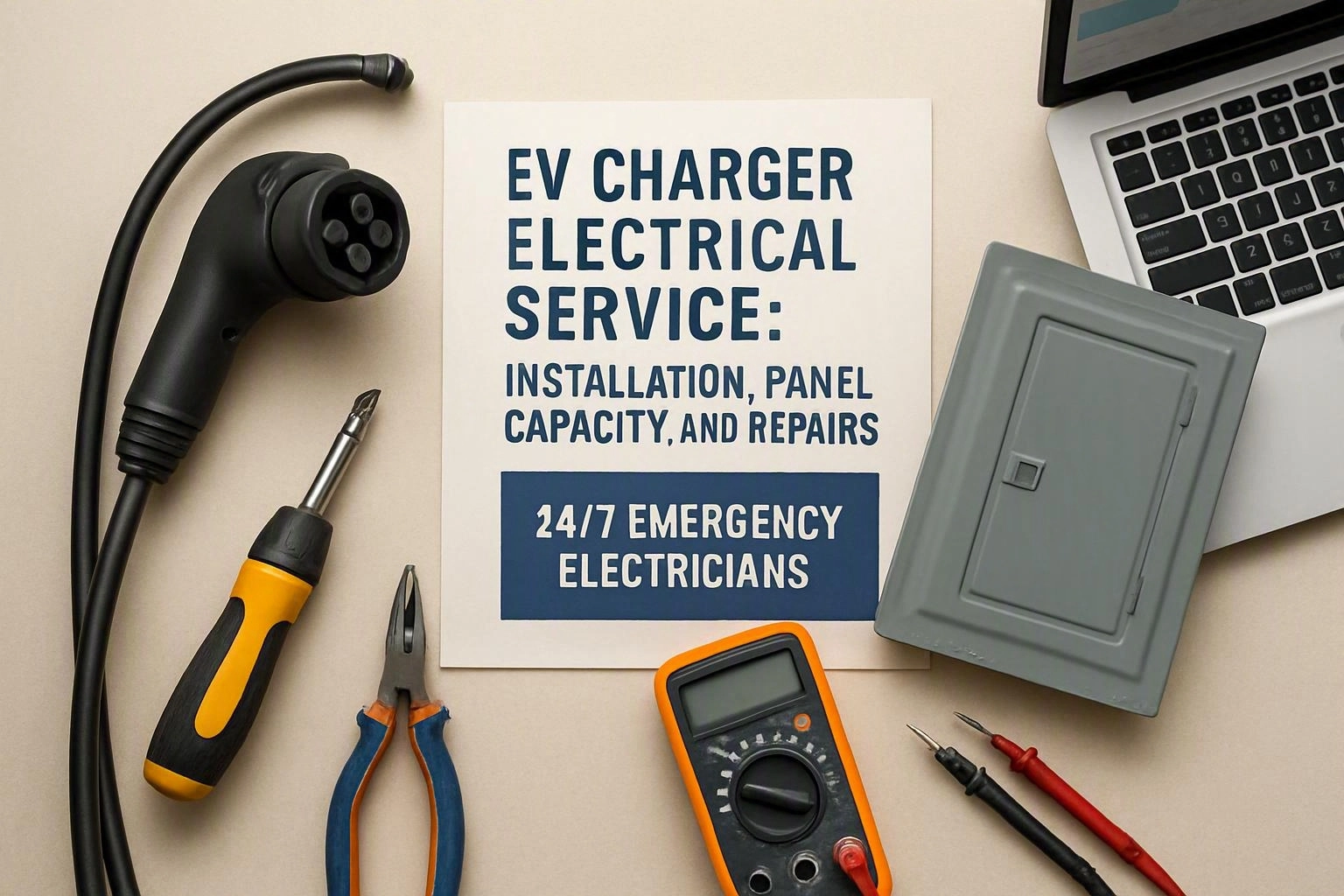
Why Homeowners Need Professional EV Charger Electrical Service?
EV charger electrical service connects charging equipment to a safe home electrical system. They also test safety devices and find faults. This lowers the risk of heat, trips, damage, and unsafe do-it-yourself work.
An EV charger may look like a larger outlet. It can run for many hours, though. Your home must support that load with heating, cooking, laundry, and other appliances.
We explain charging choices in plain language. Your driving needs and vehicle battery size affect the best charger. Charging speed also matters. Electric Vehicle Charger Installation in Fort Wayne must fit the home.
How EV Charger Installation Works from Assessment to Testing?
EV charger installation starts with a load check. It ends with testing during charging. The electrician checks the charger, panel, wires, breaker, grounding, and safety devices.
First, we review the vehicle, charger guide, and mounting spot. We also review the desired charging speed. A load calculation checks the whole home. Empty breaker spaces don't prove that the panel has enough capacity.
Next, the electrician chooses a dedicated branch circuit and breaker. Wires must match the expected load. The wire path may use cable or conduit. Long runs and detached garages may need larger wires.
We check grounding and bonding before connecting the charger. GFCI protection depends on the charger and setup. Outdoor work needs weather-rated equipment and sealed fittings.
After connection, we check the wires, voltage, breaker, and safety devices. We also test the charger while it runs. Most jobs take part of a day. Panel work, trenching, and inspections may take longer.
| Installation stage | What is checked |
|---|---|
| Assessment | Vehicle needs, load calculation, panel capacity, route, and location |
| Circuit work | Conductor size, conduit, breaker, grounding, and GFCI protection |
| Connection | Mounting, cable connection, weather protection, and equipment instructions |
| Testing | Voltage, protective devices, charging performance, and commissioning results |
Does an EV Charger Require a Dedicated Circuit?
Yes, most Level 2 charging equipment needs a dedicated branch circuit. Charging can run for several hours. The circuit should serve the charger alone. Its breaker must match the equipment and wiring.
Level 1 charging may use a grounded outlet. The charger guide and electrical system must allow it. Not every outlet is safe for this use. An electrician should check the outlet, circuit, load, and extension-cord limits.
Level 2 charging usually needs a new circuit. The breaker and wire size depend on the charger. We also check loose connections, shared loads, and voltage drop.
Panel Capacity, Upgrades, and Permits for EV Charging
Electrical panel capacity shows if a home can support an EV charger. A load calculation finds the available capacity. If capacity is low, an electrician may suggest a panel replacement, service upgrade, load-management device, or lower charging rate. Permit rules depend on the local area and job.
Panel age and service rating are only part of the review. Electric heat, ranges, water heaters, and air conditioners use a lot of power. A detached garage may need a subpanel, feeder, trench, or new ground plan. Outdoor chargers need weather-rated equipment.
| Finding | Possible approach | Why it matters |
|---|---|---|
| Enough calculated capacity | Install a dedicated charger circuit | Supports charging without exceeding service limits |
| Limited capacity | Use a lower rate or energy management system | Controls demand and may avoid larger service work |
| Outdated or damaged panel | Consider electrical panel replacement | Improves compatibility and connection safety |
| Long run or detached garage | Plan conduit, feeder, conductor size, and voltage-drop control | Reduces loss, heat, and installation problems |
Permit rules are separate from charger instructions. The local building department may require an Indiana electrical permit and inspection. We plan for these steps before work starts.
Will I Need a Panel Upgrade for an EV Charger?
Not always. A panel upgrade is needed when the load check shows limited safe capacity. The main breaker and service rating also matter.
A newer panel with moderate loads may support a dedicated circuit. Electric heat, large appliances, and older service may reduce available capacity.
Other choices include a lower charging rate or load-shedding device. This device pauses charging when home demand rises. The choice should match the load check and desired charging speed.
Does EV Charger Installation Require a Permit in Indiana?
Often, an Indiana electrical permit and inspection may be needed. This applies to new circuits, panel work, and fixed wiring changes. The local building department sets the exact rule.
Permit rules may vary by location and job. An application may list the circuit, charger, and work area. An inspection checks grounding, wire protection, and code rules.
The National Electrical Code sets the main safety rules. The local authority handles permits and inspections. We check the process before work begins.
Why an EV Charger Stops Working and When Repair Is Urgent?
EV charger repair may fix a tripped breaker, bad wire, damaged cable, fault code, or wet equipment. It may also address heat, vehicle issues, or charger failure. Stop charging if the unit smells hot, sparks, shows burn marks, or trips the breaker often.
Our team checks the circuit, breaker, ground path, wires, charger controls, and cable. We find if the home wiring or charger caused the issue. Don't keep resetting the breaker. That can make damage worse.
What Should I Do if an EV Charger Smells Hot or Sparks?
- Stop charging: Unplug it only when no hot, wet, melted, or arcing parts are present.
- Isolate the circuit: Turn off the charger breaker if the panel is safe to reach. Never touch exposed wires.
- Keep people away from the charger. Watch for smoke, fire, spreading heat, or arcing.
- Call for emergency electrical repair after sparks, smoke, burning smells, or heat damage.
- Don't use the equipment again until an electrician finds the cause and confirms safety.
Leave the home if a fire is present or growing. Call emergency responders. Turn off the circuit only when safe.
Features That Matter and Common Home Charging Challenges
Smart EV charger features should fit the vehicle and home wiring. Adjustable amperage, circuit safety, weather protection, clear controls, and cable storage all matter. Extra features may not be useful.
We review the location before choosing equipment. Garage work may need wall protection and cable storage. Outdoor work needs a weather-resistant case. Long runs and detached garages may need larger wires.
Key features for homeowners include:
Common home charging challenges include:
Choosing the Right Electrical Service for Your EV Charger
Choosing the right EV charger electrician means matching the work to your home and charger. A trained electrician can check the panel, install wiring, replace an old panel, and fix unsafe connections. They can also respond to urgent charger faults.
Ask if the service includes a load calculation, circuit plan, breaker checks, grounding checks, and testing. For new work, ask about conduit, voltage drop, weather exposure, garages, permits, and inspections.
For repairs, describe the symptoms clearly. A tripped breaker, fault code, damaged cable, burning smell, moisture, or odd sound can have different causes. Our team may perform electrical wiring repair, charger testing, or electrical panel replacement.
Home EV charger service may need one small repair or a full installation. We use the home's real conditions to guide the work.
When a charger is unsafe, Emergency EV Charger Repair starts with circuit isolation and inspection. 24/7 Emergency Electricians may help when sparks, smoke, arcing, or a strong burning smell creates an immediate danger.
Questions About 24/7 Emergency Electricians
Does EV Charger Installation Require a Permit in Indiana?
It often does when work adds a circuit, changes a panel, or modifies fixed wiring. The local authority decides the Indiana electrical permit and inspection rules. A permit application may be needed before work starts.
Does an EV Charger Require a Dedicated Circuit?
Most Level 2 chargers need a dedicated circuit because charging is a continuous load. Some Level 1 setups may use a grounded outlet. The outlet must suit the load and charger instructions.
Will I Need a Panel Upgrade for an EV Charger?
Not always. A load calculation checks the breaker, service rating, available power, and home demand. Limited capacity may call for a panel upgrade, lower charging rate, or load-shedding device.
Why Is My EV Charger Not Working?
Common causes include a tripped breaker, damaged cable, fault code, loose wire, moisture, heat, vehicle issue, or charger failure. Stop using it if it is hot, wet, damaged, or trips the breaker.
What Should I Do if an EV Charger Smells Hot or Sparks?
Stop charging and stay away from sparks or exposed parts. Turn off the circuit only if safe. Don't reset the breaker or use the charger again. Request urgent electrical repair, and leave if smoke or fire is present.
Safe charging starts with the right circuit and a careful capacity check. Testing should reflect real use. Contact our team for installation, electrical wiring repair, or help with a dangerous charger fault.
Get a Free EstimateRelated Resources
How Much Does an Emergency Electrician Cost in Fort Wayne?
emergency electrician cost Fort Wayne IN
What It CostsCircuit Breaker and Fuse Replacement: What It Costs and How It Works
circuit breaker replacement cost emergency electrician
Compared ToEmergency Electrician vs. Regular Electrician: Which Service Do You Need?
emergency electrician vs regular electrician
Compared ToElectrical Panel Repair vs. Replacement: Cost, Options, and Timing
electrical panel repair vs replacement cost