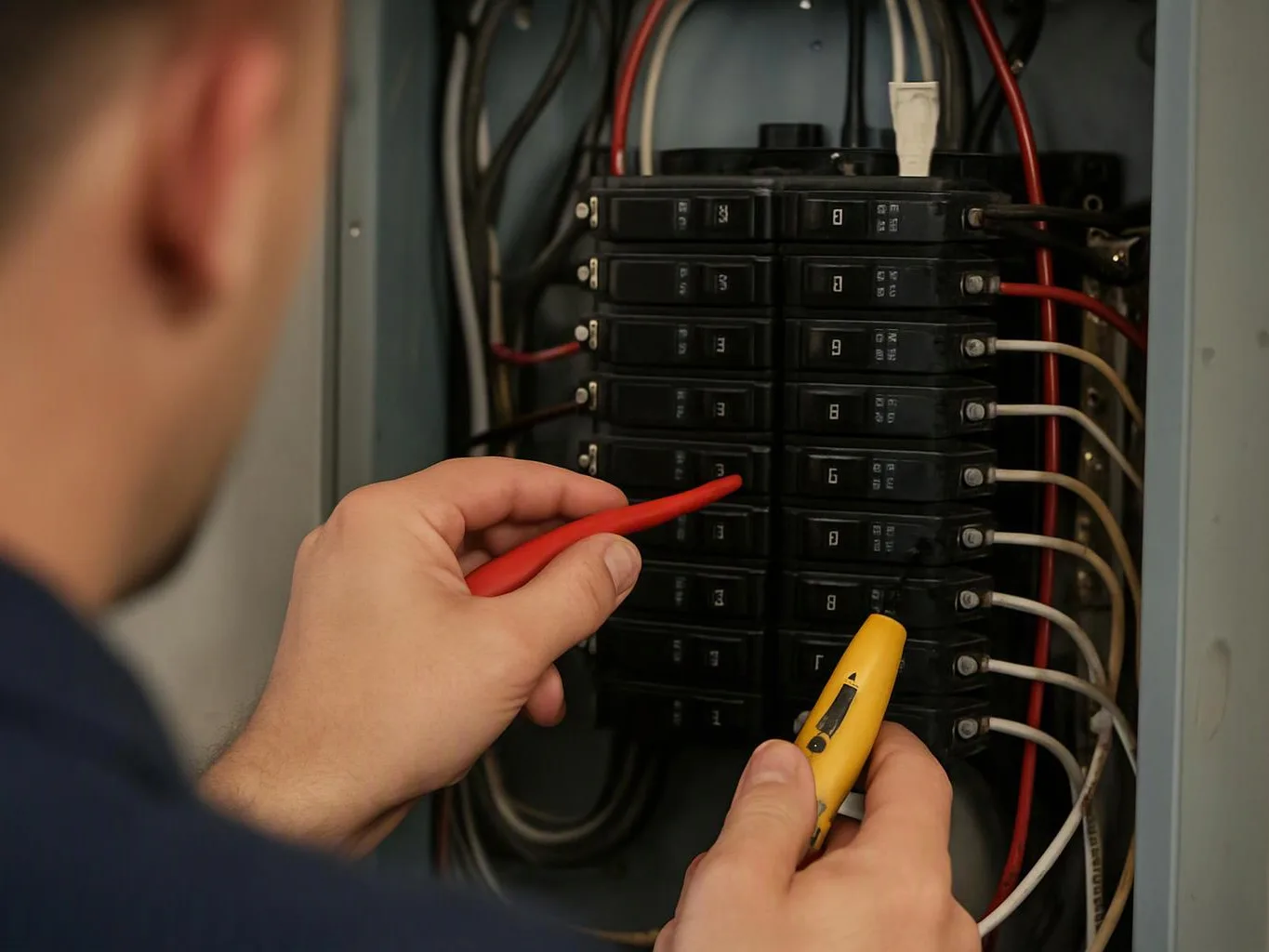
Preparing for a Residential Electrical Inspection
Residential electrical inspection preparation means making the home accessible, documenting electrical work, noting concerns, and avoiding unsafe DIY changes; Chris Miller Electric uses the inspection to identify conditions that may need code correction, wiring repair, or panel service.
Get a Free EstimateWhat Does a Residential Electrical Inspection Check?
Residential electrical inspections evaluate accessible electrical equipment and installations for safety, damage, improper alterations, and conditions that may require electrical code correction.
We review the electrical panel, branch circuits, receptacles, and switches when those components are accessible. We also look for concerns involving grounding, bonding, visible wiring, and the way equipment was installed under applicable electrical code requirements.
Our team records visible conditions and explains which findings may need repair or additional evaluation. An inspection is not permission for a homeowner to open energized equipment or test wiring without the proper training and tools.
How to Prepare Your Home for an Electrical Inspection
Homeowners can prepare by clearing access to electrical equipment, identifying known concerns, gathering service records, and keeping occupants away from areas being inspected.
Good preparation helps our crew see equipment clearly and connect visible conditions with the home’s service history. Keep pets and children away from work areas, and tell us about any location that may be difficult to access.
Homeowner preparation should focus on access and information. You do not need to make electrical repairs before the inspection.
Residential Electrical Inspection Checklist
A residential electrical inspection checklist should cover visible equipment, access points, known problems, and documents without asking homeowners to open energized equipment or perform electrical testing.
Use the checklist to note what you can safely see from accessible areas. Our crew handles inspection work that requires opening equipment, testing circuits, or evaluating conditions beyond a visual review.
| Area | What to note |
|---|---|
| Electrical panel | Access, visible damage, labeling, and unusual sounds or smells. |
| Circuit breakers and fuses | Repeated trips, blown fuses, heat marks, or signs of improper changes. |
| Outlets and switches | Loose covers, warm surfaces, damage, unusual operation, or loss of power. |
| Light fixtures | Flickering, failed fixtures, loose parts, or visible damage. |
| Extension cords | Damage, overheating, or use as permanent wiring. |
| Smoke alarms | Visible damage, missing units, or signs that alarms do not operate correctly. |
| Outdoor electrical equipment | Weather damage, exposed parts, damaged covers, or unsafe access. |
| Visible wiring | Cuts, loose connections, exposed conductors, or signs of heat or damage. |
Do not remove panel covers or disturb wiring to complete the checklist. Share your notes with us so we can focus the inspection on the areas that concern you.
What Should You Tell the Electrical Inspector Before the Inspection?
Homeowners should report electrical symptoms, previous repairs, remodeling, recurring breaker trips, and any areas where the electrical system behaves unexpectedly.
Tell us about power outages, flickering lights, warm receptacles, a burning odor, or outlets and switches that work intermittently. These details help our team connect the inspection findings with the conditions you have noticed.
Share information about previous electrical work, additions, remodels, and changes to the electrical panel. We use that history to identify possible alterations that need closer review or electrical code correction.
Which Electrical Service Records Should You Keep?
Electrical service records help show what work was completed and provide context for future inspections or repairs. Keep documents that describe the system, the work performed, and any follow-up recommendations.
Keep records together when possible, and give our team the documents that relate to the area being inspected. Clear records can reduce uncertainty about previous repairs and alterations.
How to Organize Records for Home Electrical Services
Home electrical service records are easiest to use when documents are grouped by property, labeled by system or project, and updated after each inspection, repair, or alteration.
Use a digital folder for invoices, inspection reports, permits, and warranty documents. Keep paper copies in a home maintenance file, and label each document with the area or project it describes.
Maintain an electrical panel directory that identifies the circuits as accurately as possible. We can review circuit identification during service when labels are unclear or no longer match the home.
Keep records with other property documents when the home may be sold. Accurate disclosures and organized service history give the next owner a clearer view of the electrical system.
When Should You Schedule an Electrical Inspection?
A residential electrical inspection is appropriate when a home is being bought or sold, electrical work is planned, damage is visible, or recurring problems suggest an unsafe condition.
Schedule an inspection before or during a home purchase or sale when the electrical system’s condition is unclear. We can review accessible equipment and explain findings that may affect repair planning.
Renovation is another useful trigger, especially when walls, circuits, or service equipment may change. Older wiring, electrical damage, repeated breaker trips, and visible damage also deserve attention.
Contact us promptly when you notice a burning smell, a warm outlet, smoke, sparking, or other signs of an unsafe condition. If there is an immediate danger, move away from the equipment and contact emergency services as appropriate.
What to Do After a Residential Electrical Inspection
After a residential electrical inspection, review each finding, separate urgent safety concerns from maintenance items, schedule needed electrical work, and retain the completed documentation.
Our team can explain what each finding means and identify the next step. A written inspection report or service record can help you track decisions and follow-up work.
Repair needs can vary with the condition, location, and accessibility of the equipment. We explain the work included in our quote so you can make an informed decision.
How Chris Miller Electric Can Help With Inspection Findings
Chris Miller Electric can inspect residential electrical systems and address related code corrections, wiring repairs, and panel concerns; Free Estimates Available applies when requesting a quote for the needed work.
We use the inspection findings to plan practical electrical code correction, electrical wiring repair, or an electrical panel inspection. Our team explains visible problems, identifies work that needs closer evaluation, and documents the completed service.
When you are ready to discuss inspection findings, request our Electrical Inspection service. Free Estimates Available for the work identified during the service.
Contact Chris Miller Electric to review the condition of your home’s electrical system and plan the appropriate follow-up work.
Get a Free EstimateWhat Should You Avoid Before an Electrical Inspection?
Homeowner safety depends on leaving energized equipment and suspected hazards undisturbed before the inspection. Preparation should provide access and information, not create new electrical risks.
Leave suspected hazards in place and tell our team what you observed. We can determine whether the condition needs immediate attention, electrical code correction, or further testing.
Questions About Preparing for an Electrical Inspection
Can a homeowner prepare for an electrical inspection without making repairs?
Yes, a homeowner can prepare for an electrical inspection without making repairs. Chris Miller Electric recommends clearing access, gathering records, and writing down symptoms while leaving electrical work to our team.
Should appliances be unplugged before a residential electrical inspection?
No, appliances do not normally need to be unplugged before a residential electrical inspection. Leave appliances connected unless there is visible damage, overheating, smoke, sparking, or another immediate safety concern.
What happens if an electrical inspection finds a code violation?
An electrical inspection finding that conflicts with electrical code is documented and reviewed for the appropriate correction. We explain the condition, outline the needed electrical code correction, and provide a repair plan when work is requested.
Can an electrical inspection identify problems behind walls?
No, a standard visual electrical inspection cannot confirm every problem behind finished walls. We can identify warning signs from accessible equipment and recommend further evaluation when symptoms or visible conditions point to concealed damage.
Should electrical inspection records be kept with other home documents?
Yes, electrical inspection records should be kept with other home documents. Store inspection reports, permits, invoices, panel directories, and repair history together so future service and property disclosures are easier to manage.
Related Resources
What to Expect From a 24/7 Emergency Electrician in Fort Wayne, IN
What It CostsCircuit Breaker and Fuse Replacement: What It Costs and How It Works
What It CostsElectrical Panel Upgrade Cost Factors: Capacity, Parts, Labor, and Scope
What It CostsEV Charger Installation Cost Factors: Wiring, Panel Capacity, and Installation Scope